Viettel SDMC NR3053 Teardown: MediaTek Filogic 820 Platform & Hardware Analysis
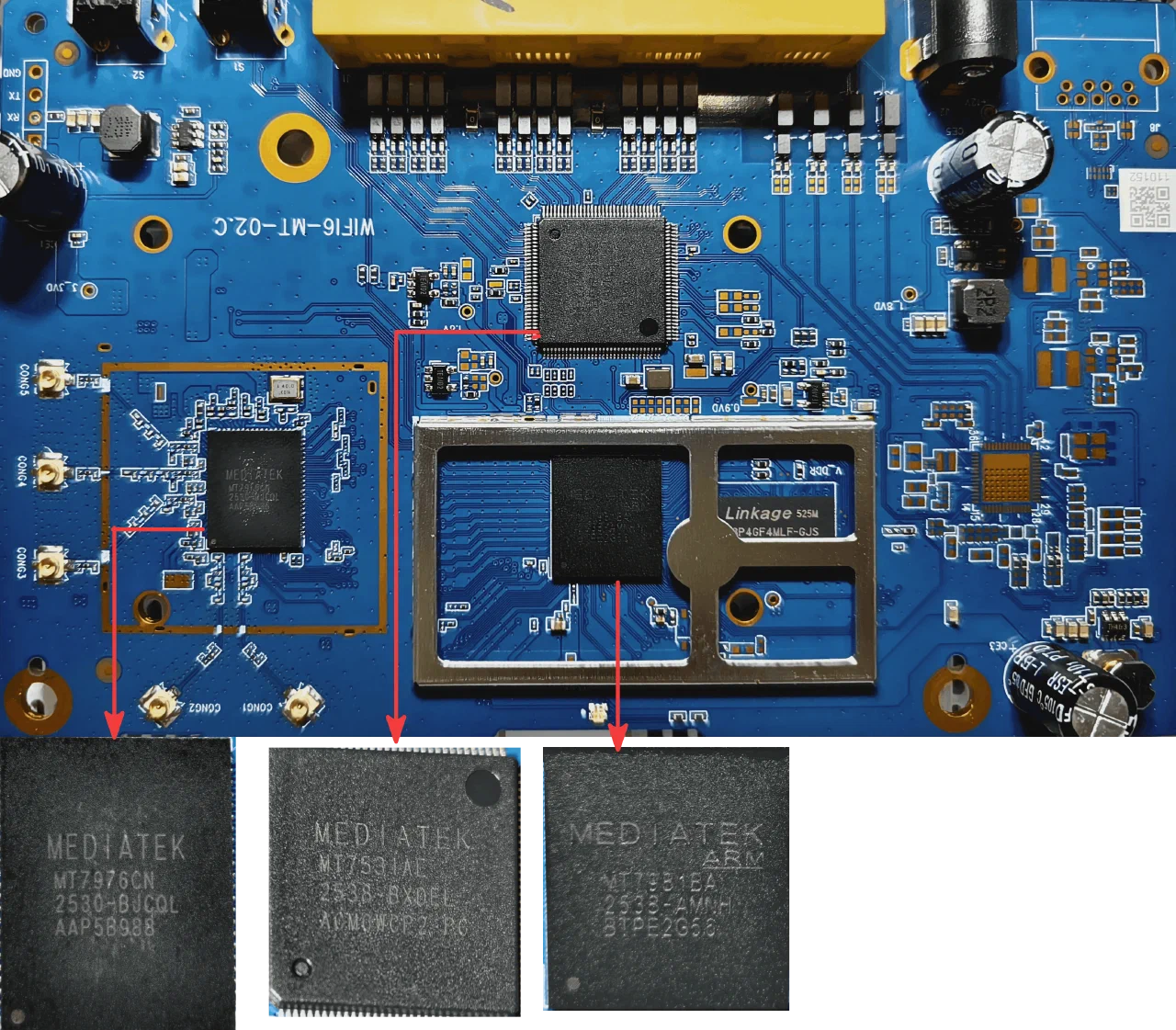
TABLE OF CONTENTS (Nhấn để xem)
As part of the rollout strategy for next-generation broadband Internet and the Home WiFi 6 ecosystem, Vietnamese telco Viettel partnered with leading telecommunications equipment manufacturer SDMC (Shenzhen SDMC Technology Co., Ltd.) to deploy the Wi-Fi Mesh router model Viettel SDMC NR3053.
What quickly grabbed the attention of network enthusiasts and hardware tinkerers is its generous internal hardware specifications: a MediaTek Filogic 820 (MT7981BA) processor, 512MB of RAM, and 256MB of Flash storage.
Let’s dive into the exterior design and take it to the workbench to examine the underlying semiconductor architecture inside this Wi-Fi 6 router.
I. Design Overview & Key Features
1. Exterior & Port Layout
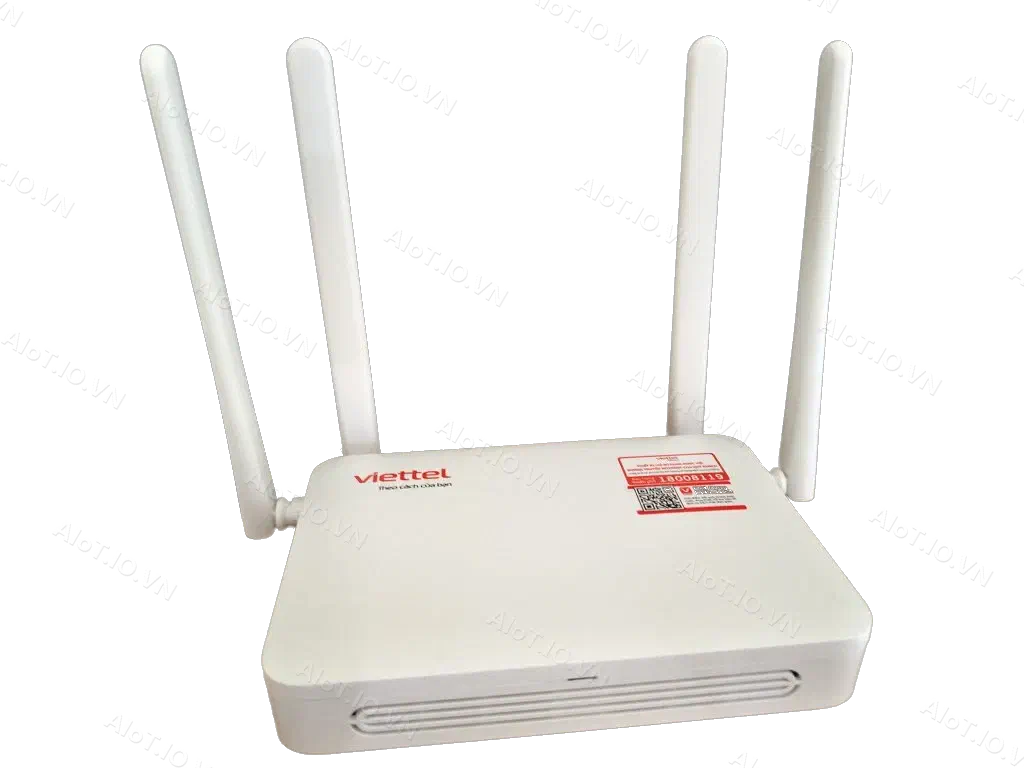
Externally, the Viettel SDMC NR3053 adopts a clean and minimalist aesthetic in an all-white chassis with softly curved edges.
- Antenna System: Equipped with 4 high-gain omnidirectional external antennas (5dBi).
- Convective Heat Dissipation
- Rear Port Layout: Includes:
- 3 Gigabit Ethernet Ports (10/100/1000 Mbps)
- 1 WPS/Mesh Button
- 1 Reset Button
- 12V DC Power Jack
2. Rated Specifications
- Wi-Fi Standard: Wi-Fi 6 (IEEE 802.11ax), fully backwards-compatible with 802.11a/b/g/n/ac.
- Theoretical Maximum Throughput (AX3000):
- 2.4GHz Band: Up to 574 Mbps (2x2 MIMO, 40MHz).
- 5GHz Band: Up to 2402 Mbps (supporting 160MHz channel width).
- Advanced Wireless Features: Supports Beamforming, OFDMA, MU-MIMO, and modern WPA3-Personal encryption.
II. Internal Layout & Board Thermal Design
Removing the plastic shell reveals the entire internal printed circuit board (PCB).
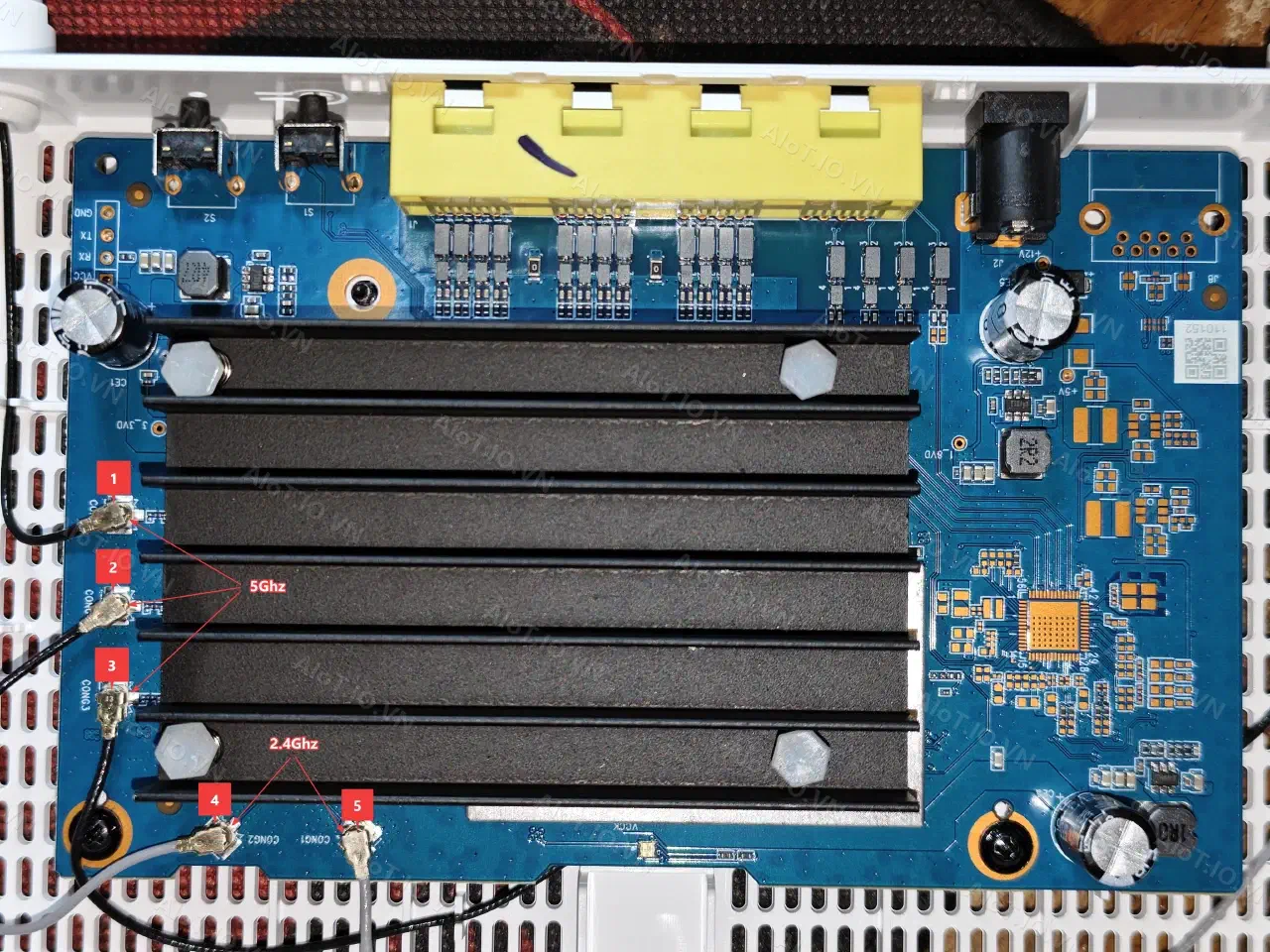
1. Monolithic Aluminum Heatsink
Dominating the majority of the board’s surface area is a black anodized aluminum finned heatsink.
2. 5-Port Antenna Feed Design
Observing the left edge of the board, there are a total of 5 antenna RF feed points:
- Ports 1, 2, 3 (5GHz): 3 dedicated RF paths for the 5GHz frequency band. Equipping 3 RF paths on the 5GHz band (3T3R or 2T3R configuration) significantly enhances the router’s ability to receive weak client signals (Maximal Ratio Combining - MRC).
- Ports 4, 5 (2.4GHz): 2 RF paths for the 2.4GHz band (2x2 MIMO configuration).
3. Exposed UART Header
A serial UART pin header is located in the top-left corner:
- 4 clearly silkscreened pin labels: GND, TX, RX, VCC.
- Standard operating voltage is 3.3V TTL, with a typical baudrate of 115200 bps.
- Having a factory-silkscreened UART pinout makes serial debugging, dumping partition backups, unbricking via
mtk_uartboot, or flashing customized bootloaders (U-Boot Mod) and open-source firmwares (OpenWrt/ImmortalWrt) much more accessible without needing to trace pads or solder jumper wires.
III. Detailed Semiconductor Breakdown
Detaching the aluminum heatsink and popping open the EMI shielding frame reveals the core semiconductor components.
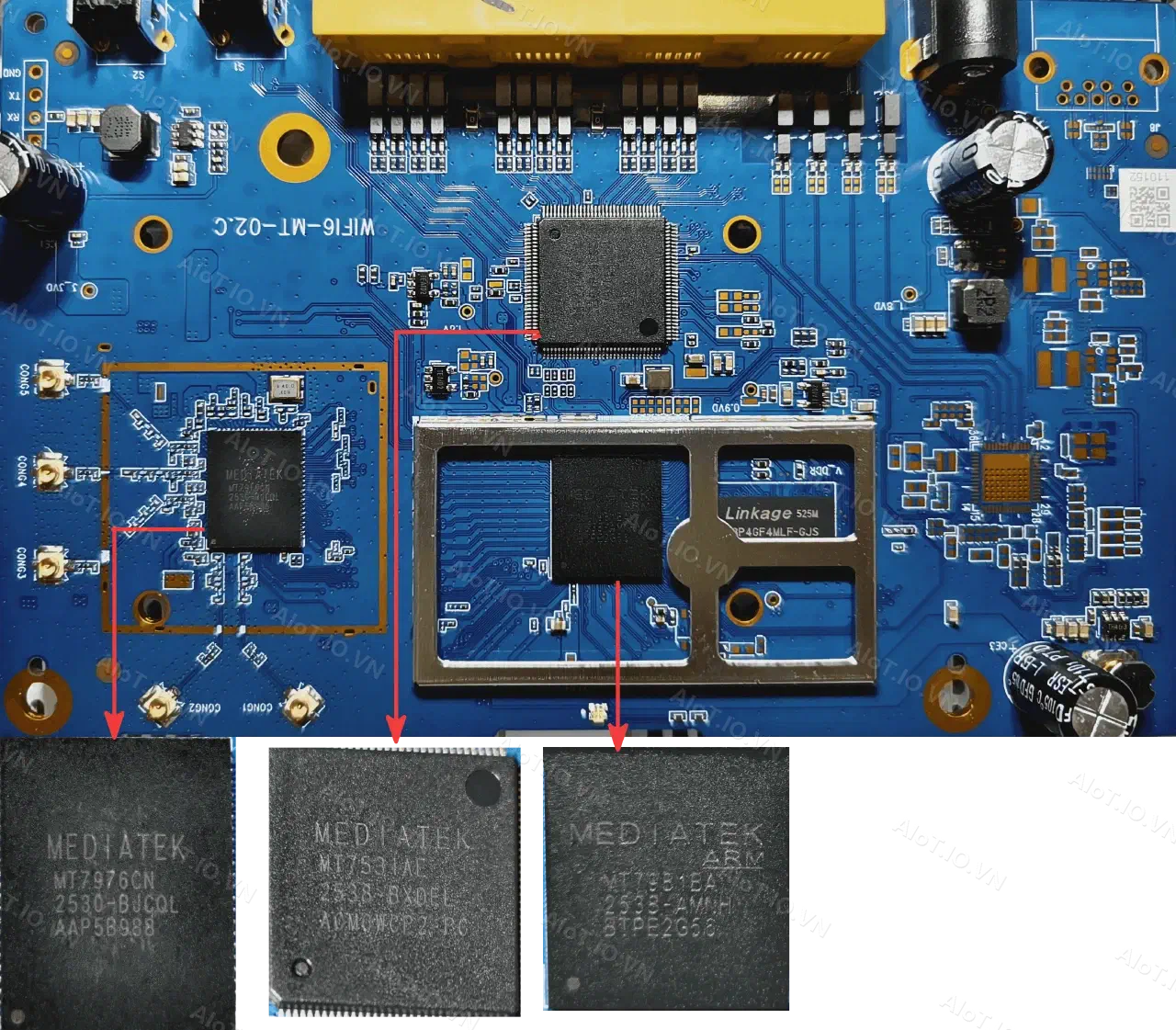
1. Central Processing Unit (CPU / SoC): MediaTek MT7981BA
At the heart of the Viettel SDMC NR3053 lies the MediaTek MT7981BA, part of the popular MediaTek Filogic 820 family:
- This SoC enjoys mature, comprehensive support upstream in the Linux kernel and the OpenWrt project (within the
mediatek/filogictarget).
2. RAM Memory: 512MB DDR3L Linkage
Located adjacent to the SoC within the shield frame is a RAM chip branded Linkage, model number 4GF4MLF-GJS:
- Memory capacity: 4Gb (equivalent to 512MB) DDR3L.
- 512MB is a generous capacity for an ISP-distributed router (which is often cost-reduced to 128MB or 256MB). This capacity comfortably handles dozens of concurrent clients and provides plenty of headroom for third-party background packages.
3. Gigabit Ethernet Switch: MediaTek MT7531AE
Directly behind the 4 RJ45 ports sits the MediaTek MT7531AE switch controller:
- Responsible for routing and switching Ethernet traffic across all Gigabit ports at wire speed.
4. Wi-Fi RF Transceiver: MediaTek MT7976CN
On the left side of the board sits the companion Wi-Fi RF chip, the MediaTek MT7976CN:
- Operates in tandem with the MT7981BA SoC to handle all physical radio communications across both 2.4GHz and 5GHz bands.
- Delivers 1024-QAM modulation and ultra-wide 160MHz bandwidth on 5GHz for a theoretical maximum link rate of 2402 Mbps.
- This chip features fully integrated Front-End Modules (FEMs) on-die, which explains the absence of external discrete FEM power amplifiers on the PCB.
IV. Flash Storage & Underside of the PCB
Flipping the PCB over reveals a clean layout with wide grounding planes:
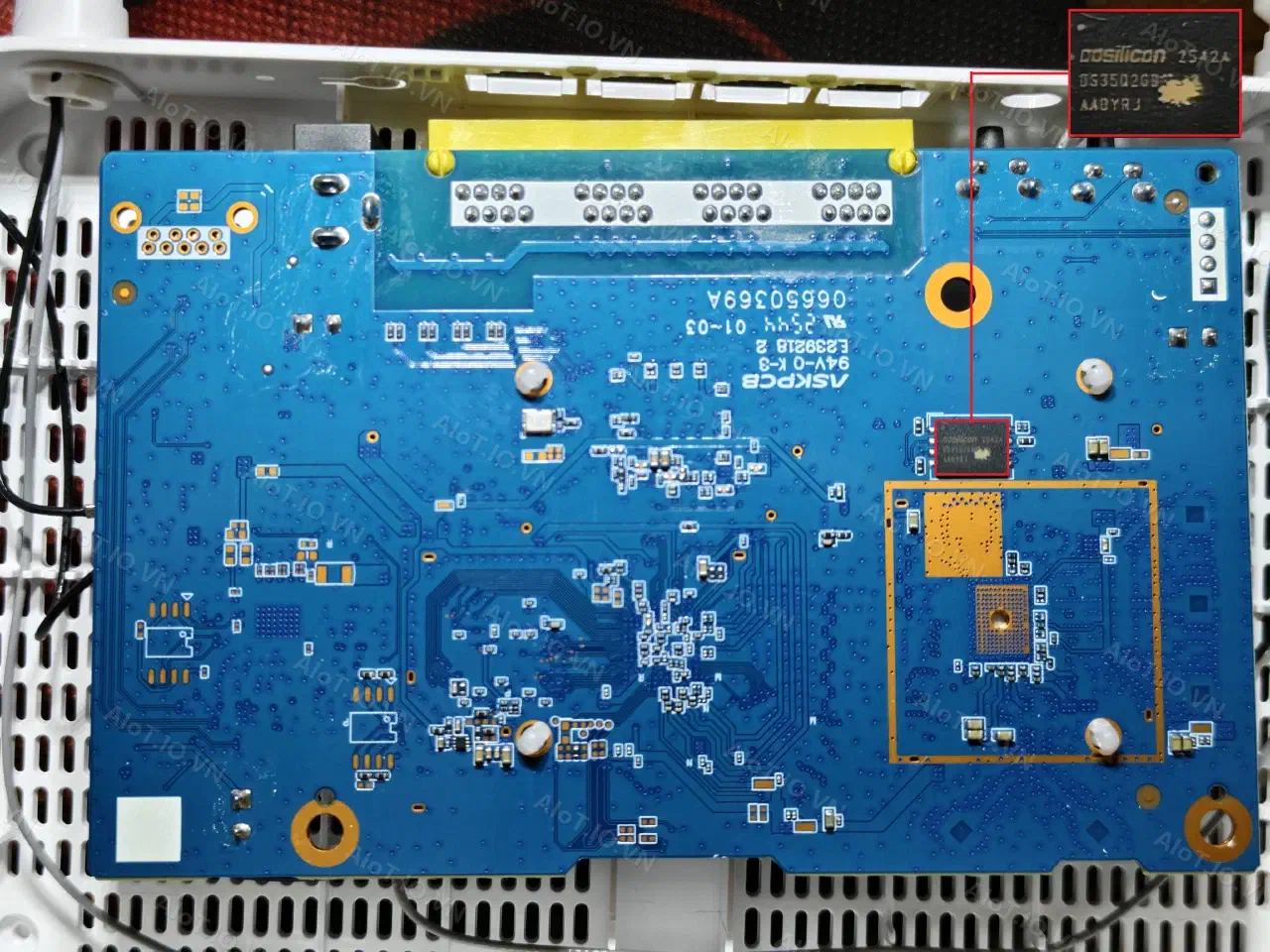
Here we find a crucial storage component:
- Flash Storage Chip: An SPI NAND Flash from Dosilicon, part number DS35Q2GB (8-pin WSON-8 package).
- Storage Capacity: 2Gb (equivalent to 256MB).
V. Hardware Specifications Summary
| Component | Detailed Specification | Notes & Remarks |
|---|---|---|
| Model | Viettel SDMC NR3053 (AX3000) | OEM by Shenzhen SDMC Technology |
| SoC / CPU | MediaTek Filogic 820 (MT7981BA) | 2x ARM Cortex-A53 @ 1.3GHz with HNAT |
| RAM | 512MB DDR3L (Linkage 4GF4MLF-GJS) | Ample memory for heavy multitasking |
| Flash Storage | 256MB SPI NAND (Dosilicon DS35Q2GB) | Large storage capacity |
| Wi-Fi RF Companion | MediaTek MT7976CN | Wi-Fi 6 AX3000 (2.4G 574Mbps + 5G 2402Mbps @ 160MHz) |
| Ethernet Switch | MediaTek MT7531AE | Manages Gigabit LAN/WAN ports |
| Physical Ports | 4 Gigabit RJ45 port (10/100/1000 Mbps) | 1WAN + 4LAN |
| Antenna Configuration | 4 external antennas (5 PCB RF feeds: 3x 5GHz, 2x 2.4GHz) | Supports 3T3R/2T3R on 5GHz for extended range |
| Hardware Debug Port | 4-pin UART (GND, TX, RX, VCC - 3.3V) | Silkscreened labels, ideal for devs & modders |
| Power Input | DC 12V / 1.0A (or 1.5A) | Standard barrel DC jack |
VI. Assessment & OpenWrt Potential
In conclusion, the Viettel SDMC NR3053 exhibits standard mainstream consumer hardware quality, quite similar to other AX3000 offerings on the market.
OpenWrt / ImmortalWrt Potential:
- The trifecta of MT7981BA + 512MB RAM + 256MB SPI NAND makes the NR3053 one of the best value-for-money options available on the second-hand and clearance markets.
- The pre-labeled UART header on the PCB is a major benefit, making recovery from bricked states or flashing U-Boot Mod much safer and more convenient compared to devices with hidden test points.
- The Filogic 820 platform leverages the mature upstream
MT76open-source driver, and together with the ubiquitous MediaTek switch, compiling and running OpenWrt on this unit is straightforward—offering high potential for users who want deep customization and performance optimization.
Disassemble
- Viettel SDMC NR3053 Teardown: MediaTek Filogic 820 Platform & Hardware Analysis Reading
- Xiaomi AX3000T New Revision Teardown: Qualcomm IPQ5018 Platform & No Custom ROM Support
- Xiaomi BE3600 1.25A White Teardown: Internal Hardware & Cost-Down Analysis
- TP-LINK TL-7DR7299 Teardown: BE7200 Wi-Fi 7, Dual 10G Ports, Quad 2.5G Ports
- Inside the TP-LINK BE6500 7DR6560 Wi-Fi 7 Router