Xiaomi BE3600 1.25A White Teardown: Internal Hardware & Cost-Down Analysis

- I. Accessories, Ports & Real-World Power Consumption
- II. Teardown & Cost-Down Comparison
- III. Detailed IC & Hardware Component Analysis
- 1. Main SoC & 2.4GHz Wi-Fi
- 2. DRAM Memory
- 3. Gigabit Switch IC
- 4. 2.5GbE PHY Chip
- 5. 5GHz Wi-Fi Radio & Dedicated FEMs
- 6. Flash ROM
- IV. Real-World Speed Testing & Fast Roaming Capabilities
- V. Verdict & Summary
The popular budget Wi-Fi 7 router Xiaomi BE3600 has recently seen a new hardware revision in the market. In this article, we tear down the Xiaomi BE3600 1.25A white version.
We specifically designate this unit as the 1.25A White version for two main reasons:
- Xiaomi subsequently introduced a black version under model code RD16 (which features all 1Gbps Gigabit Ethernet ports without the 2.5G port).
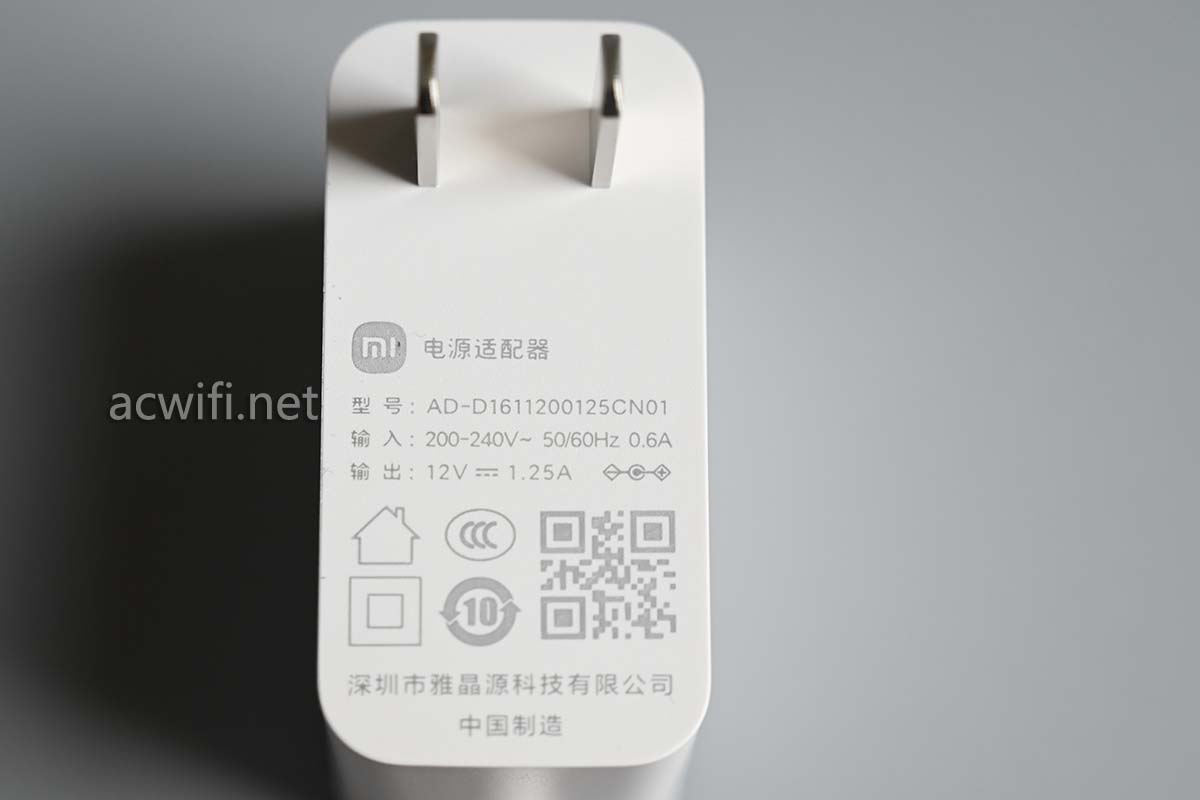
- The initial white BE3600 batches shipped with a 12V / 1.5A DC power adapter, whereas this recent production batch ships with a 12V / 1.25A power supply.
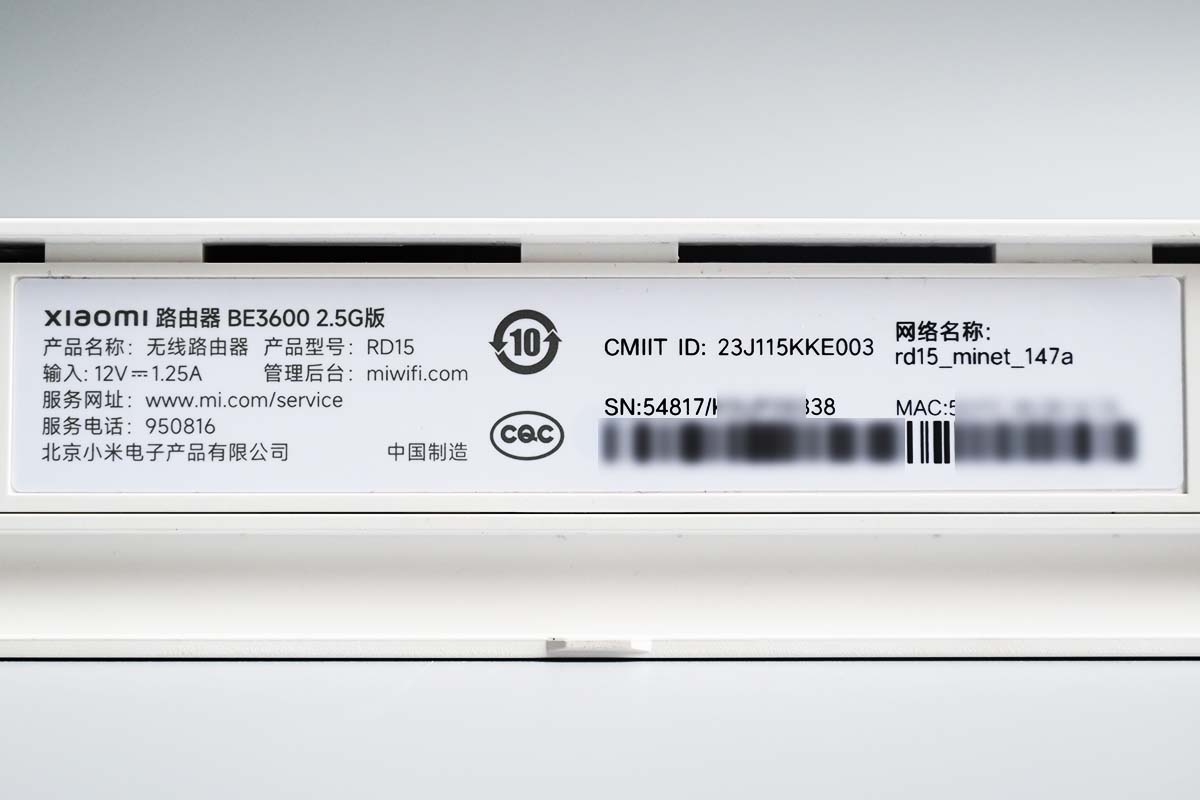
The unit examined here was manufactured in April 2024. Its serial number (SN) prefix remains 54817, and its product model number is still officially RD15.
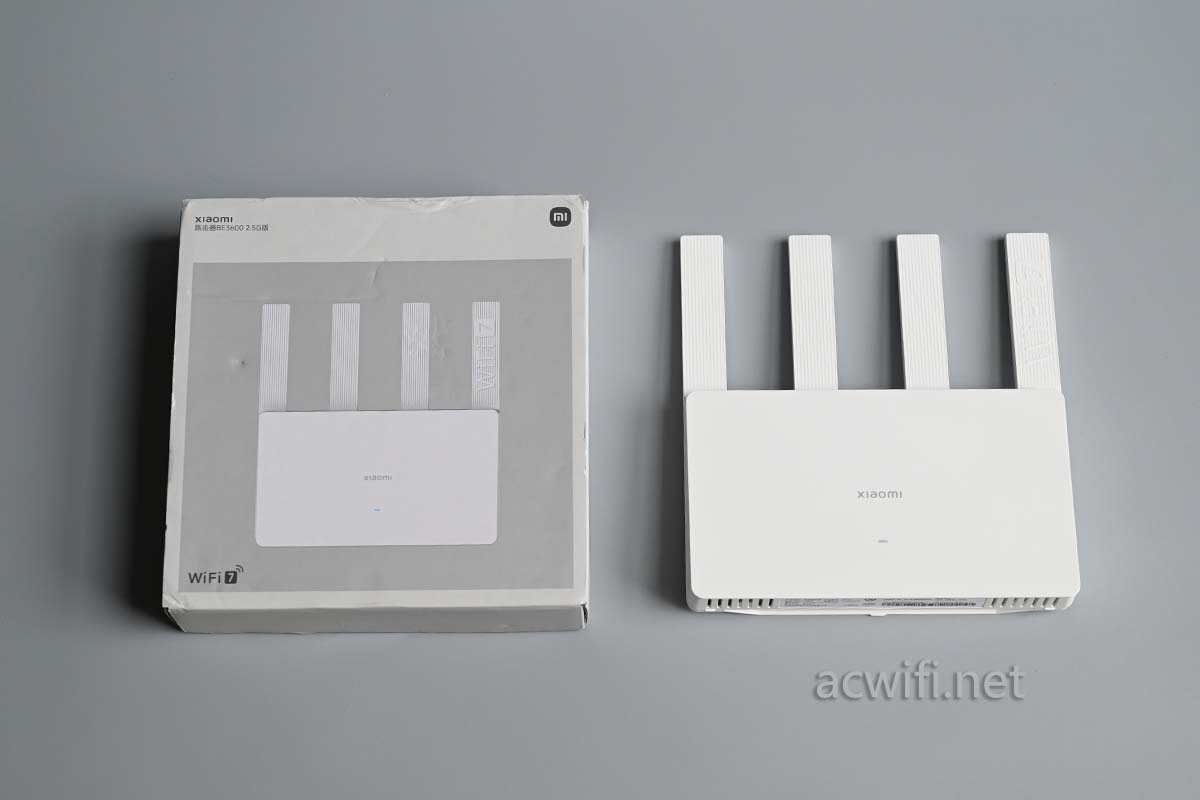
Let’s unbox the device and examine what hardware optimizations or cost-down adjustments Xiaomi made compared to the initial release.
I. Accessories, Ports & Real-World Power Consumption
The complete package includes the router, a DC power adapter, and a pre-terminated flat Ethernet patch cable:
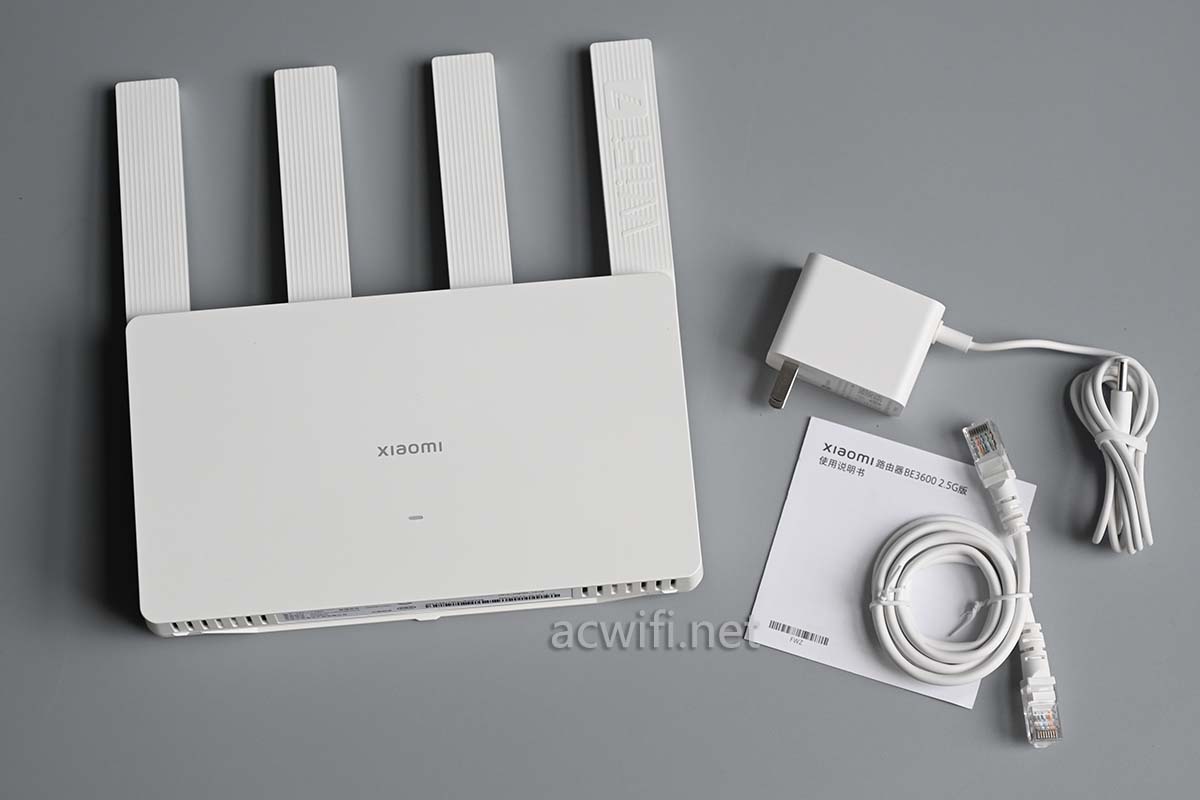
The first visible change is the power adapter rating: it outputs 12V / 1.25A (instead of 12V / 1.5A on earlier units):
Power draw measurements at the wall:
- Idle state (no Ethernet cable connected): Approximately 6.0W.
- With Gigabit WAN port connected (1Gbps): Power draw rises to 6.4W.
- With 2.5G WAN port connected (2.5Gbps): Power draw reaches 7.9W.
The actual power consumption of this 1.25A revision is practically identical to the original 1.5A model. This confirms that the underlying processor platform (SoC) and RF stage remain fundamentally unchanged.
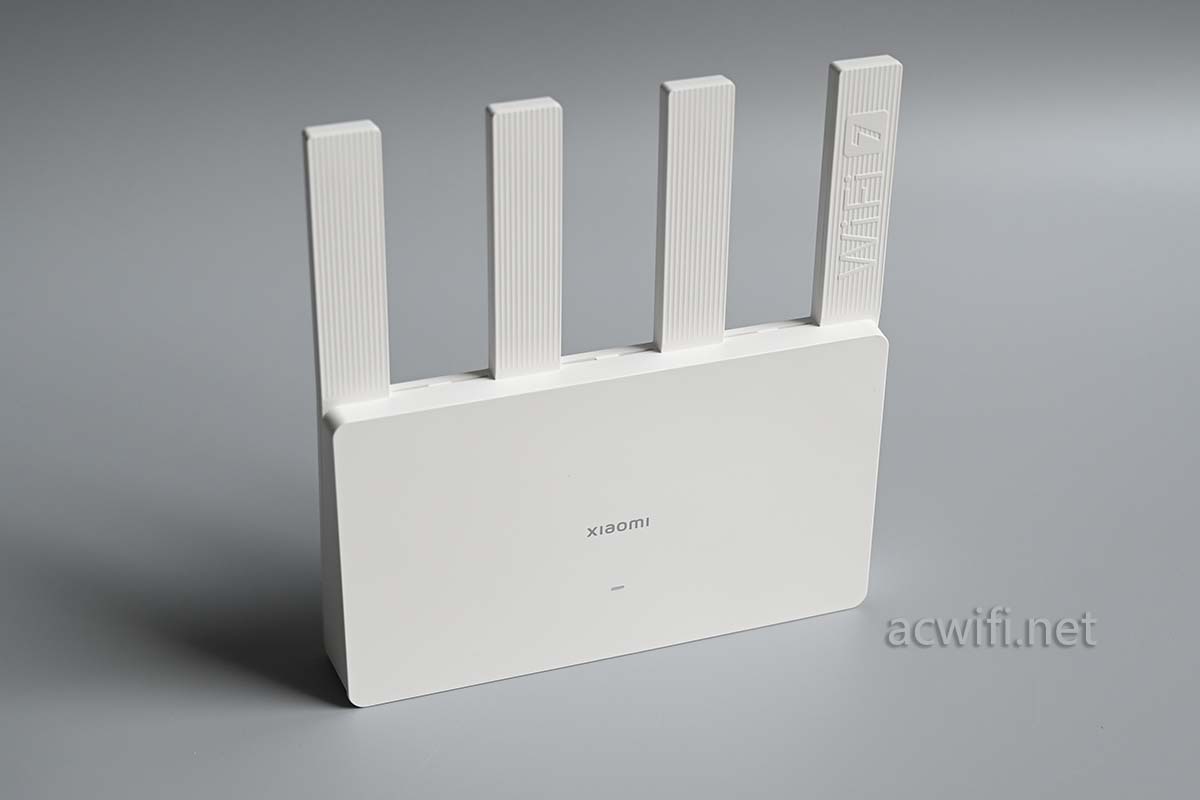
In terms of external aesthetics, the chassis is identical to the previous revision: clean white styling with four foldable flat strip antennas:
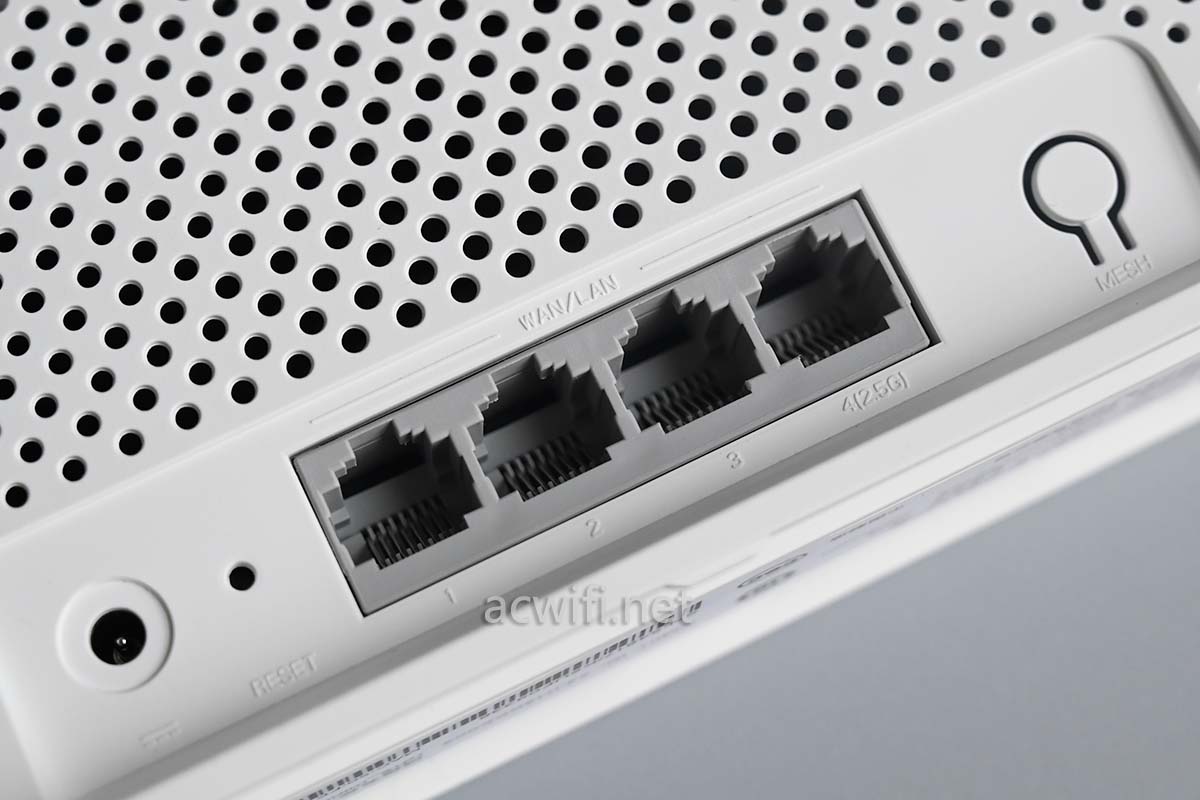
The rear panel hosts one 2.5GbE high-speed port alongside three Gigabit LAN ports:
The bottom label indicates the serial number prefix (54817) and confirms the model designation RD15:
II. Teardown & Cost-Down Comparison
Prying open the bottom shell reveals the internal circuit board:
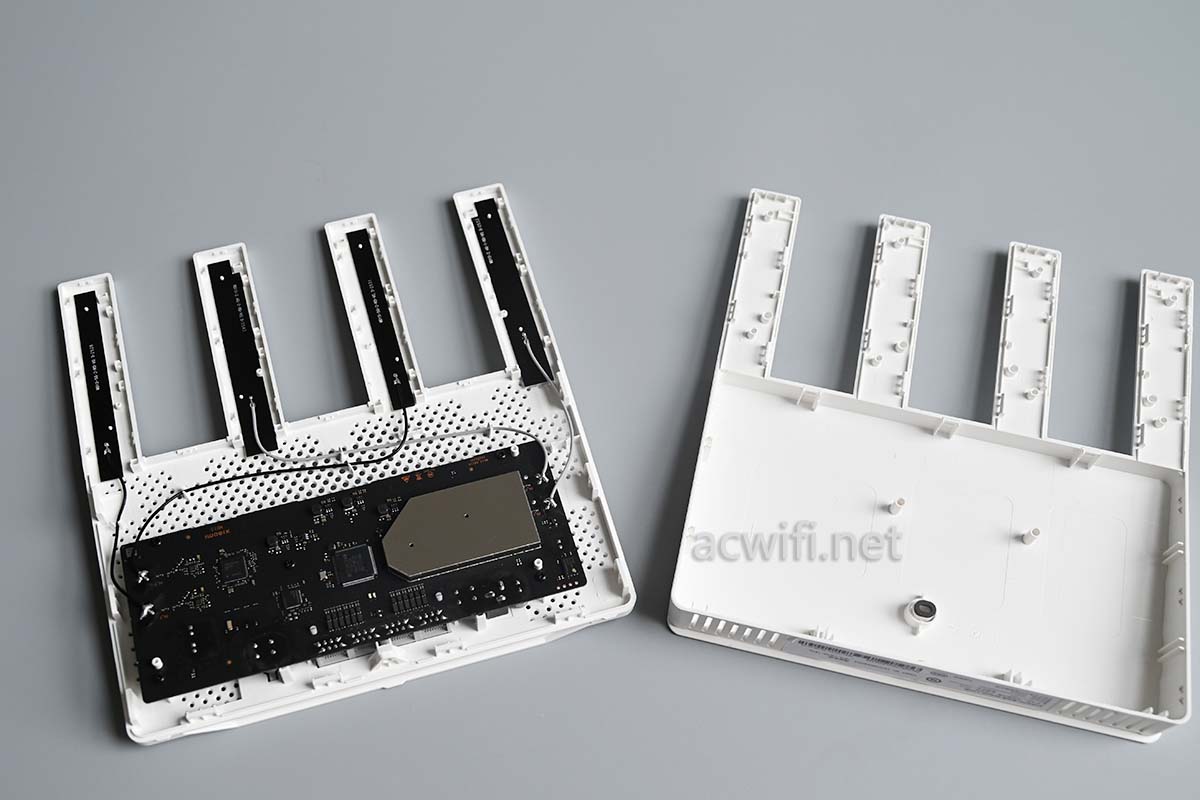
Upon opening, the first major structural change becomes apparent: only a single metal EMI shielding can remains on this side:
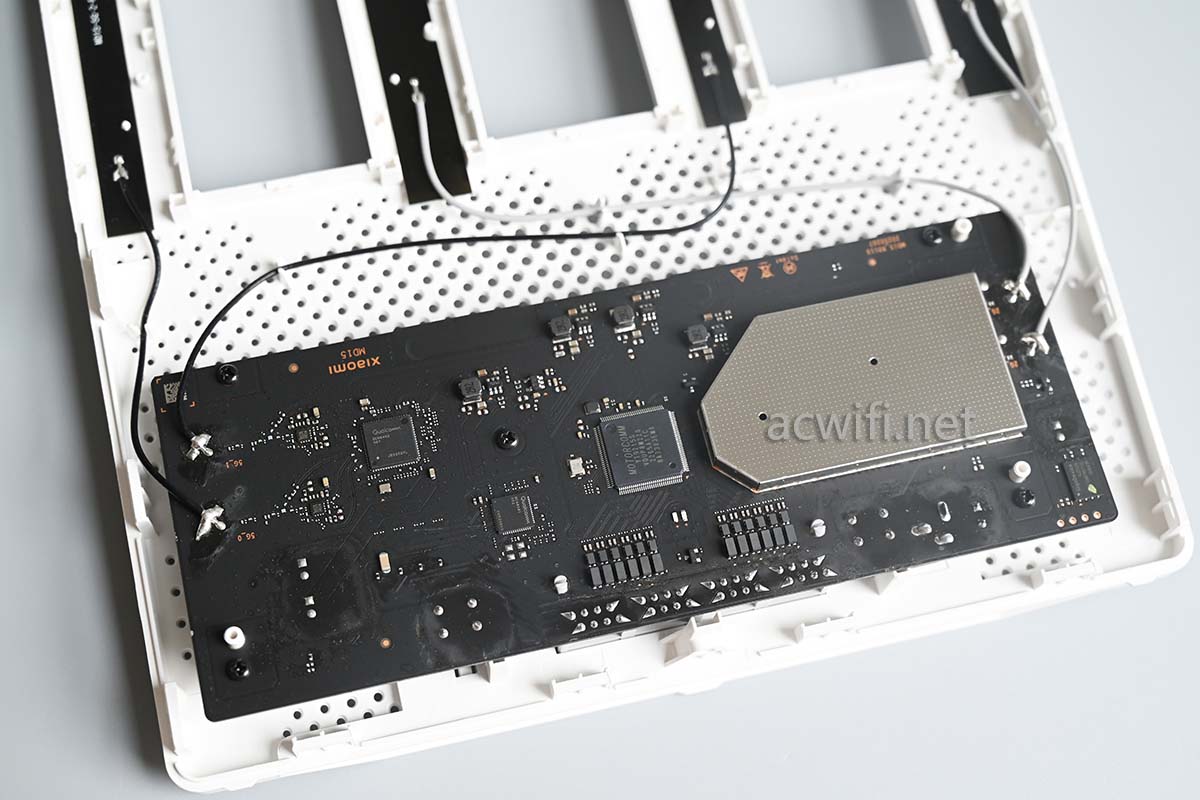
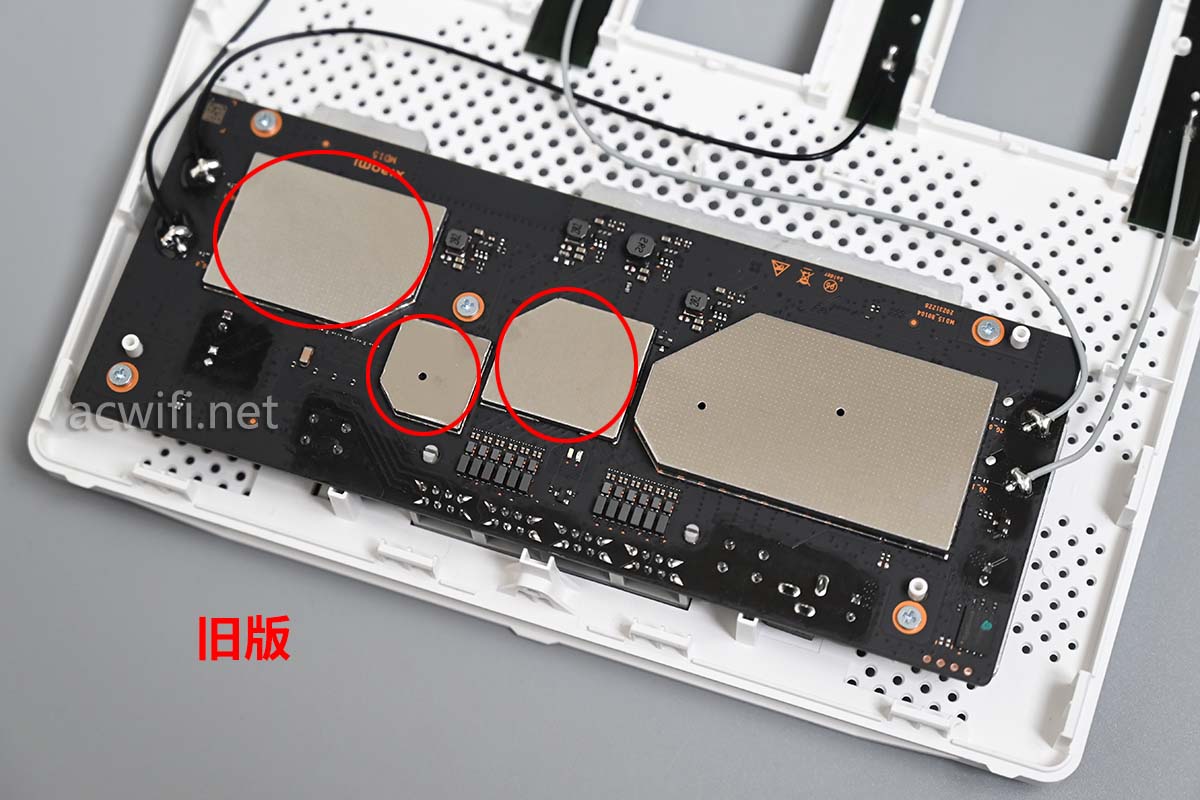
Comparing this directly with the original 1.5A PCB, the new version has removed 3 metal shielding cans:
Flipping the board over to examine the reverse side:
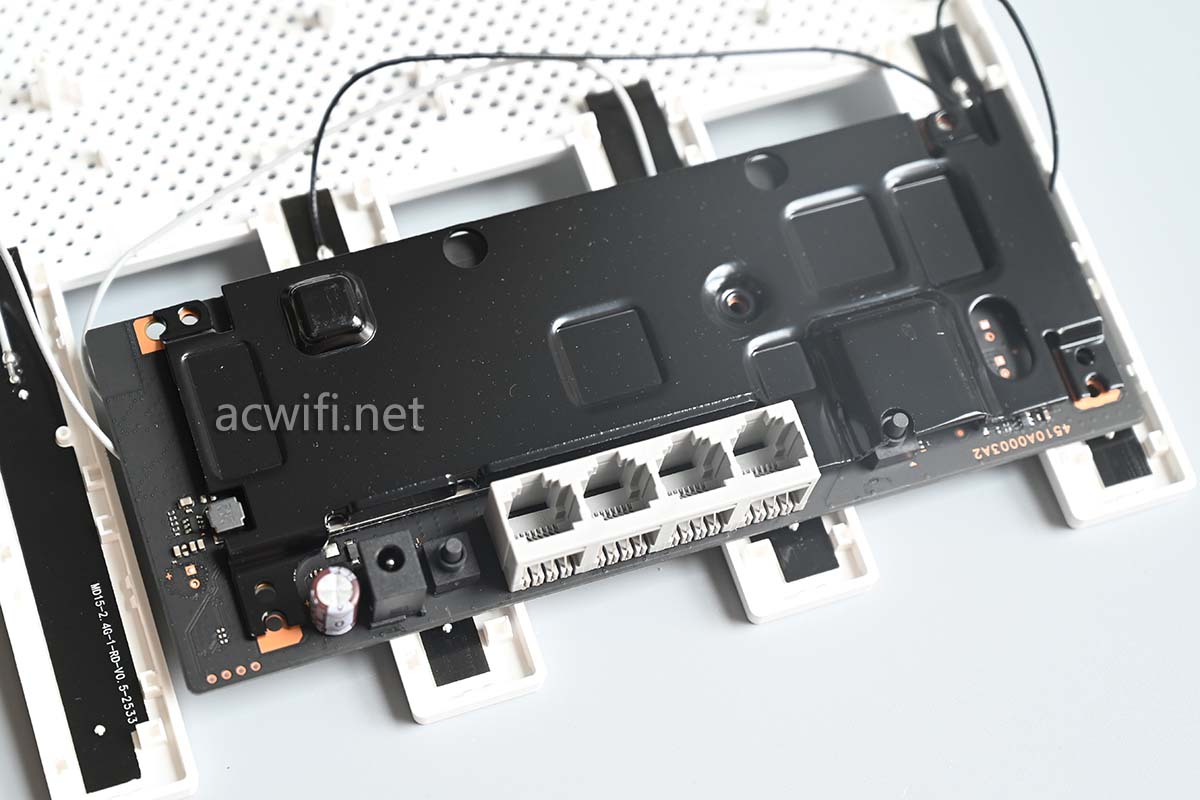
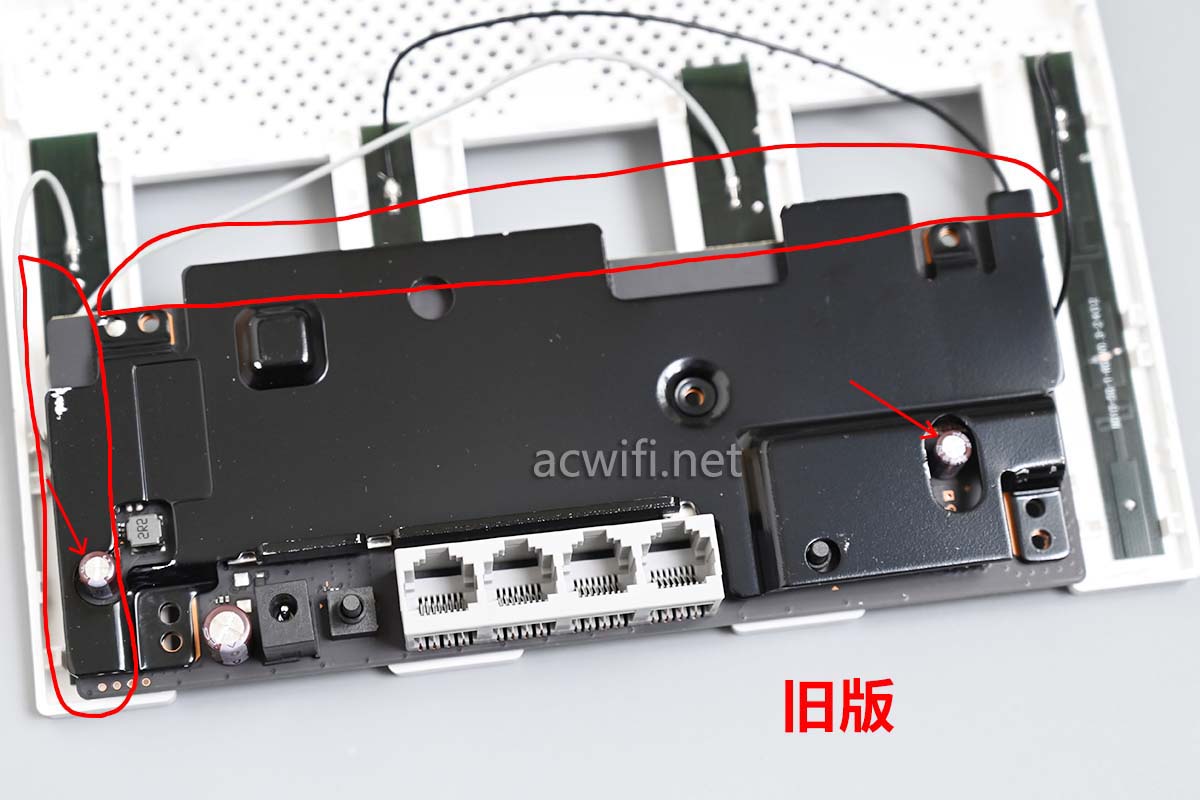
Two visible differences stand out when comparing the underside with the previous revision:
- Missing 2 electrolytic capacitors: Two power-filtering electrolytic capacitors have been omitted.
- Reduced heatsink footprint: The aluminum heatsink on the 1.25A revision is noticeably shorter in length and narrower in width compared to the original revision.
Removing the aluminum heatsink:
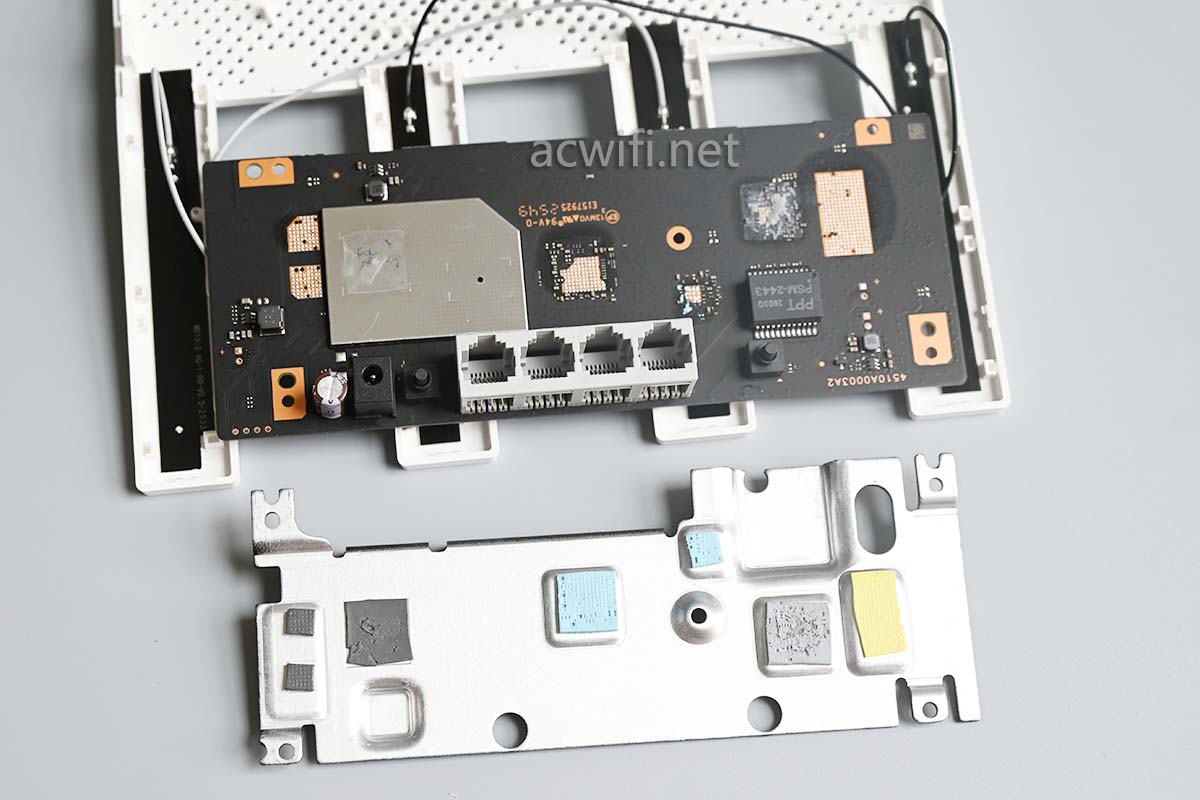
Underneath the heatsink, comparing with the original PCB reveals that this side is also missing 3 shielding cans:
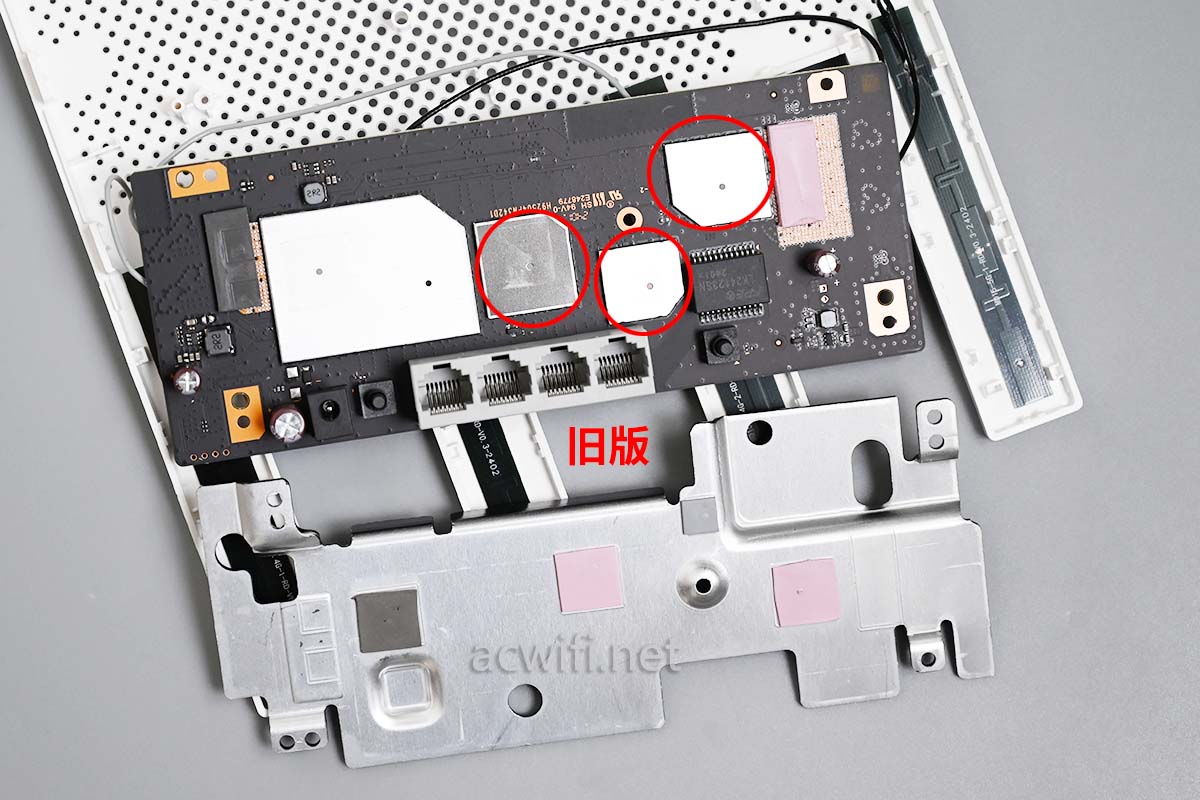
Summary of Cost-Down Changes on the 1.25A Revision:
- EMI Shielding Cans: A total of 6 shielding cans have been eliminated across both sides of the PCB (3 fewer on each side).
- Filtering Capacitors: Omitted 2 electrolytic capacitors.
- Cooling Heatsink: The aluminum thermal plate has been reduced in size (shorter and narrower).
- Power Rating: Power supply output adjusted from 1.5A down to 1.25A.
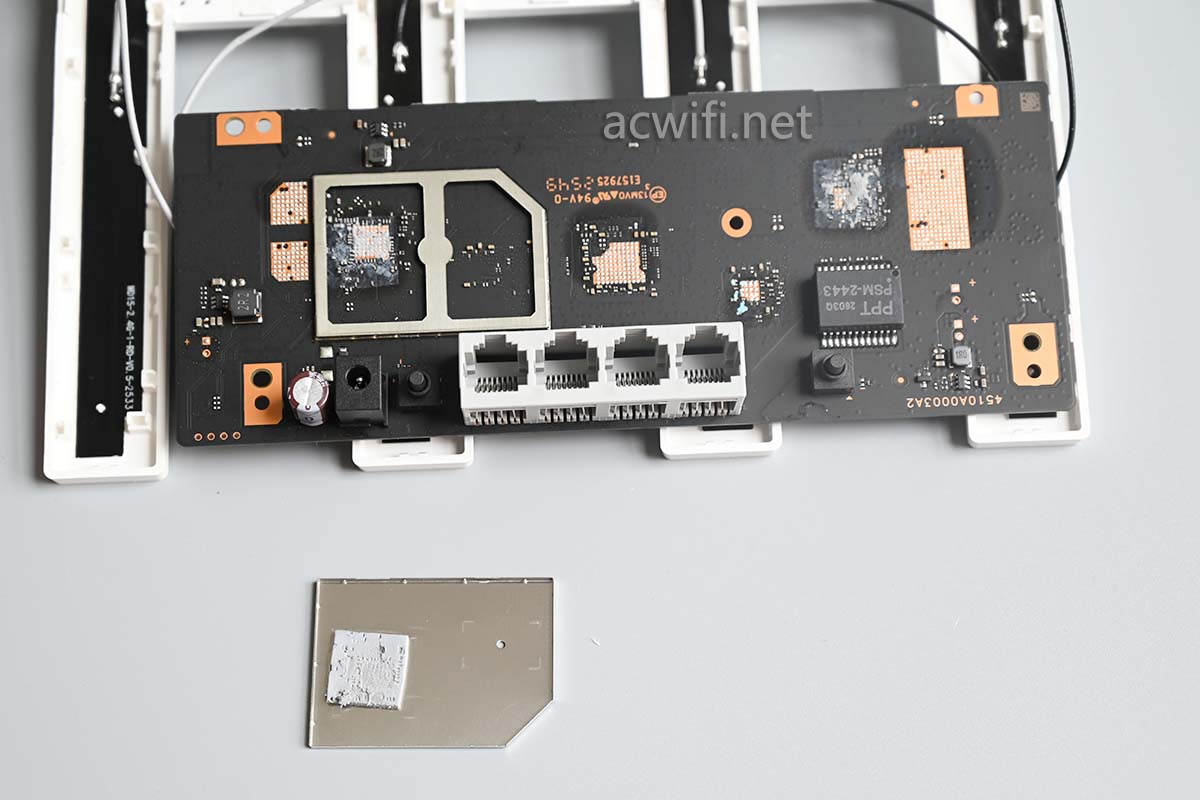
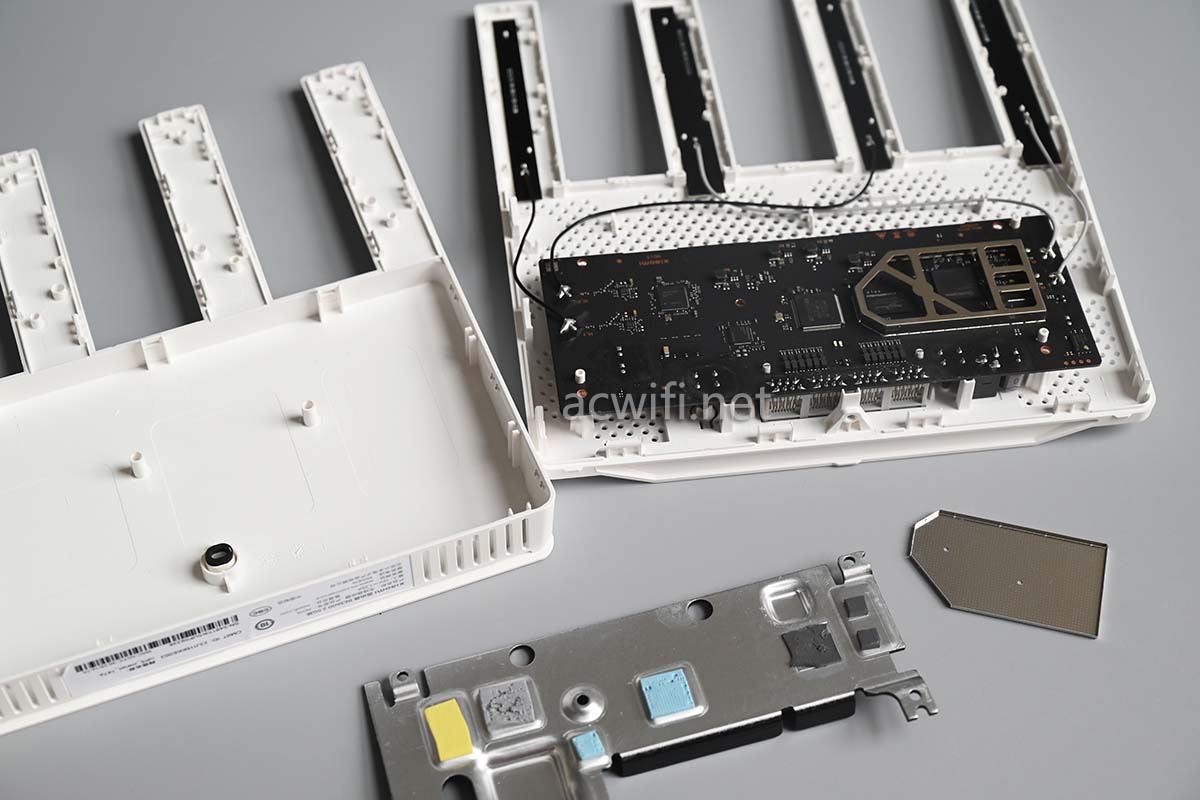
Prying open the sole remaining shielding can on this side reveals a silicone thermal pad. Since no other major active ICs reside on this face, we reassembled the heatsink to inspect the primary component side:
III. Detailed IC & Hardware Component Analysis
Removing the metal shielding can over the main section exposes the central processing unit and RF stage:
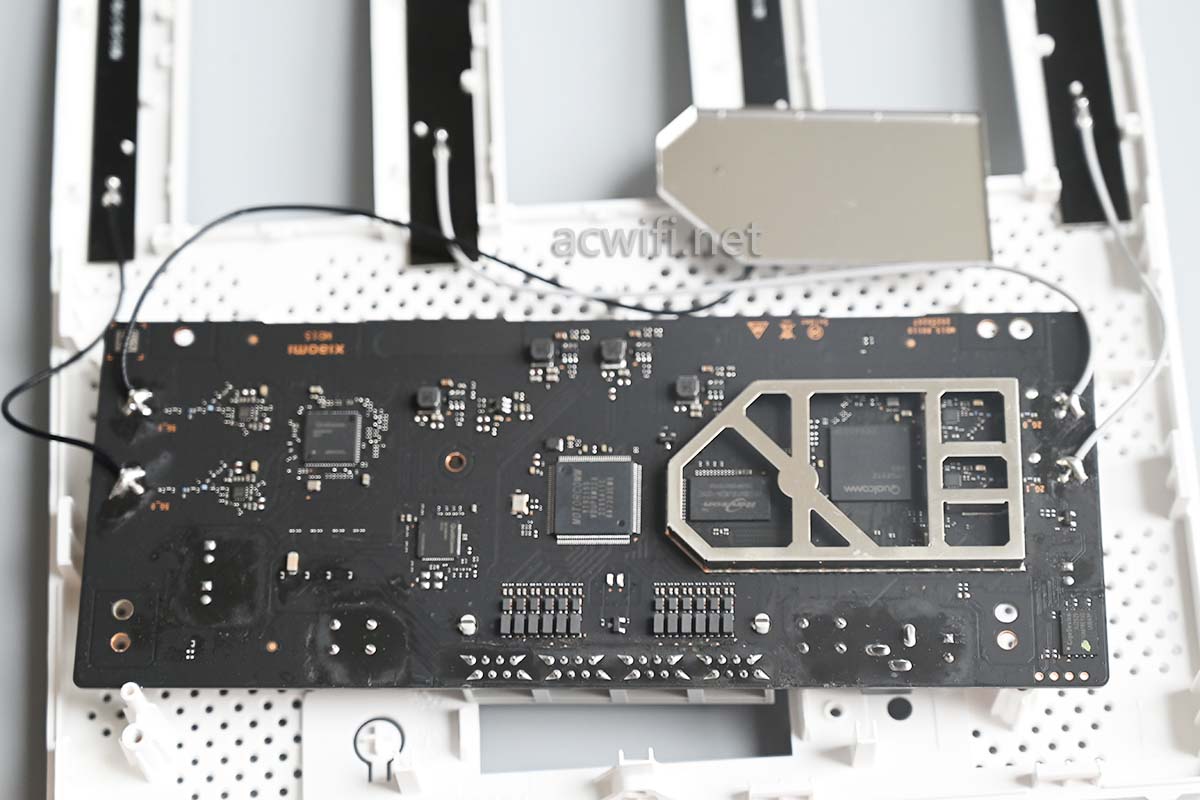
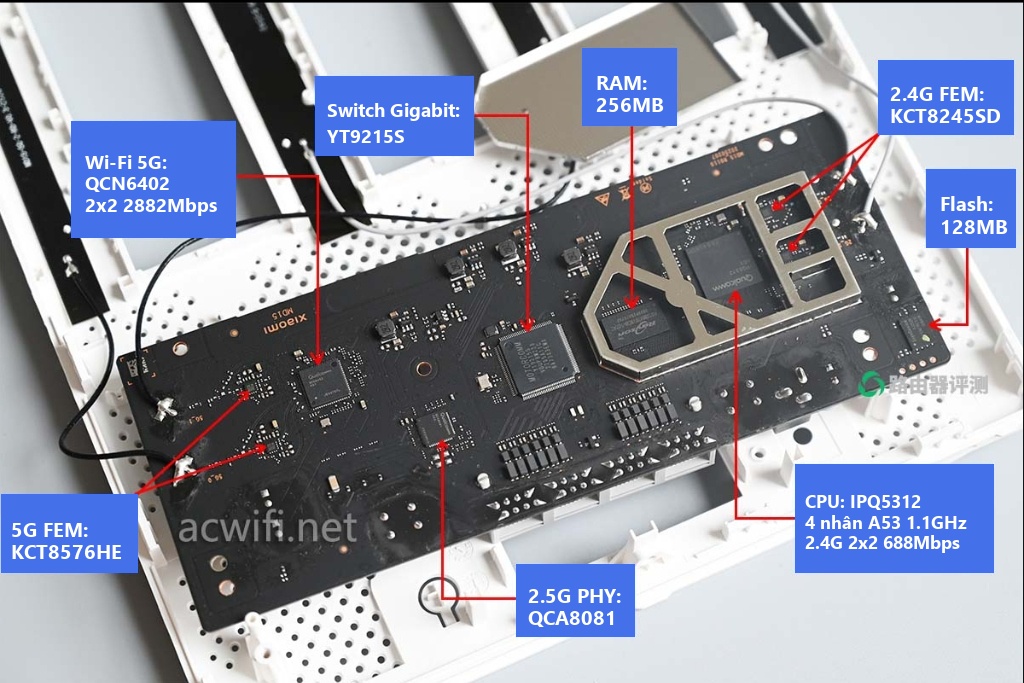
1. Main SoC & 2.4GHz Wi-Fi
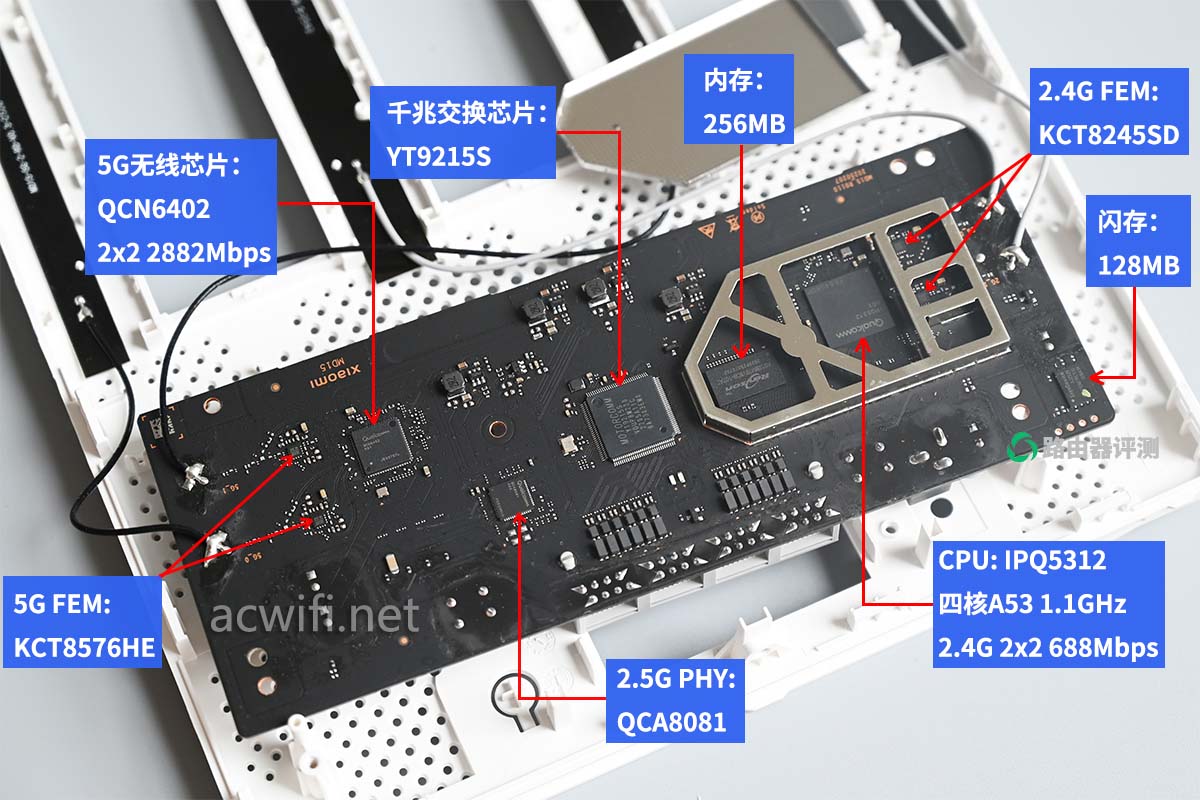
The core processor remains the Qualcomm IPQ5312:
- Quad-core ARM Cortex-A53 running at up to 1.1GHz.
- Integrated Wi-Fi 7 2.4GHz radio inside the SoC, supporting 2x2 MIMO, 40MHz channel width, and a theoretical PHY rate of up to 688 Mbps.
- Paired with two dedicated 2.4GHz front-end modules (FEMs) — the KCT8245SD from Shanghai CanSemi (Kangxi Communication).
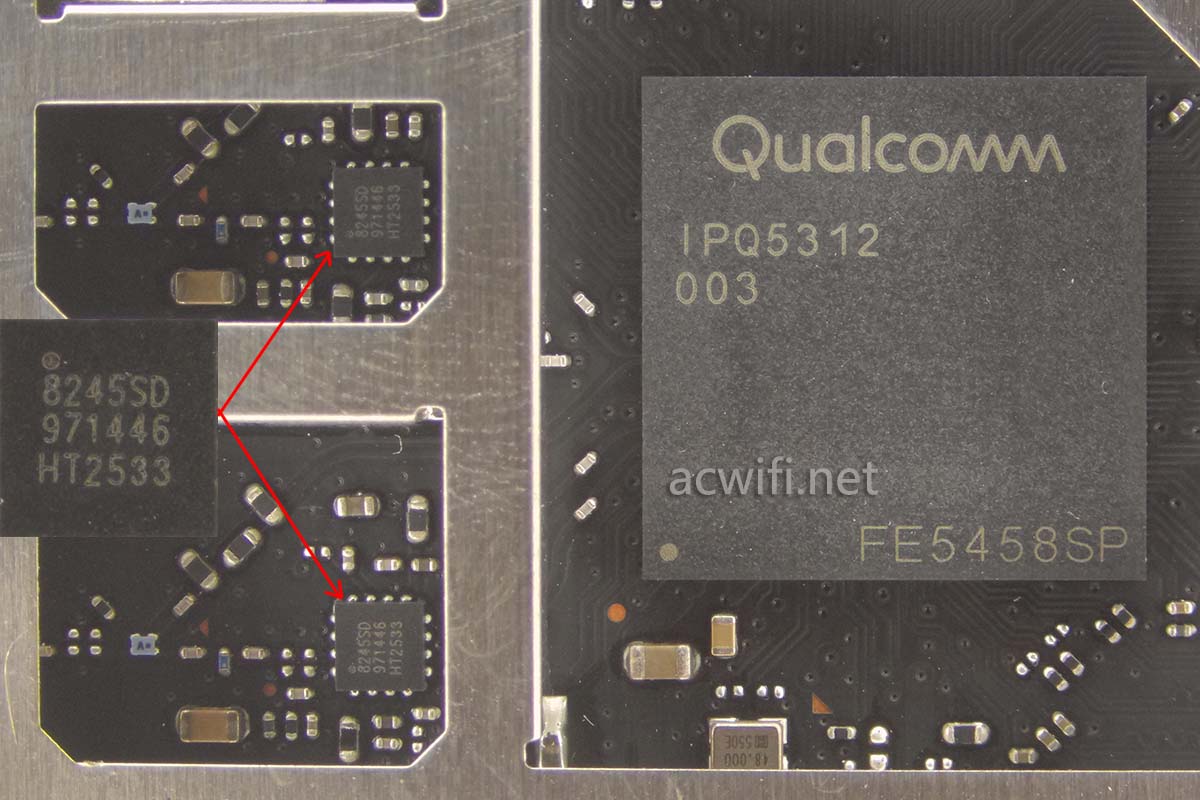
📂 Detailed RF parameters for KCT8245SD 2.4G FEM ▼
Transmit gain: 31.0dB @ 5VReceive gain: 15.0dB @ 5VNoise figure: 2.5dB @ 5VOutput power: +20.5dBm @ -43dB DEVM, HE40/MCS11, 5V +21.5dBm @ -40dB DEVM, HE40/MCS11, 5V +23.0dBm @ -35dB DEVM, VHT40/MCS9, 5V +24.0dBm @ -30dB DEVM, HT20/MCS7, 5V2. DRAM Memory
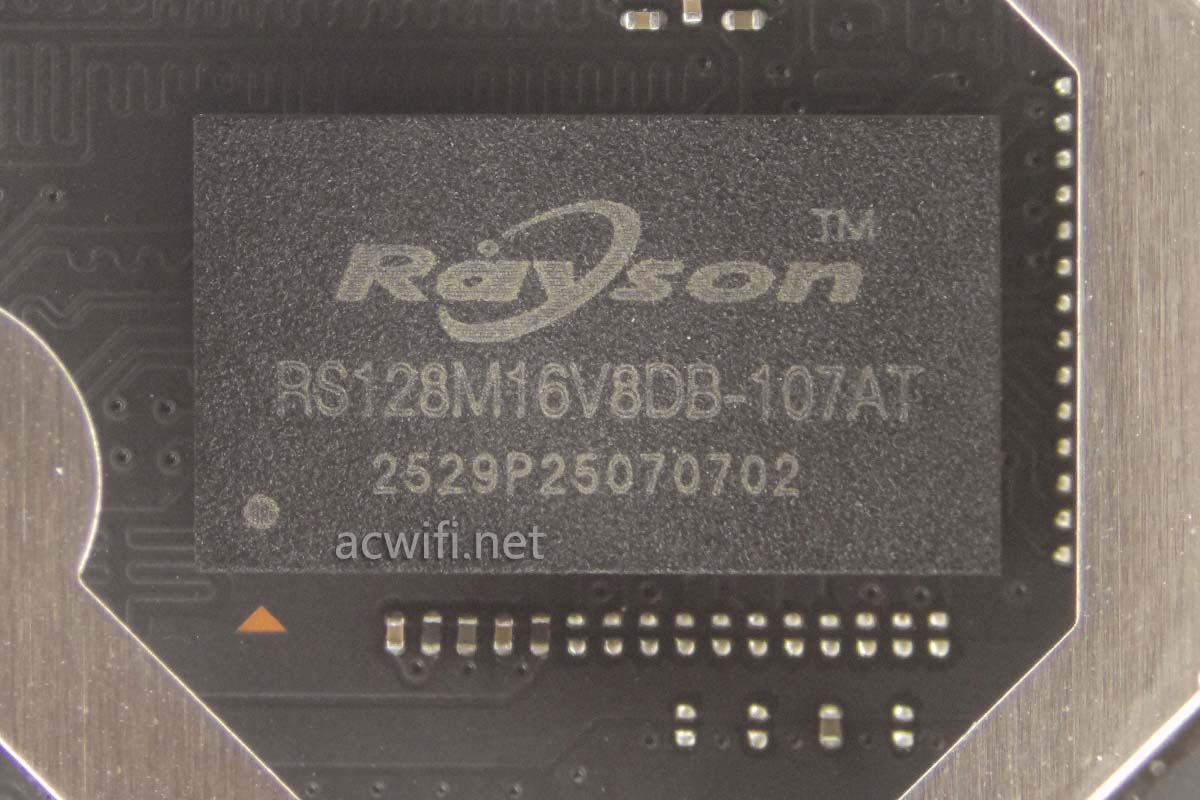
Located right next to the SoC is an SDRAM chip from King Memory with part number RS128M16V8DB-107AT:
- Standard: DDR3-1866
- Capacity: 256MB
3. Gigabit Switch IC
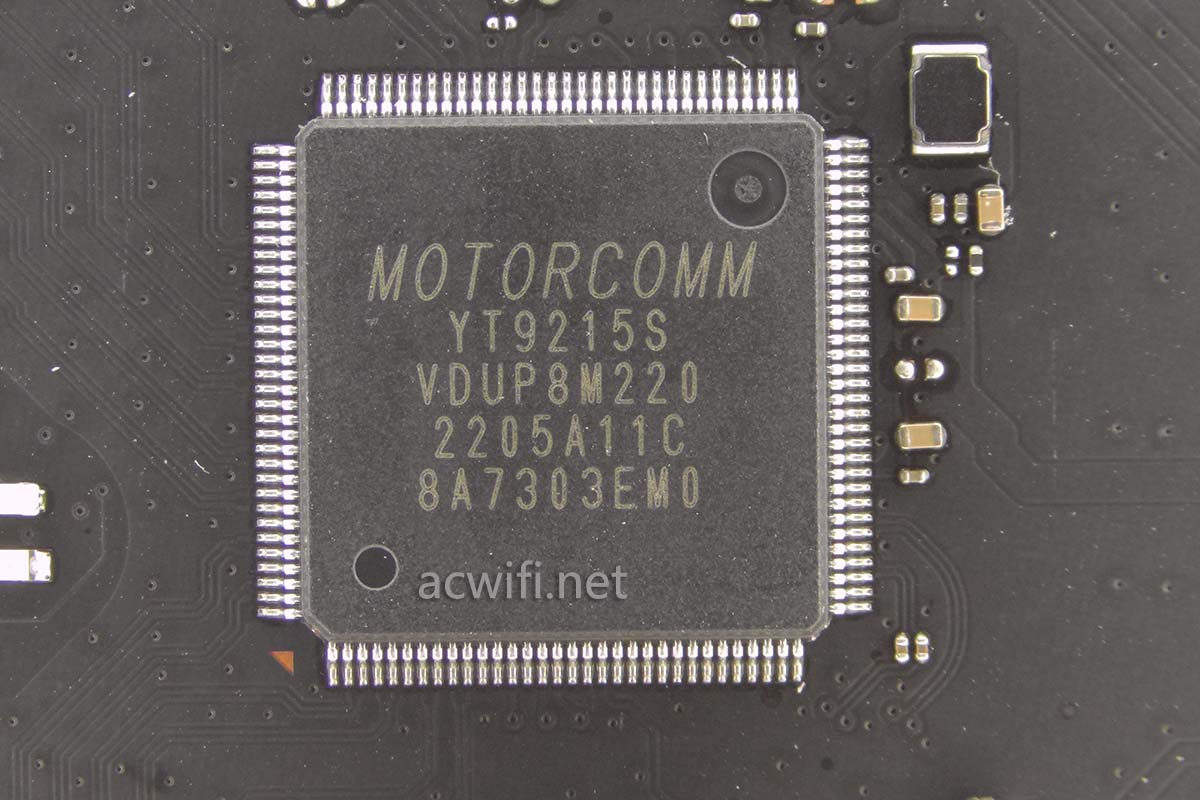
The Gigabit Ethernet switching fabric is powered by the Motorcomm YT9215S:
4. 2.5GbE PHY Chip
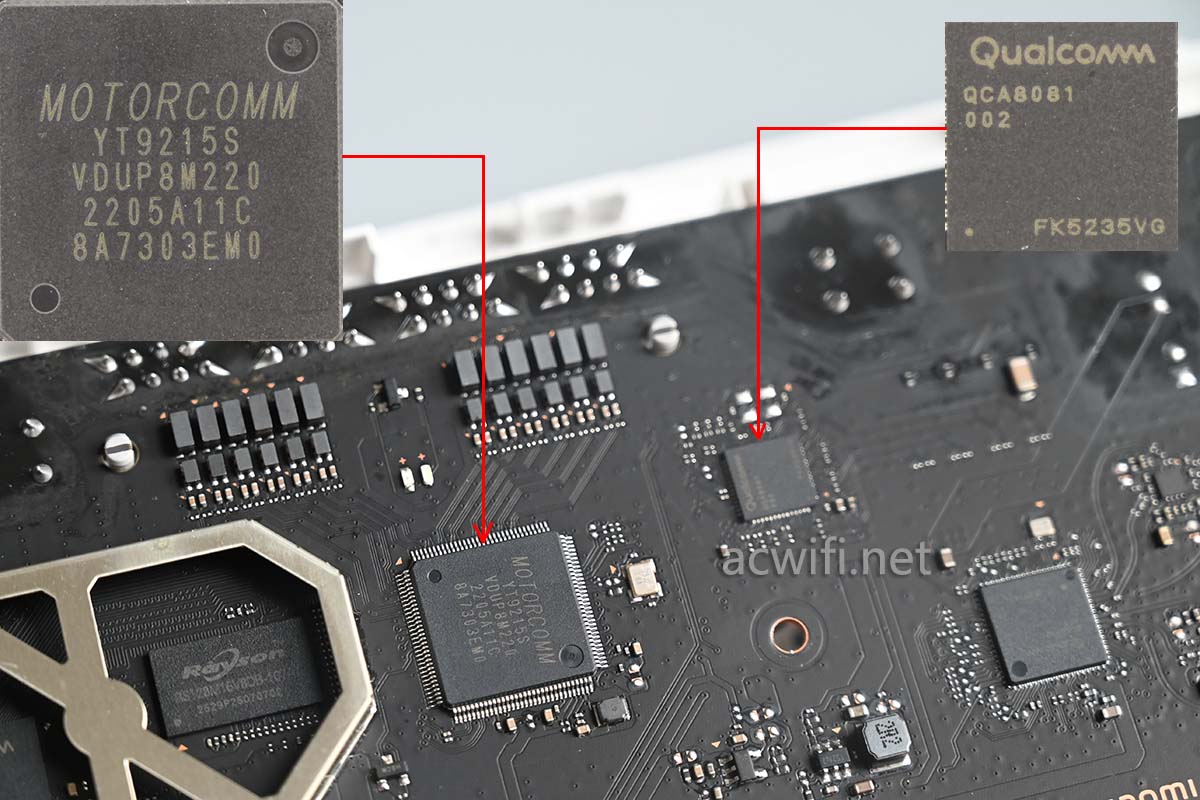
The 2.5G network port connects to a dedicated Qualcomm QCA8081 2.5G PHY transceiver:
5. 5GHz Wi-Fi Radio & Dedicated FEMs
The 5GHz band is driven by the Qualcomm QCN6402:
- Wi-Fi 7 compliant, supporting 2x2 MIMO.
- Supports 160MHz channel bandwidth and high-density 4096-QAM modulation.
- Maximum wireless link rate reaches 2882 Mbps.
- Accompanied by two discrete external FEMs, the KCT8576HE from Shanghai CanSemi:
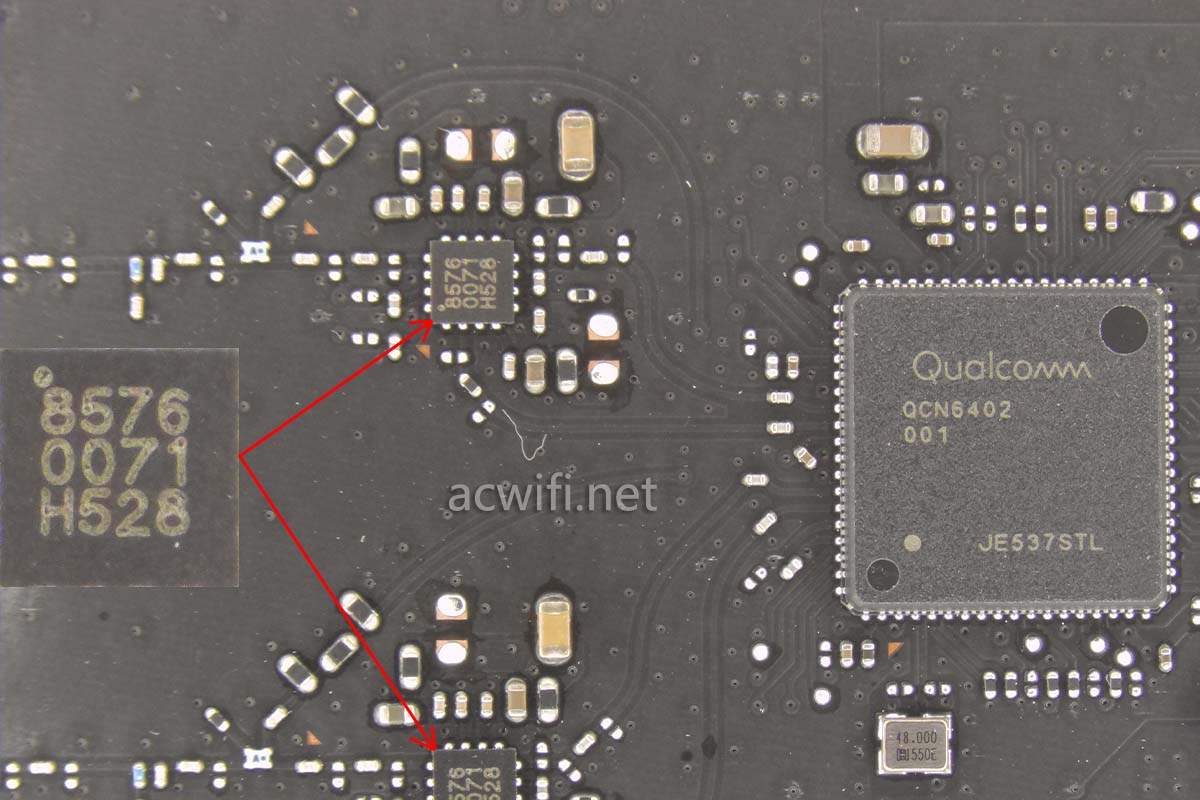
📂 Detailed RF parameters for KCT8576HE 5G FEM ▼
Transmit gain: 30.5dB @ 5VReceive gain: 15.5dB @ 5VNoise Figure: 1.8dB @ 5VOutput power: +18dBm @ -43dB EVM, HE160/MCS11, 5V +21dBm @ -40dB EVM, HE160/MCS11, 5V +23dBm @ -35dB EVM, VHT80/MCS9, 5V +24dBm @ -30dB EVM, HT20/MCS7, 5V6. Flash ROM
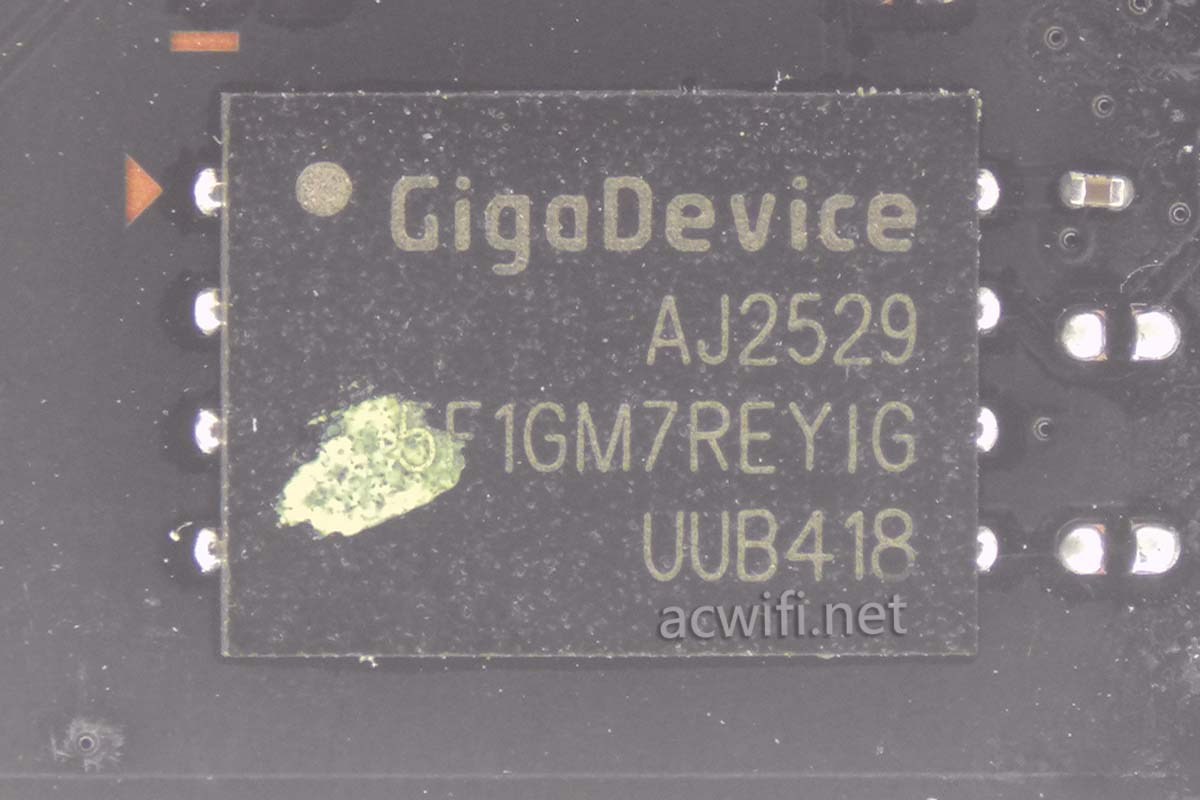
Firmware storage is handled by a GigaDevice GD5F1GM7REYIG 128MB SPI NAND flash memory chip:
Complete disassembly overview:
Here is a full component map summarizing all key silicon chips on the Xiaomi BE3600 1.25A PCB:
IV. Real-World Speed Testing & Fast Roaming Capabilities
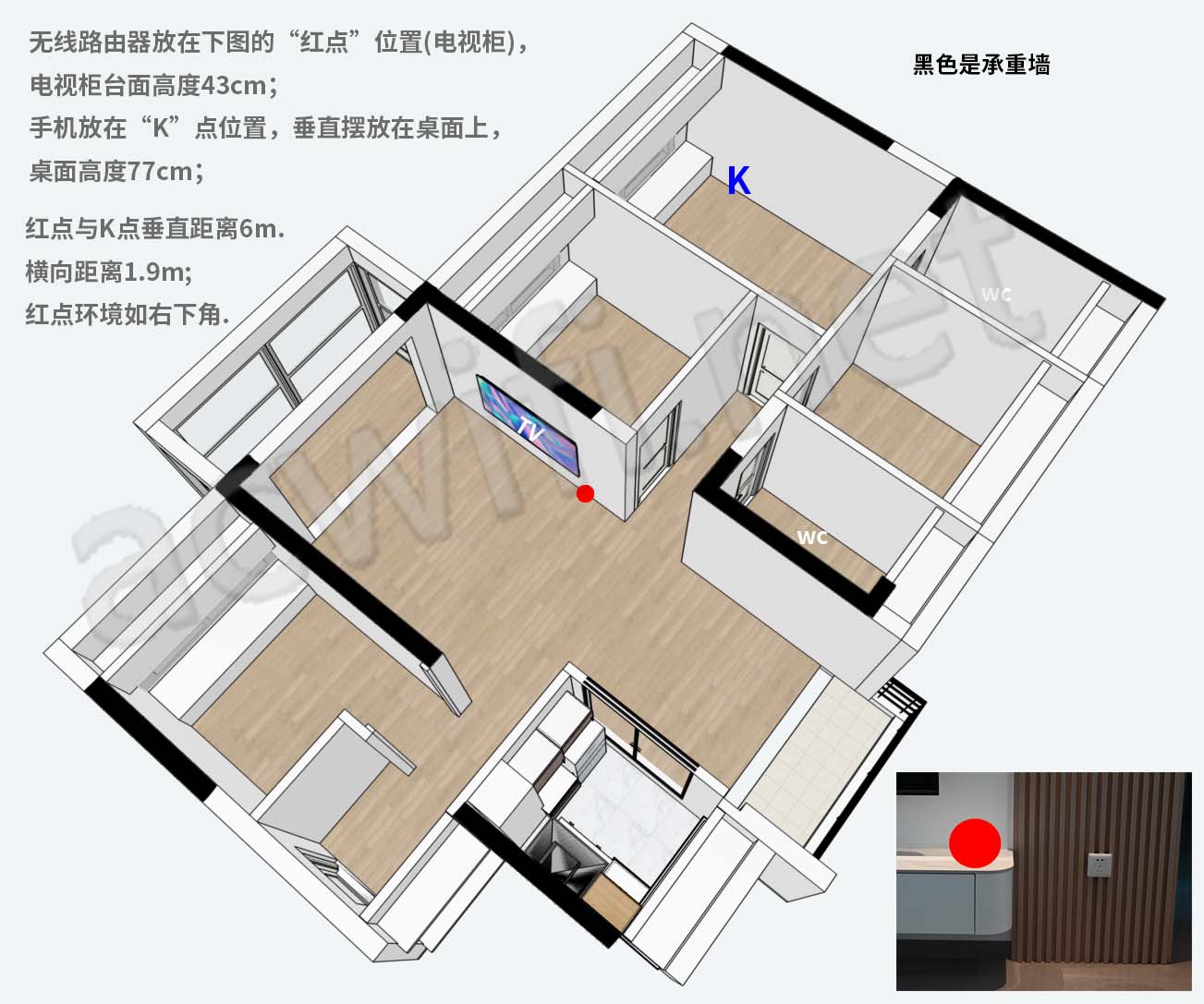
Real-world wireless speed tests were performed at Point K (a challenging location situated behind multiple concrete walls in a standard residential floor plan):
Speed test results across five different smartphone models at Point K:
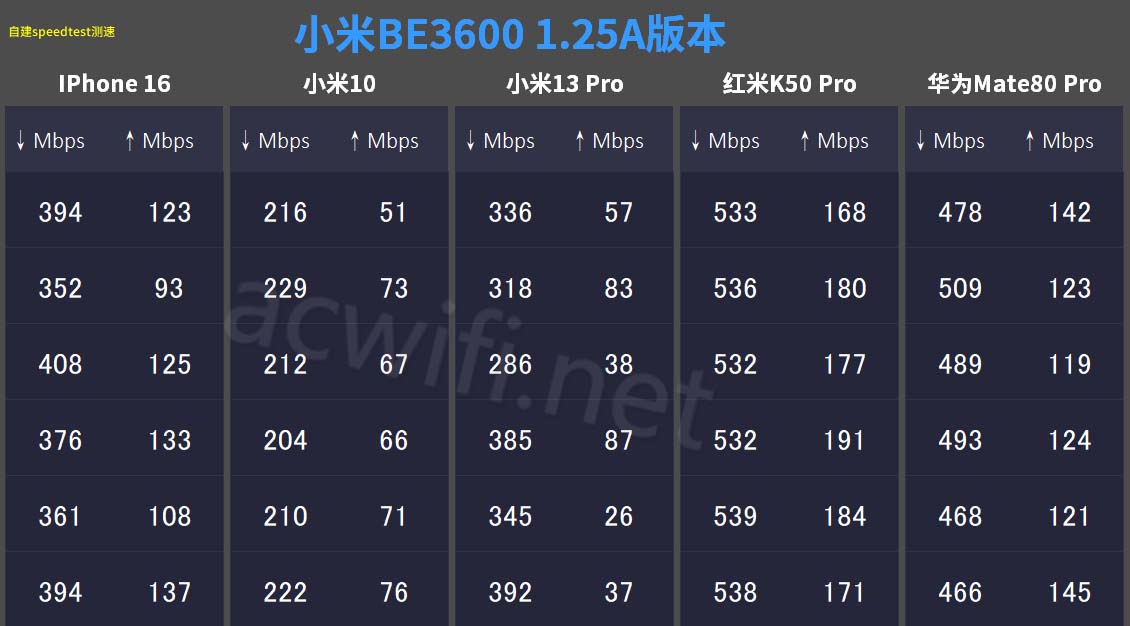
Note: These tests reflect practical residential environments for general consumer reference.
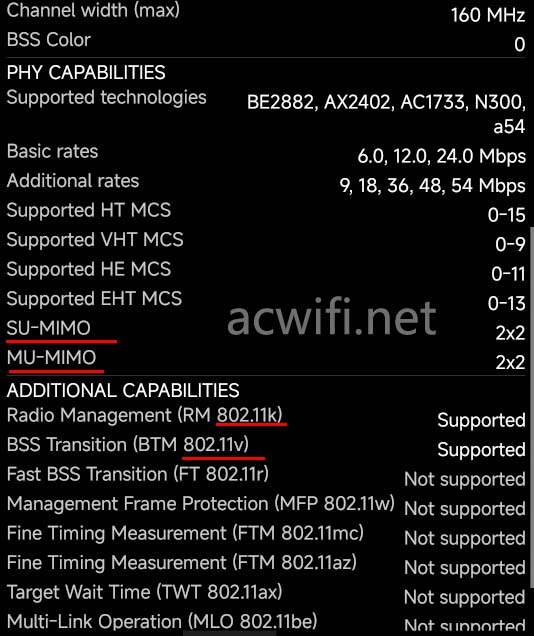
Regarding Fast Roaming protocol support:
- Out of the box, the firmware supports both 802.11k (RRM) and 802.11v (BSS-TM).
- Beamforming and MU-MIMO are fully enabled by default:
V. Verdict & Summary
Overall, on this Xiaomi BE3600 1.25A white version:
- Core silicon remains completely intact: The Qualcomm IPQ5312 SoC, QCN6402 5GHz radio, QCA8081 2.5G PHY, and all four independent CanSemi FEMs are identical to the launch revision. Wireless throughput and operational power draw match the original batch.
- Cost-down adjustments: Six metal EMI shielding cans have been eliminated across the board, two electrolytic filtering capacitors were dropped, the aluminum heatsink was trimmed down, and the bundled adapter rating was lowered from 1.5A to 1.25A.
Selling at approximately 140 RMB (around $20 USD) on Chinese e-commerce platforms, getting an authentic Wi-Fi 7 router powered by a Qualcomm platform with an integrated 2.5GbE port remains an unbeatable value proposition.
Good luck with your setup!
If you have any questions or insights regarding the Xiaomi BE3600 series, feel free to leave a comment below.
Original source: 小米BE3600拆机1.25A版本白色-路由器交流
Comments & Discussion
Share your thoughts, ask questions and feedback