TP-Link TL-7DR7299 Teardown: BE7200 Wi-Fi 7, Dual 10G Ports, Quad 2.5G Ports, and MediaTek MT7988A

- I. Unboxing, Accessories & Power Consumption
- II. Industrial Design, Antenna Array & Port Layout
- III. PCB Teardown & Thermal Management
- IV. Chipset & Semiconductor Architecture Breakdown
- 1. Central Processor (SoC)
- 2. System Memory (RAM)
- 3. Multi-Gigabit Switching & 10G PHY
- 4. Flash Storage
- 5. Wi-Fi Baseband & MAC Processor
- 6. 2.4GHz RF Transceiver & External FEMs
- 7. 5GHz RF Transceiver & High-Power FEM Array
- 8. Peripheral ICs
- V. Top-Side Heatsinks & Assembly Reversal
- VI. Real-World Benchmarking & Wireless Performance
- 1. 64-Byte Small Packet Forwarding
- 2. Point K Wireless Speed Test (Obstacle-Heavy Corner)
- 3. Roaming Protocols & Beacon Capabilities
- 4. Over-The-Air Throughput with MediaTek MT7927 Wi-Fi 7 Client
- 5. Web Management UI
- VII. Final Verdict & Buying Recommendations
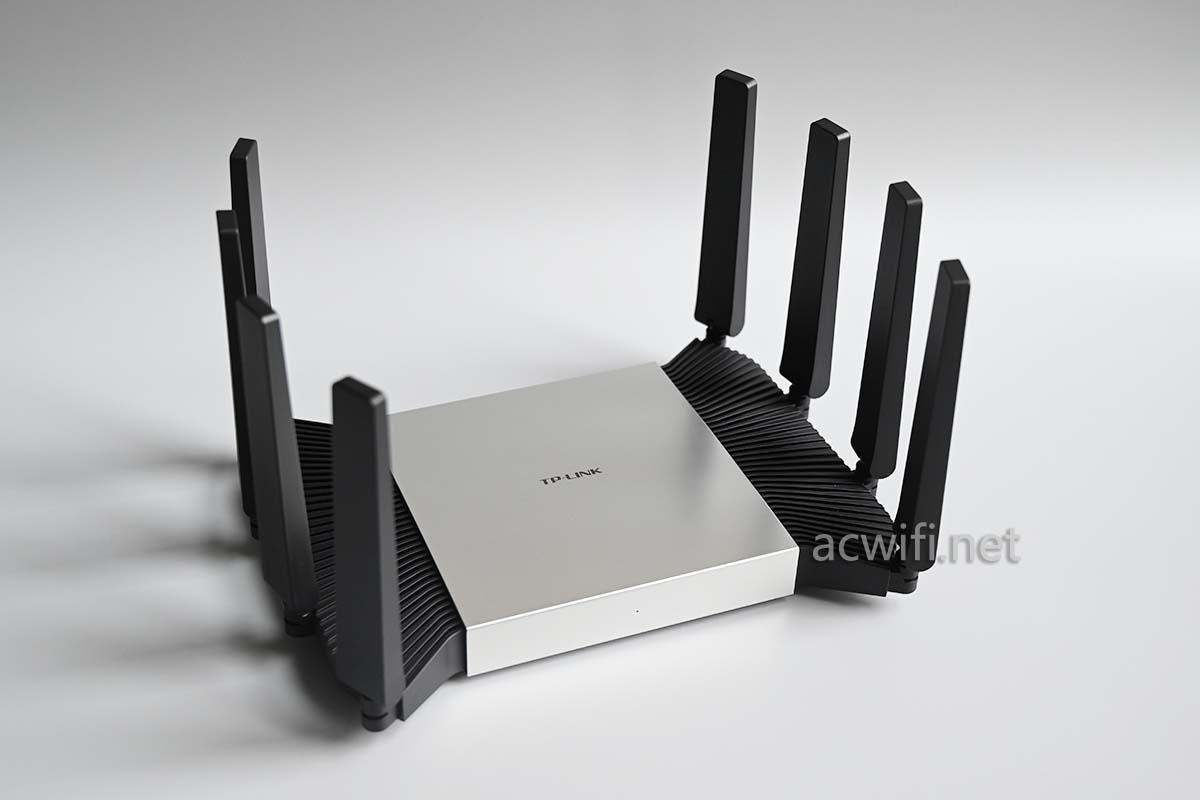
The TP-Link TL-7DR7299 might easily be the coolest-running wireless router to date housed in the iconic “Feiliu” dual-band chassis (the classic mold shared with the XDR5480, XDR6080, and 7DR7290).
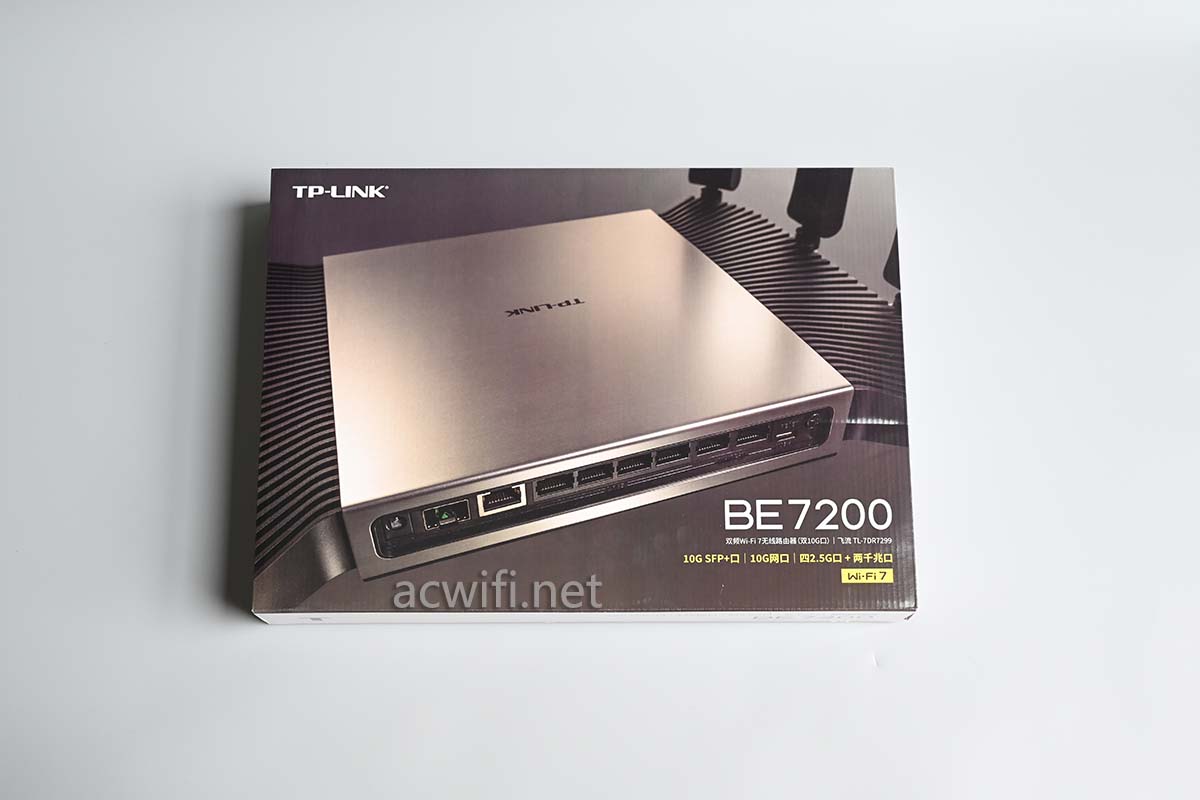
In the dual-band BE7200 Wi-Fi 7 space, the 7DR7299 makes a bold statement by packing dual 10-Gigabit ports (one 10G SFP+ optical cage and one 10G RJ45 copper port), accompanied by four 2.5GbE ports, two Gigabit ports, and a USB 3.0 Type-C interface—all under a price tag of roughly 999 RMB (around $140 USD).
Below is the complete board disassembly, semiconductor component breakdown, and bench performance validation originally conducted by ACWiFi.
I. Unboxing, Accessories & Power Consumption
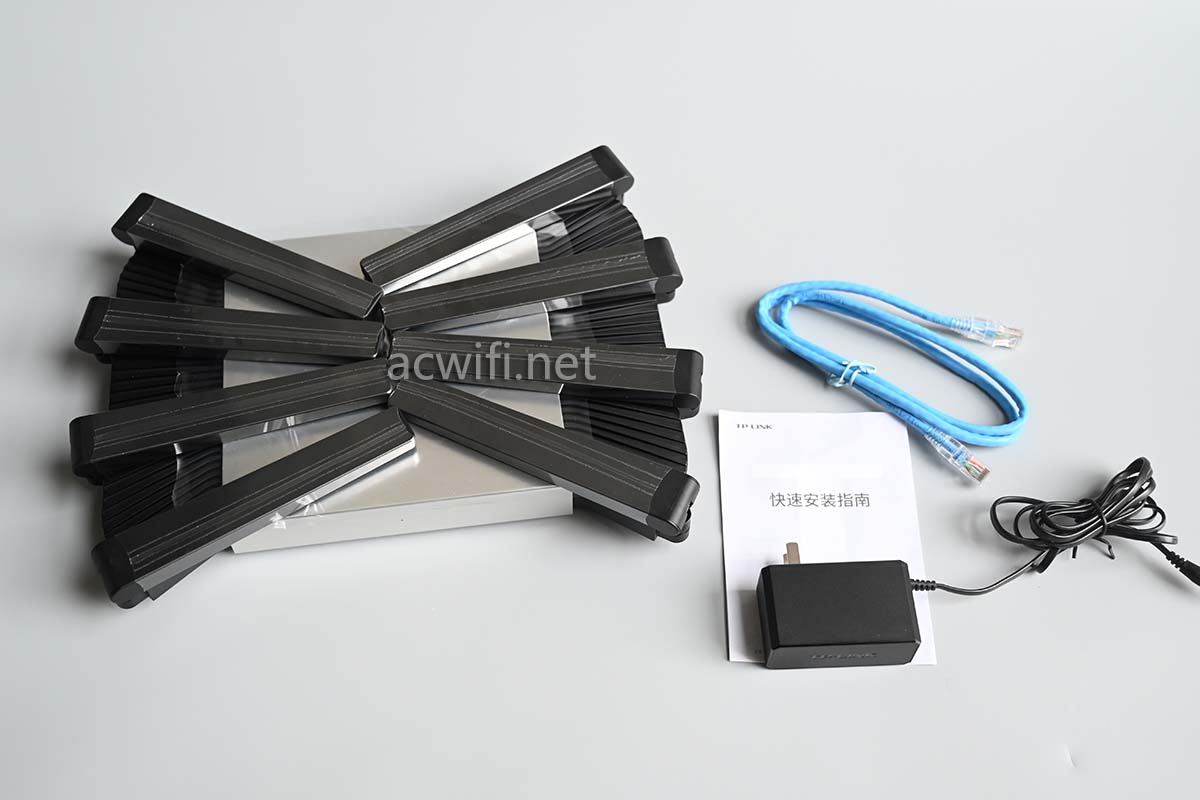
Inside the retail box, you’ll find the main TL-7DR7299 unit, a heavy-duty DC power adapter, and a molded patch cable:
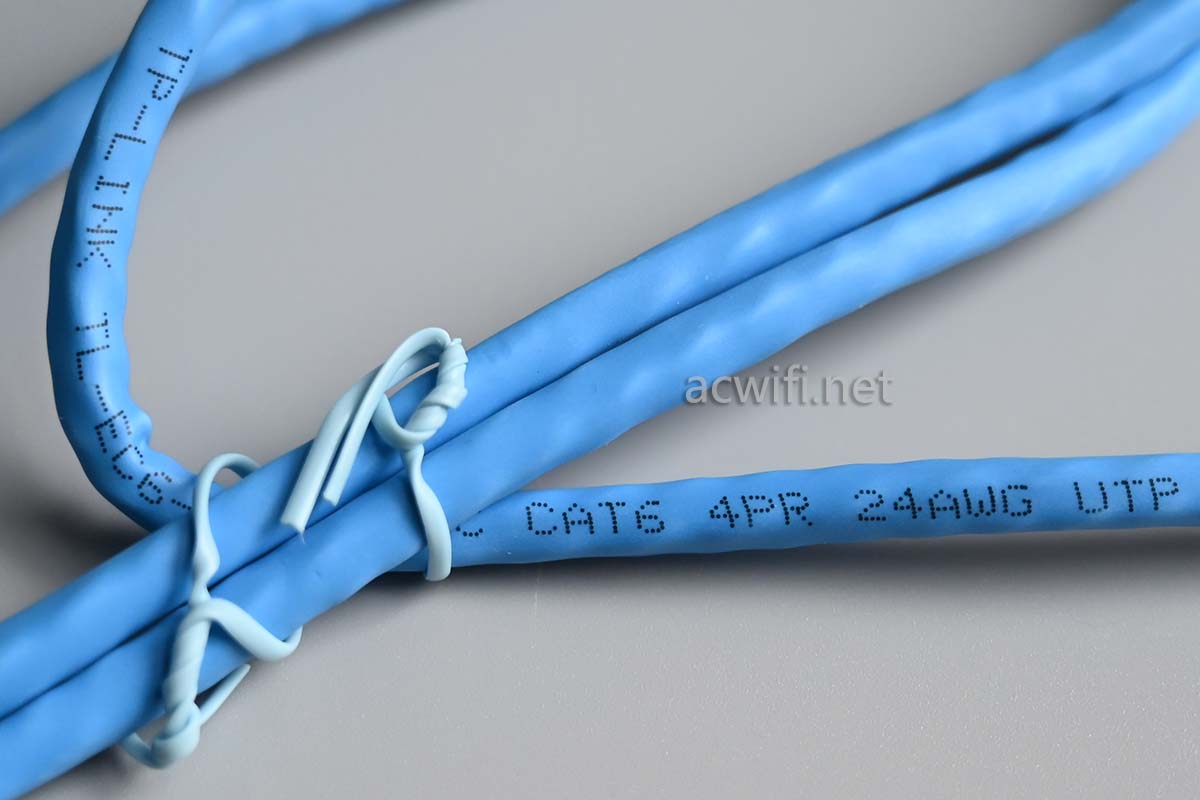
The bundled network cable is a Cat6 24AWG patch cord, manufactured directly in-house by TP-Link:
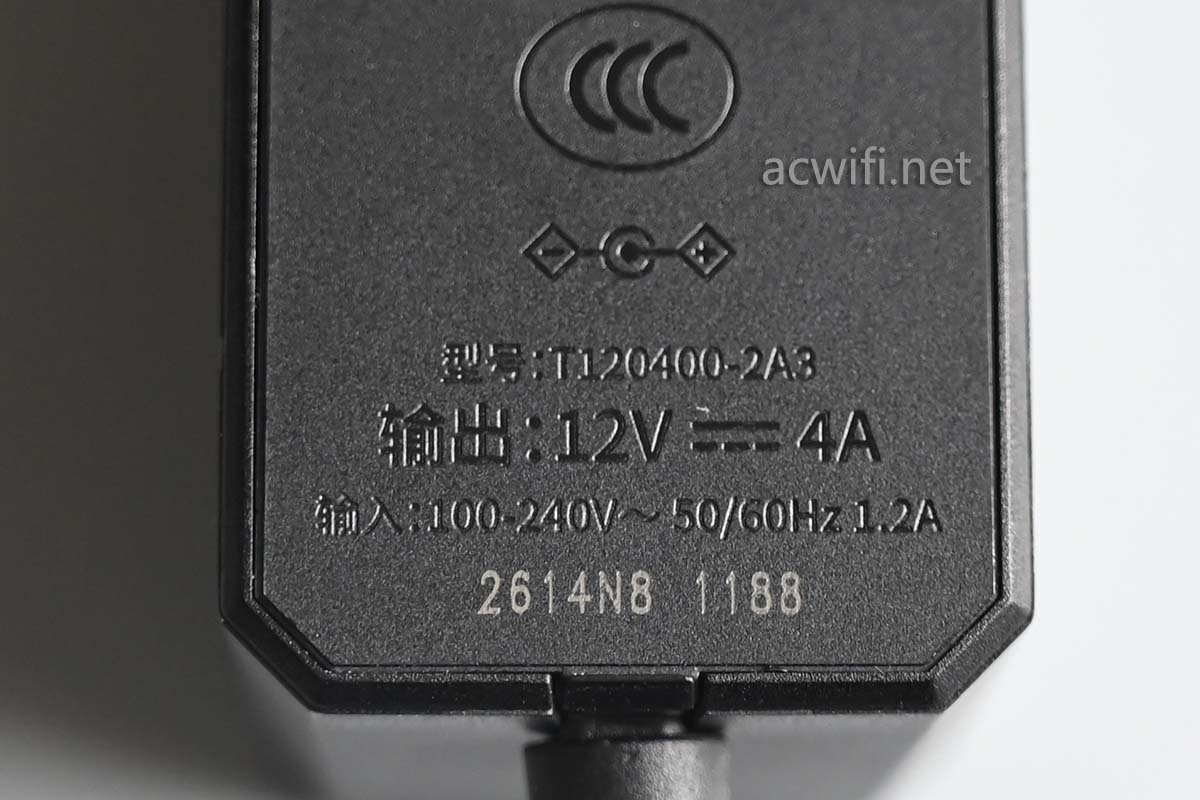
The power brick is rated at 12V / 4A (48W nominal output), providing plenty of headroom for active optical modules and USB storage:
Real-world power consumption measured at the wall:
- Standby idle (Wi-Fi active, no Ethernet cables plugged): 8.2W.
- With all four 2.5GbE ports linked: 10.8W.
- Adding one 10G multimode SFP+ optical transceiver and one 10G RJ45 link: 13.3W.
- Fully populated port configuration (all ports linked): 13.8W.
Drawing only 13.8W with all high-speed ports fully populated—including dual 10G interfaces and four 2.5G links—is exceptionally efficient for a high-performance multi-gigabit router. This low thermal footprint is driven by the 12nm CPU and the 6nm Wi-Fi baseband/MAC silicon.
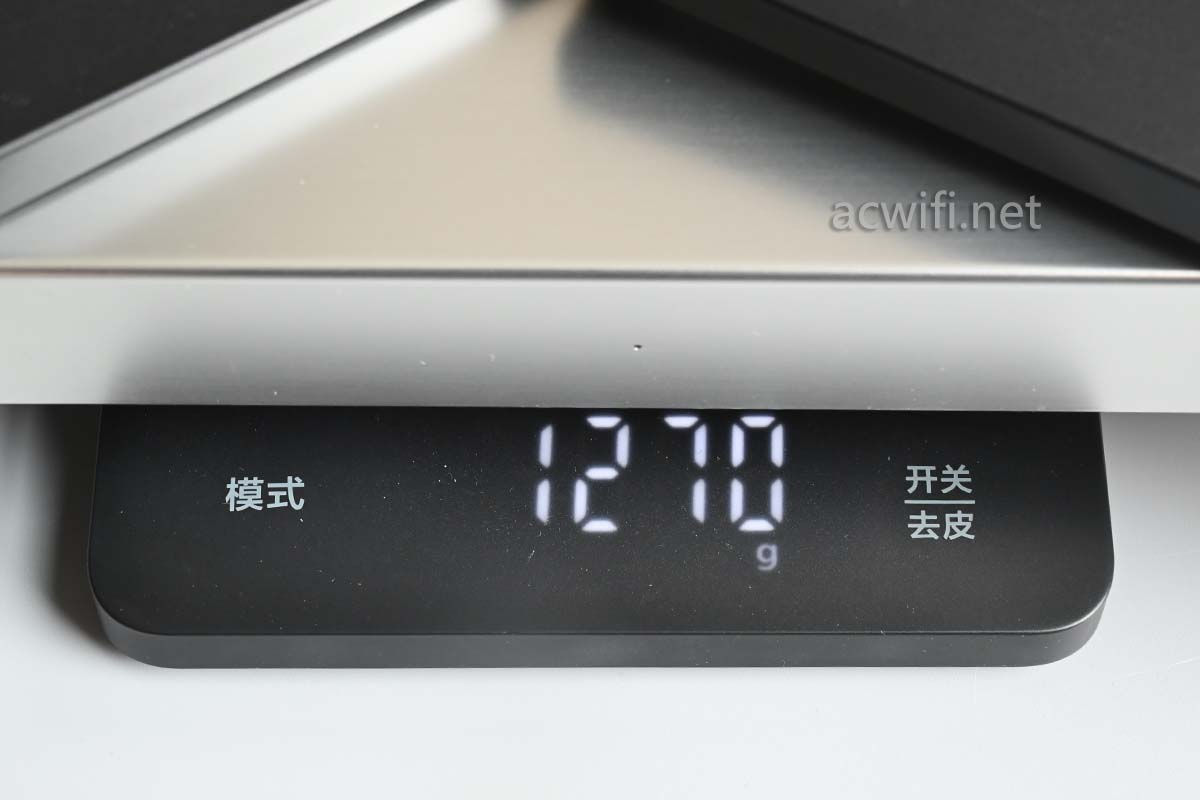
With protective films removed from the chassis and antennas, the bare unit weighs in at 1270 grams (retail packaged weight is 1994g):
II. Industrial Design, Antenna Array & Port Layout
The TL-7DR7299 retains the aggressive, aerodynamic aesthetic of TP-Link’s Feiliu series. Router enthusiasts frequently note that any model sharing this chassis chassis provides consistently reliable RF coverage and strong convection cooling:
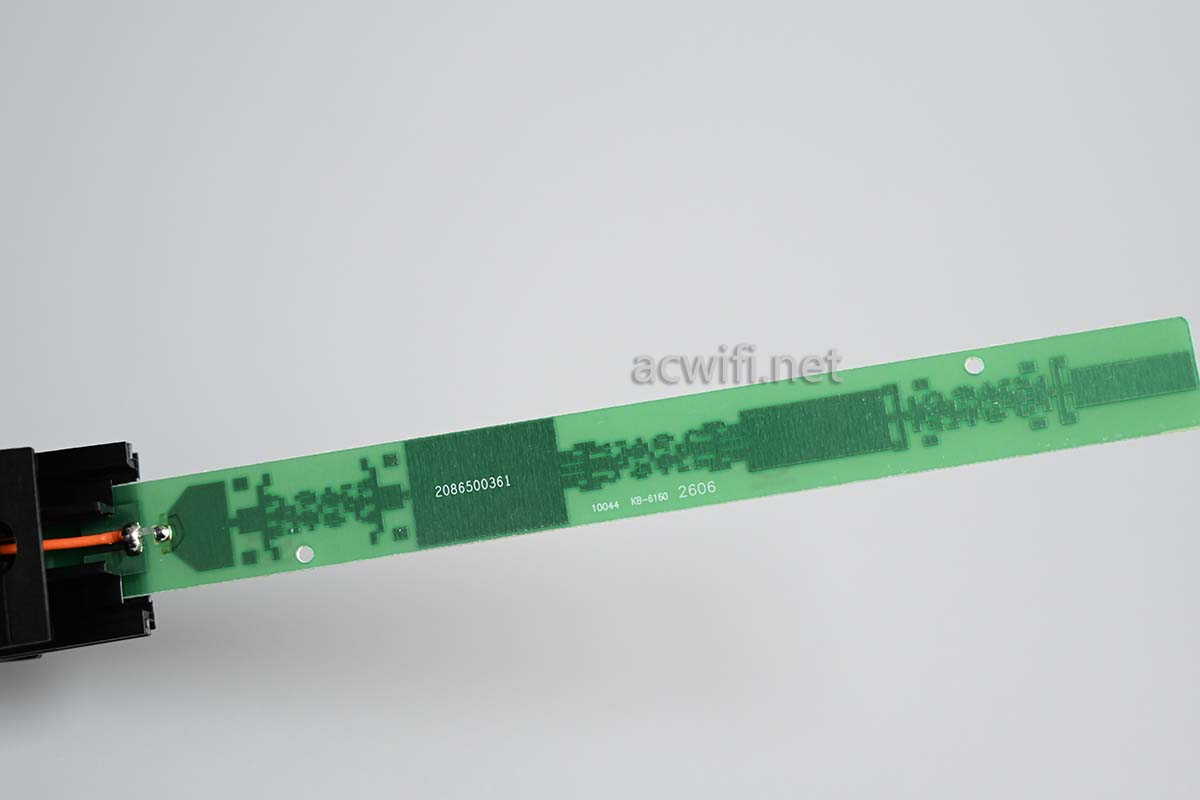
The external antennas feature a “Pixel Antenna” geometric layout, designed to enhance directional gain and signal propagation:
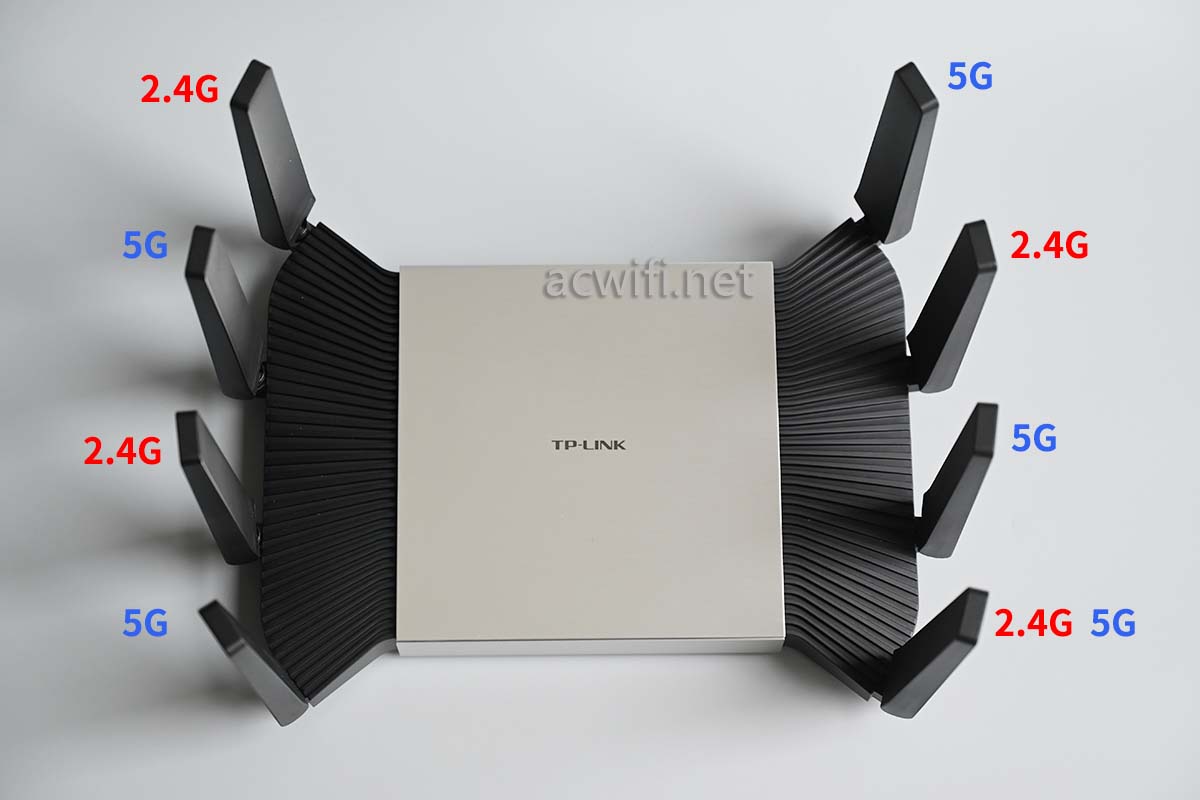
Antenna distribution across the 2.4GHz and 5GHz bands:
- 2.4GHz utilizes a 4T4R configuration (4 transmit, 4 receive streams).
- 5GHz utilizes a 4T5R configuration (4 transmit, 5 receive streams) to boost client uplink reception.
- Because the 5GHz radio connects five distinct antenna paths, one of the six external antennas is a dual-band element (serving both 2.4G and 5G), while the remaining five are single-band dedicated antennas:
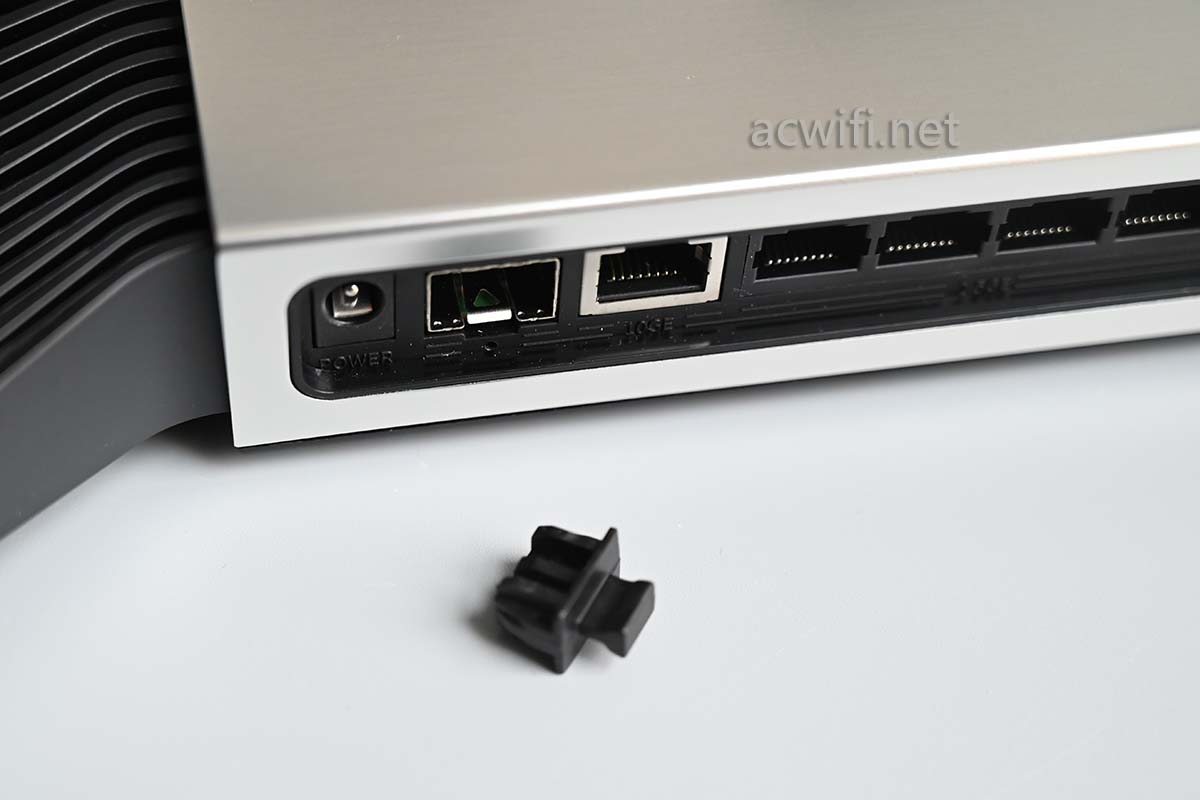
The rear I/O layout is the centerpiece of the device: Dual 10G interfaces, featuring one 10G SFP+ cage alongside a 10G multi-gigabit copper RJ45 port:
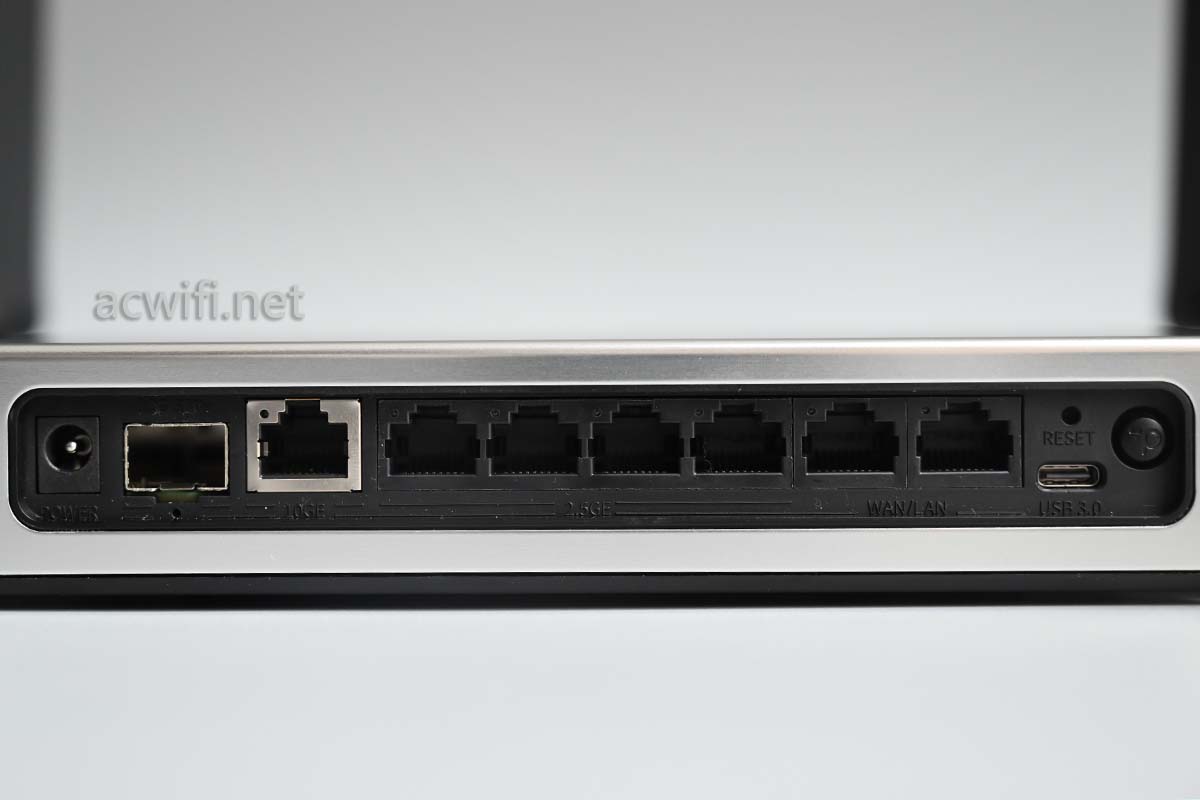
Rounding out the connectivity array are four 2.5GbE ports, two 1GbE ports, and a USB 3.0 Type-C port:
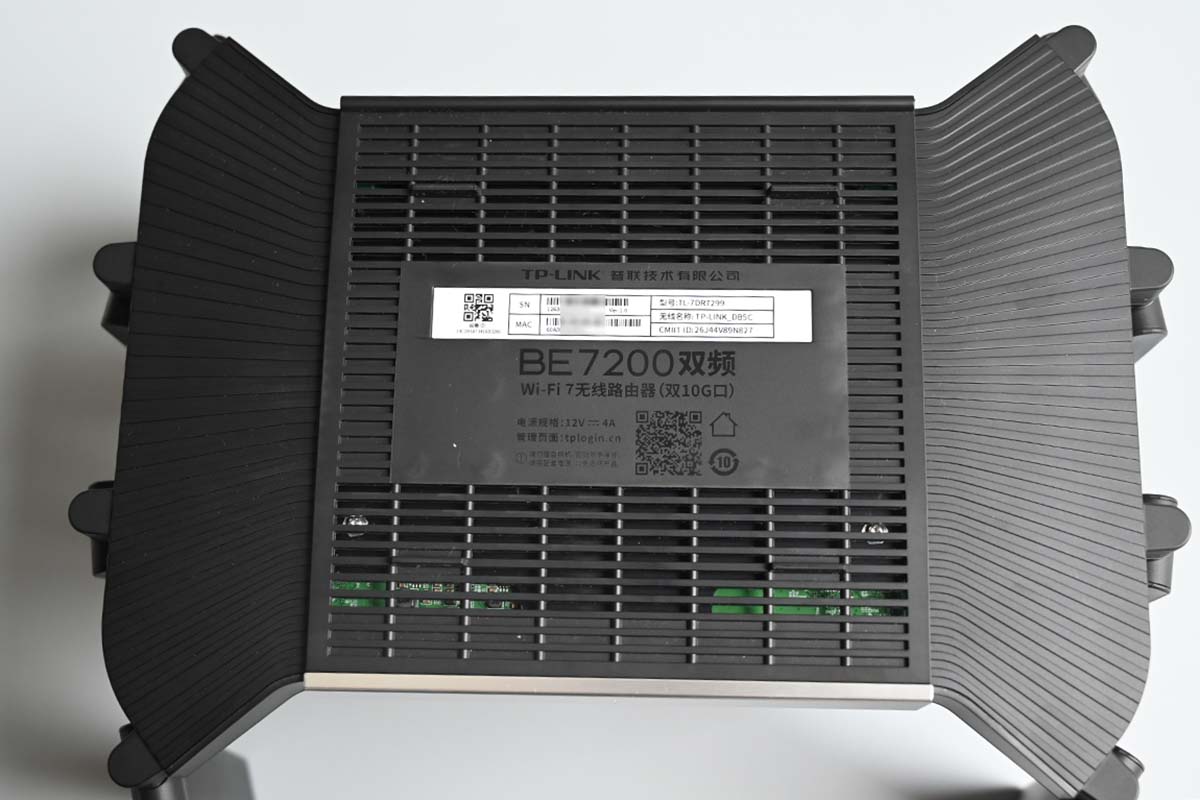
The bottom panel features an extensive honeycomb mesh pattern for passive convective intake:
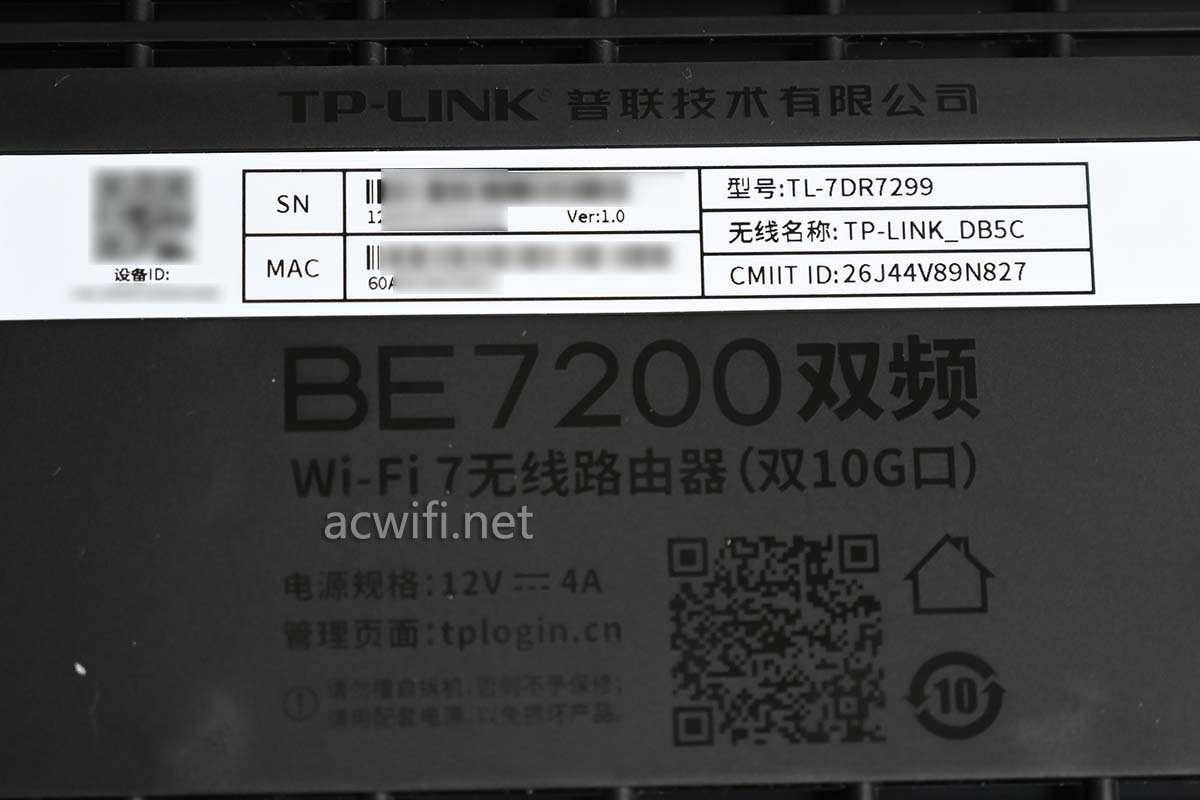
The regulatory label confirms the model identifier as TL-7DR7299, hardware version v1.0:
III. PCB Teardown & Thermal Management
Removing two screws concealed beneath the bottom label allows prying open the snap-fit perimeter clips:
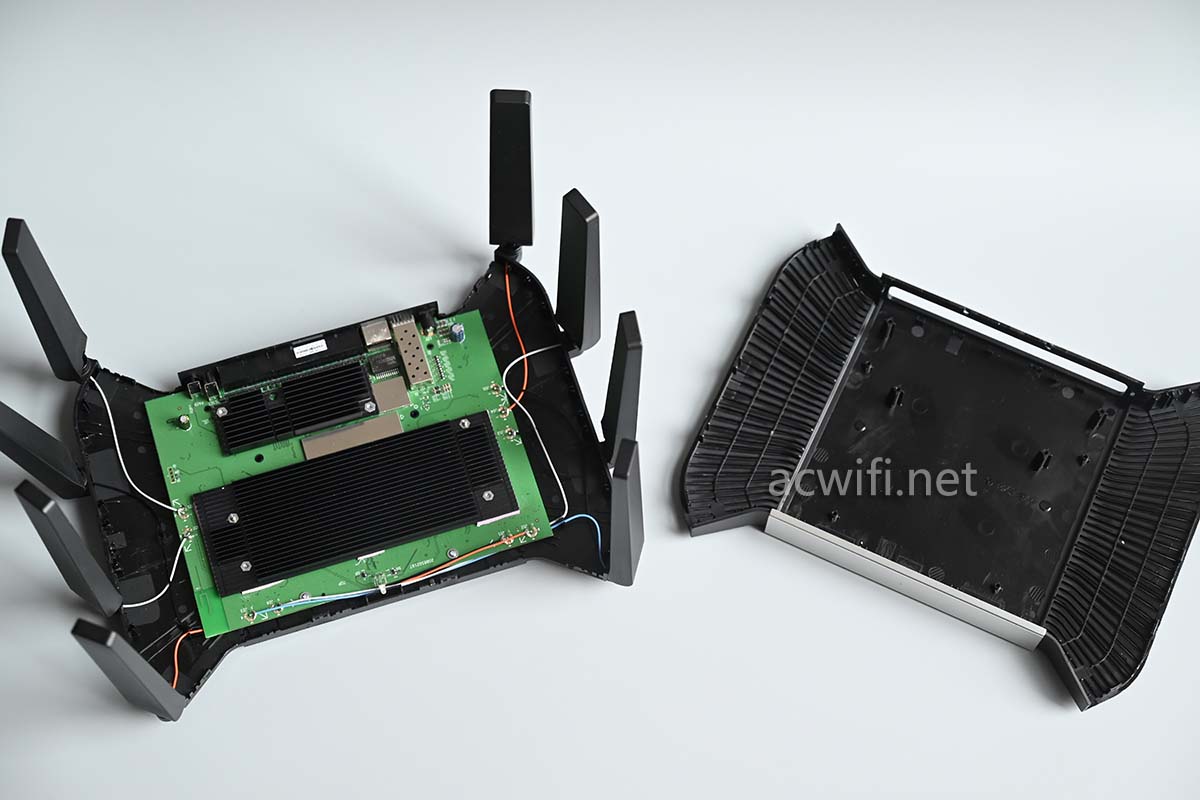
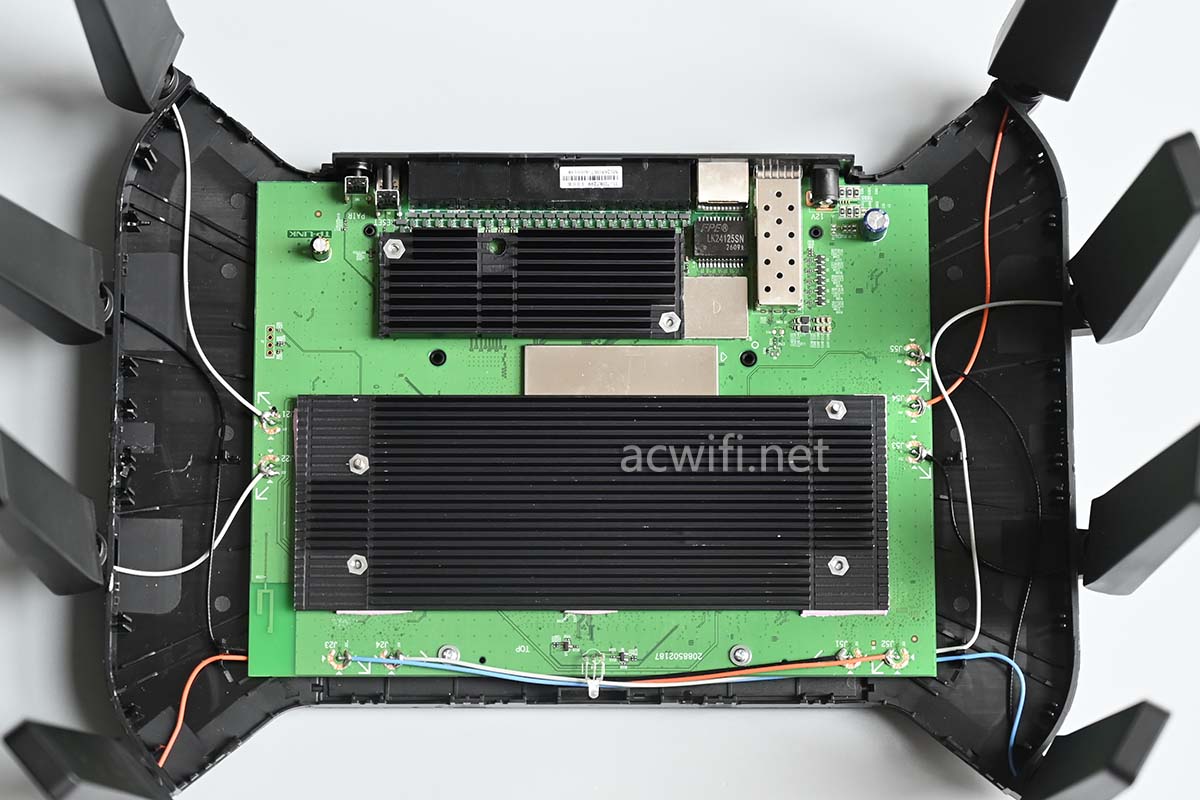
Inside, the TL-7DR7299 PCB is noticeably larger than that of the 7DR7290:
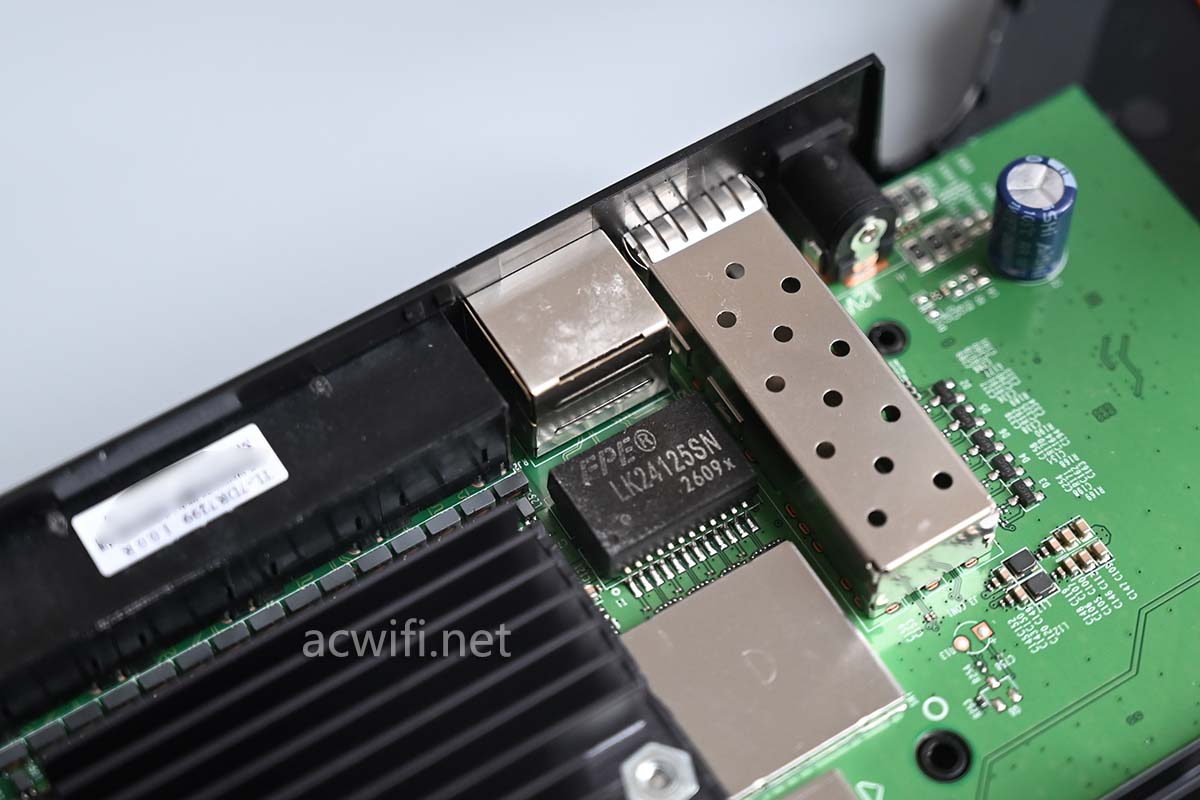
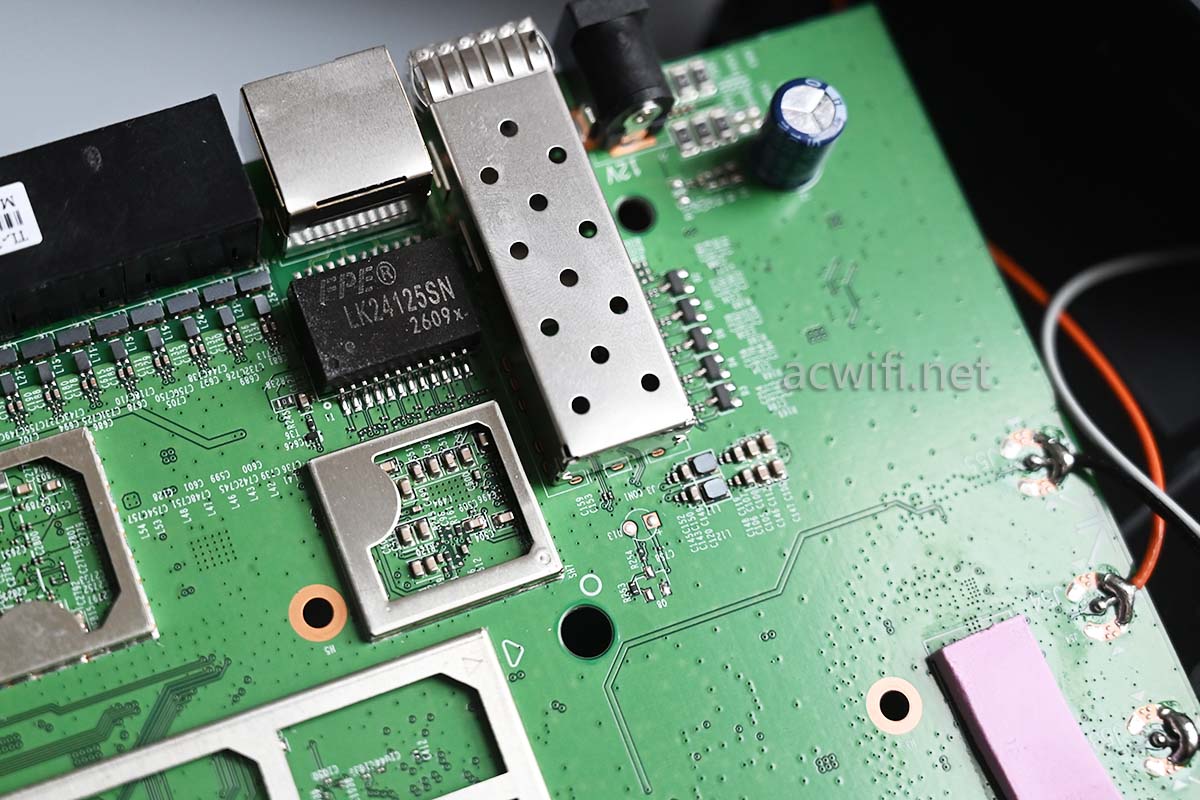
The 10G RJ45 port utilizes a Maxim LK24125SN network isolation transformer:
The RF feeder coaxial cables flanking the board are relatively short. To flip the PCB over, the 2.4GHz feeder cables must be desoldered:
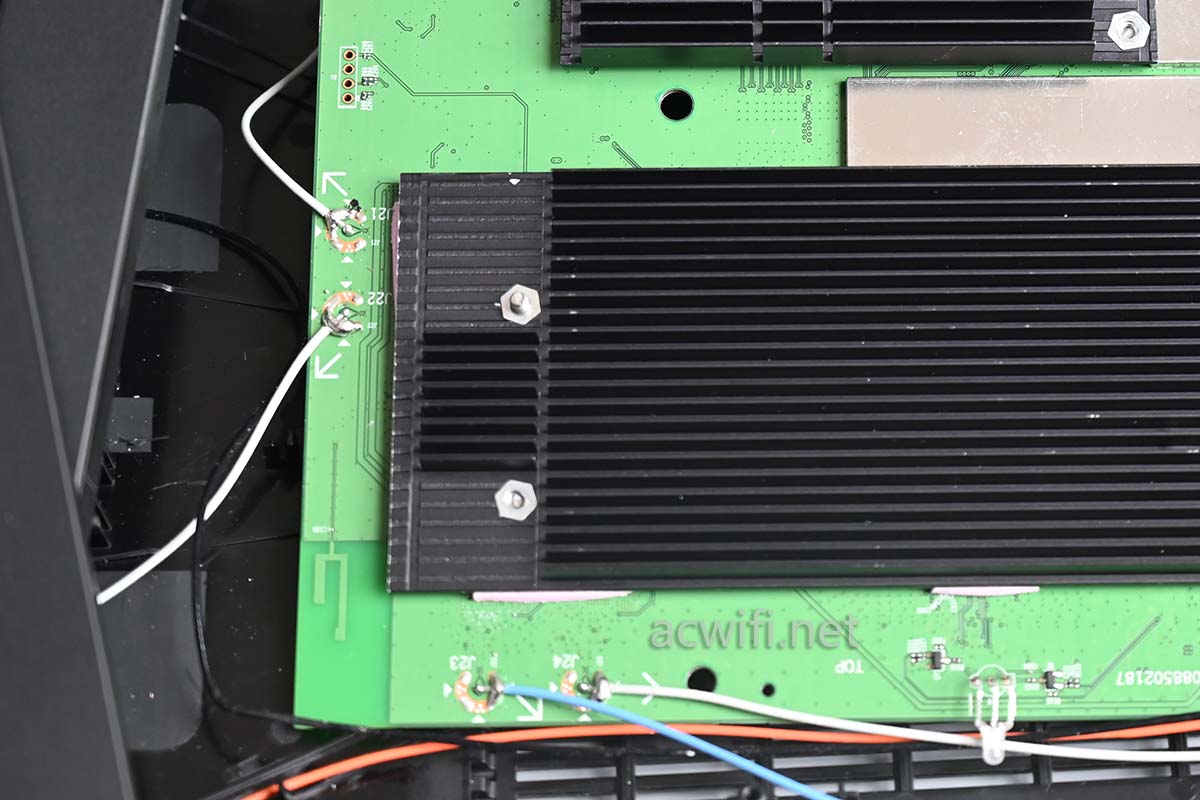
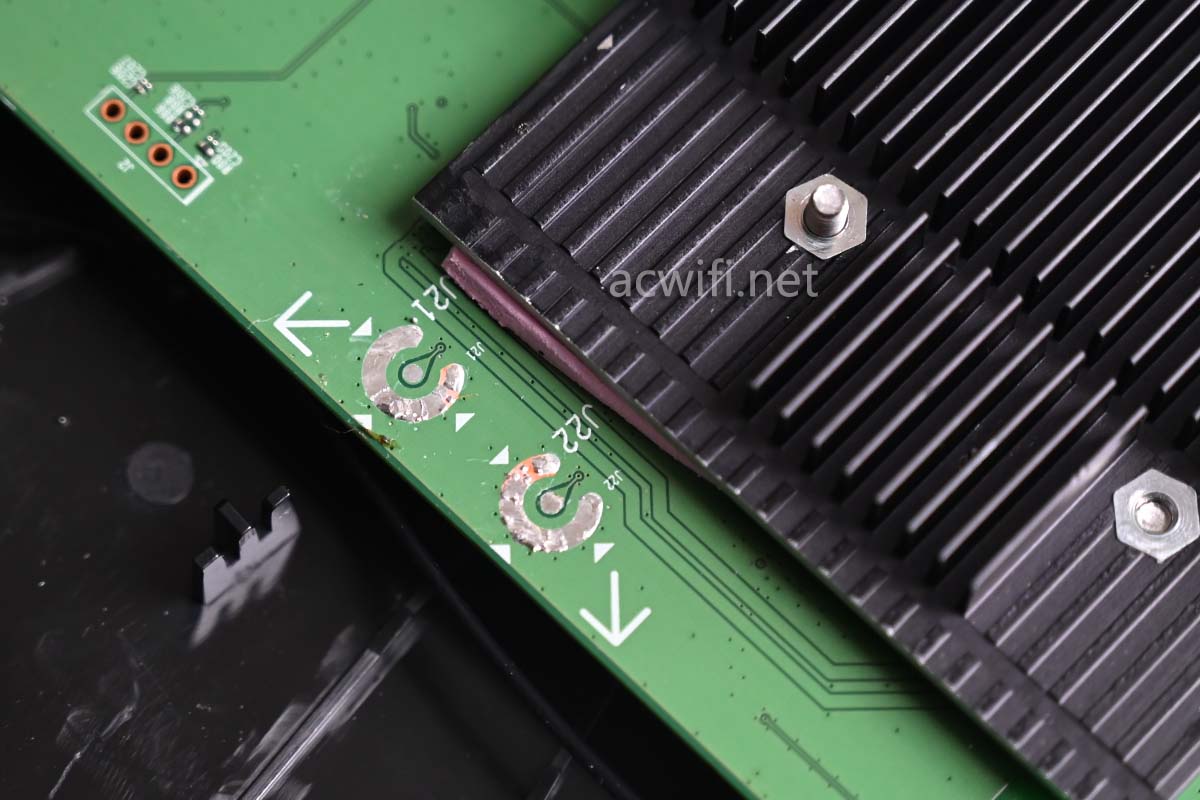
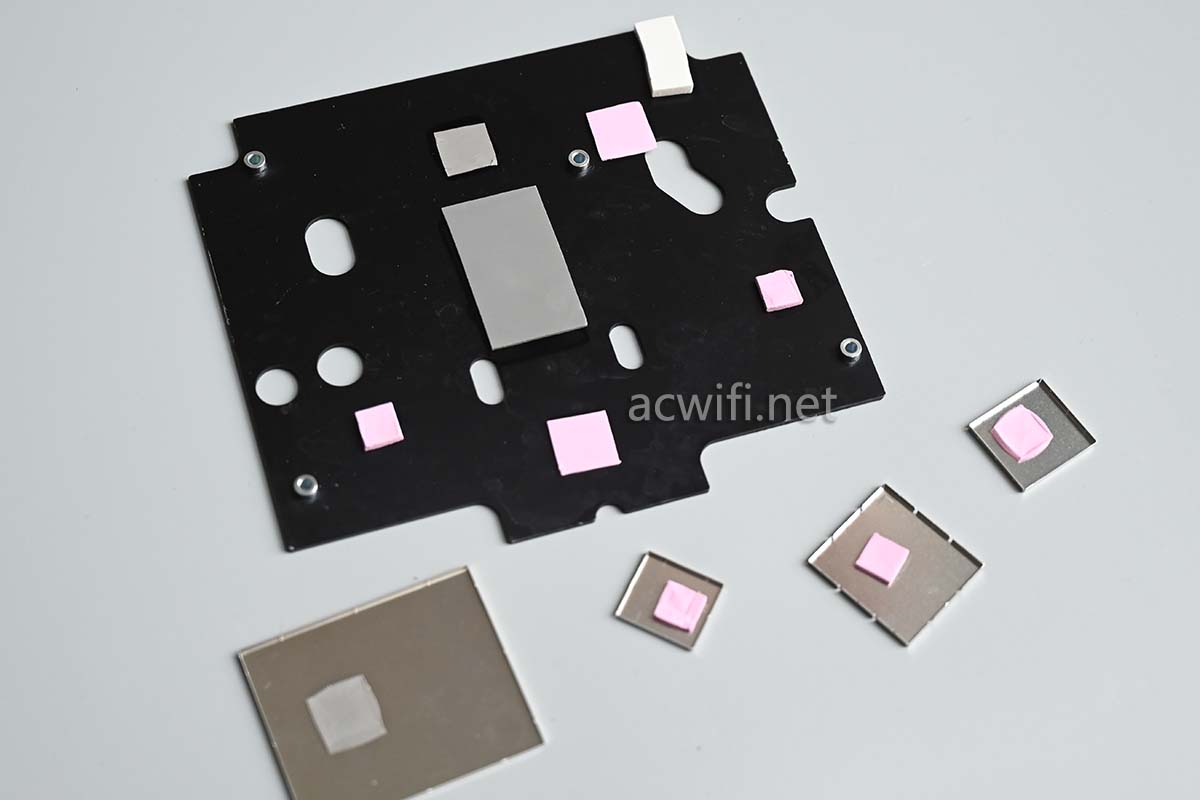
With the feeders free, the board can be fully inverted. The underside is dominated by a substantial black anodized aluminum heat spreader (larger than the plate found on the 7DR7290):
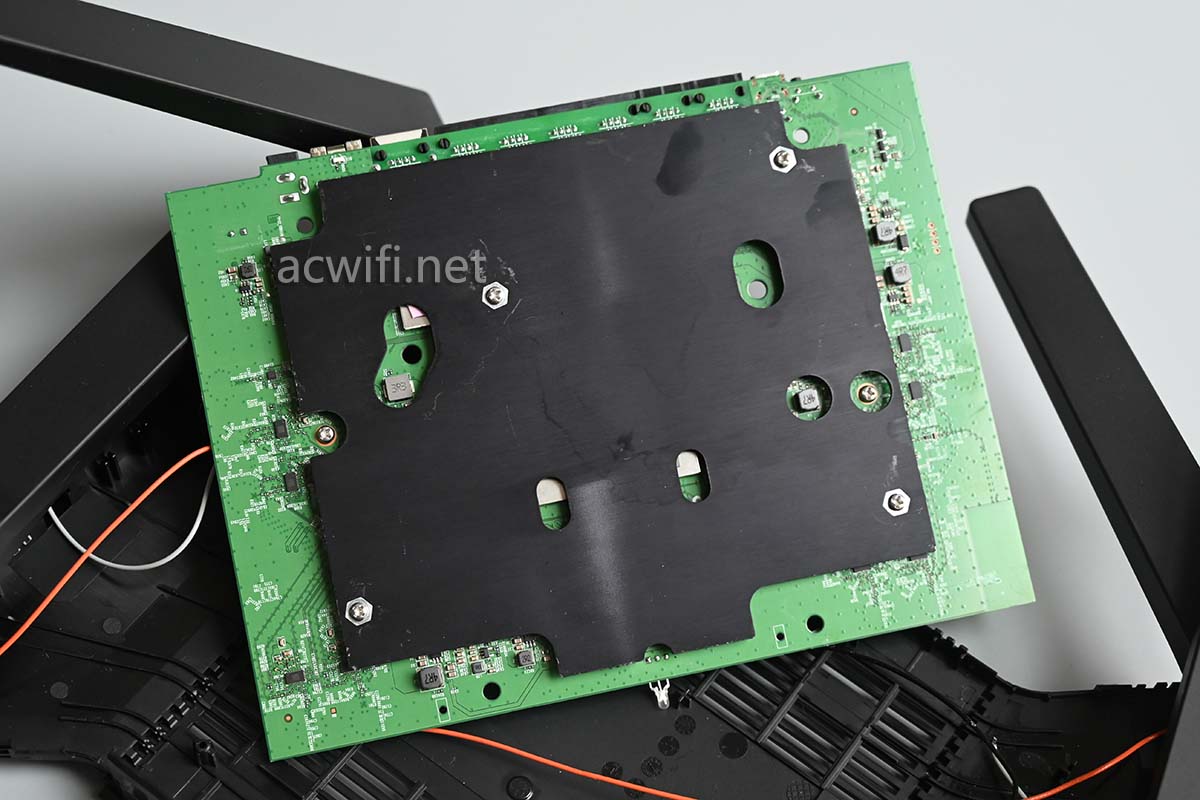
Removing the heat spreader reveals multiple high-conductivity thermal silicone pads. Notably, a dedicated thermal pad sits directly underneath the 10G SFP+ cage to wick heat away from active optical transceivers:
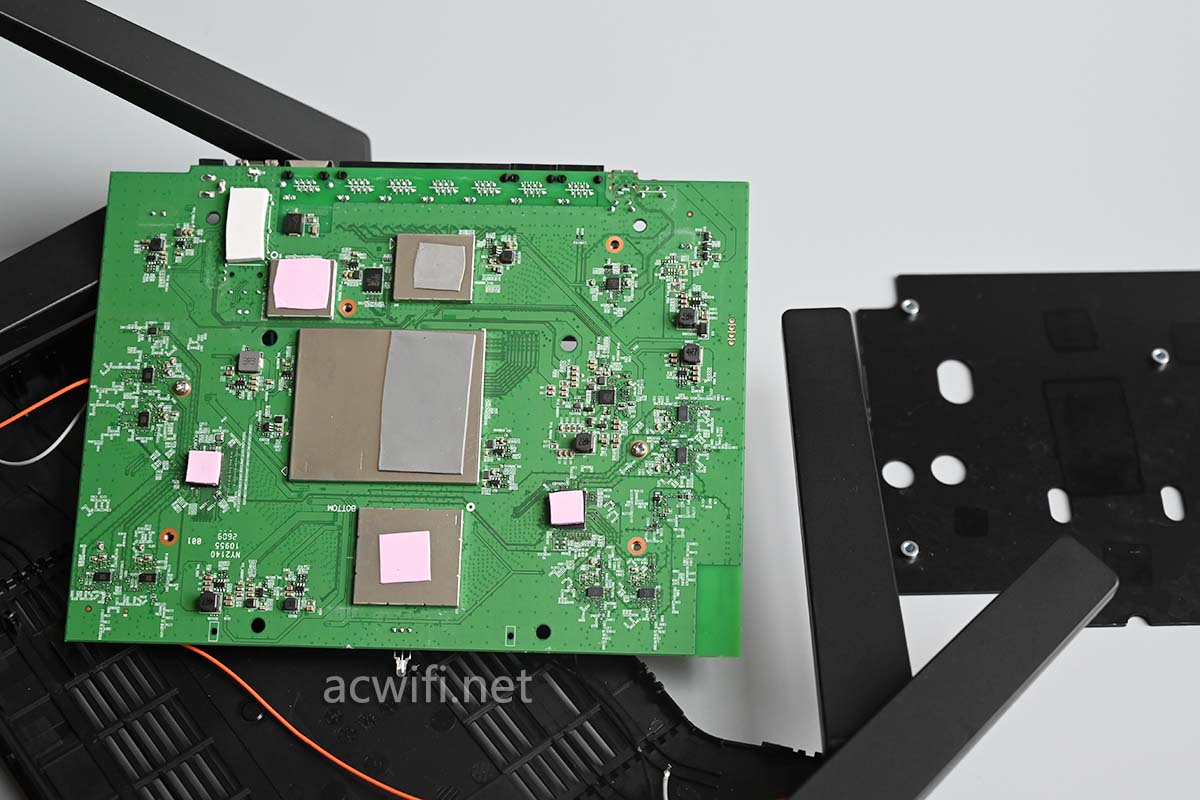
All primary processors and radio ICs are situated on this side of the PCB, sealed under EMI shielding cans:
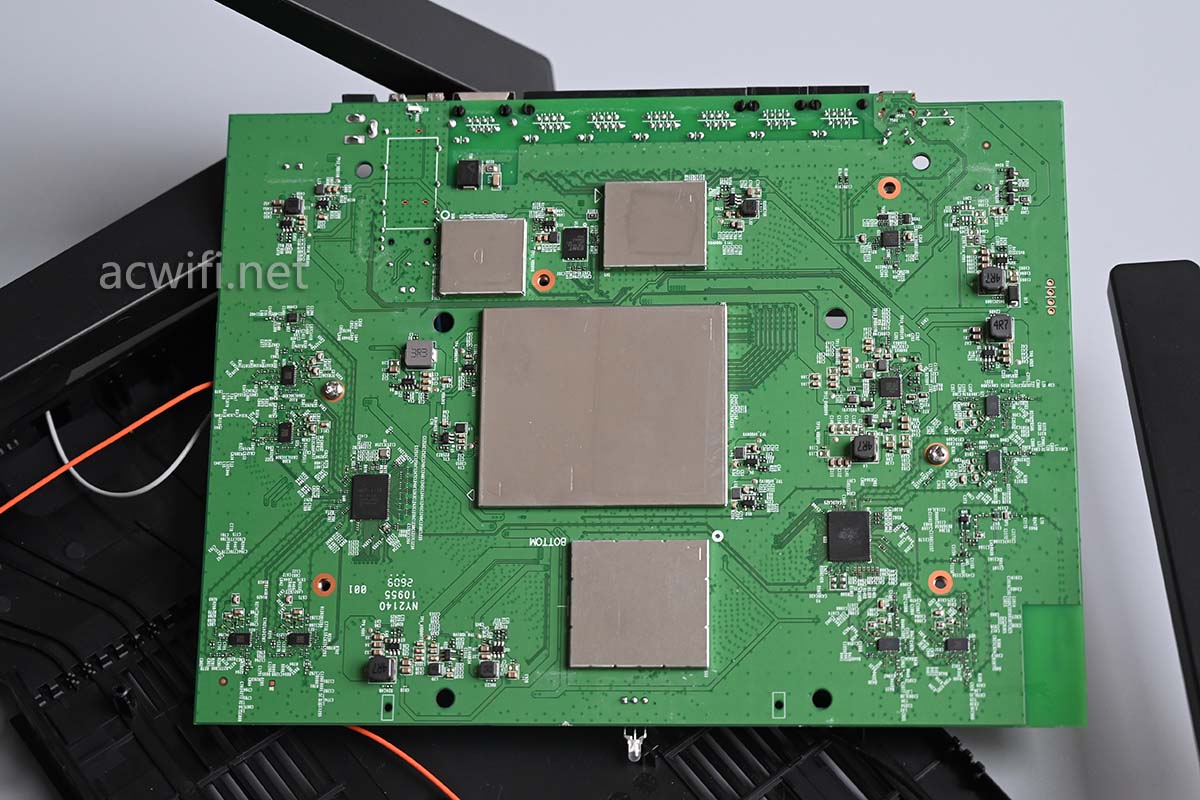
Prying off the EMI shields:
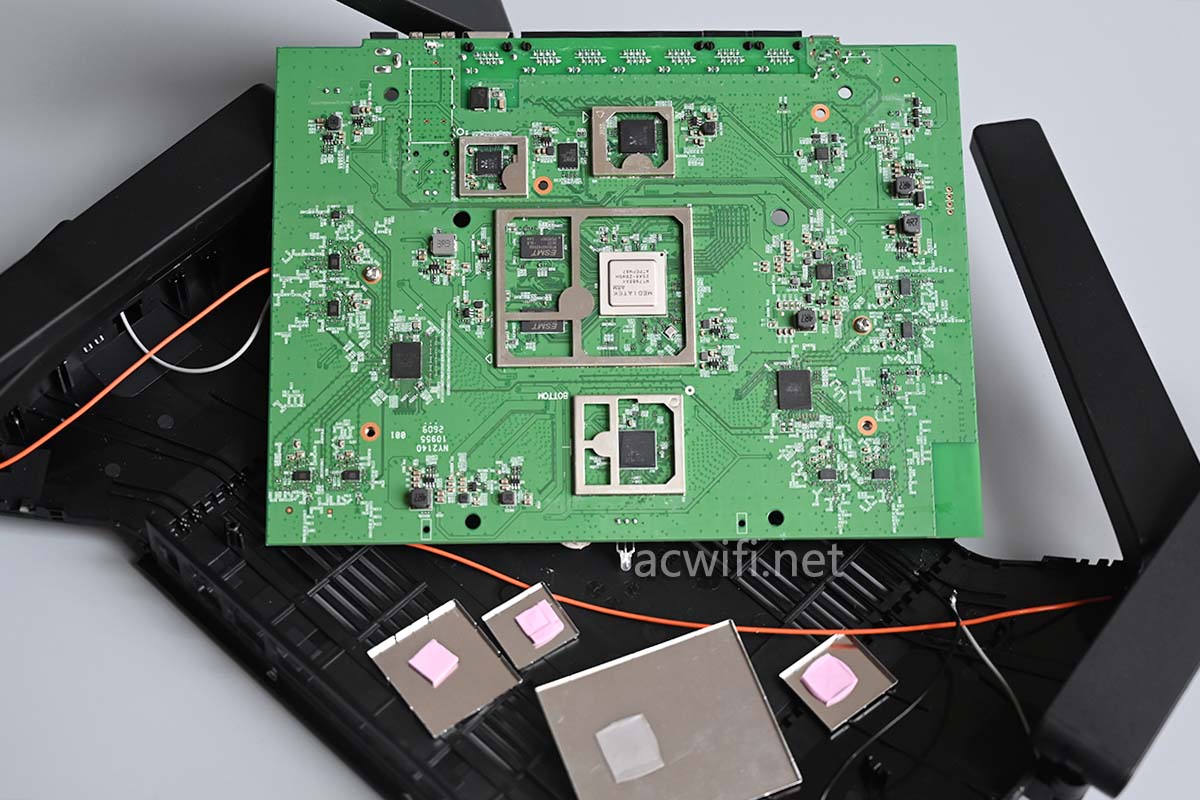
The core silicon lineup of the TP-Link TL-7DR7299 is fully exposed:
IV. Chipset & Semiconductor Architecture Breakdown
The hardware configuration delivers impressive silicon choices across CPU, switching, and radio systems:
1. Central Processor (SoC)
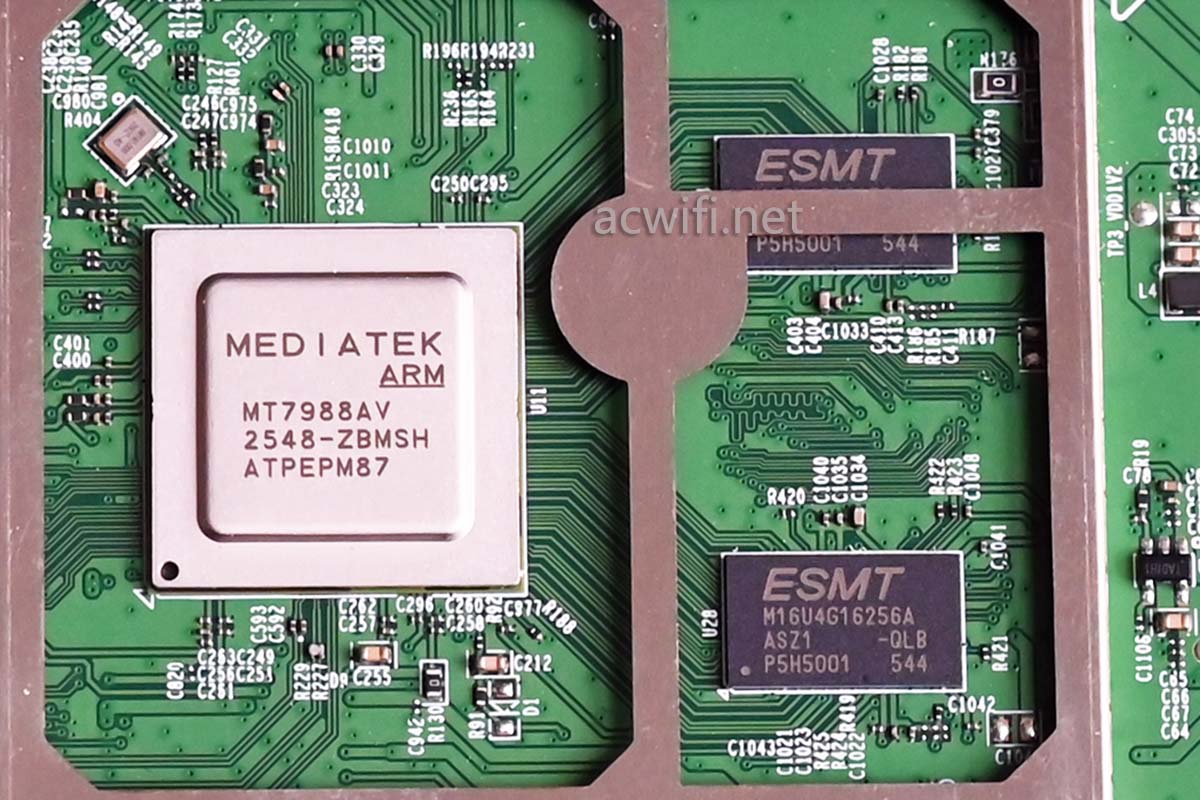
Occupying the central PCB position is the flagship MediaTek MT7988AV (commonly abbreviated as MT7988A, flagship of the Filogic 880 family):
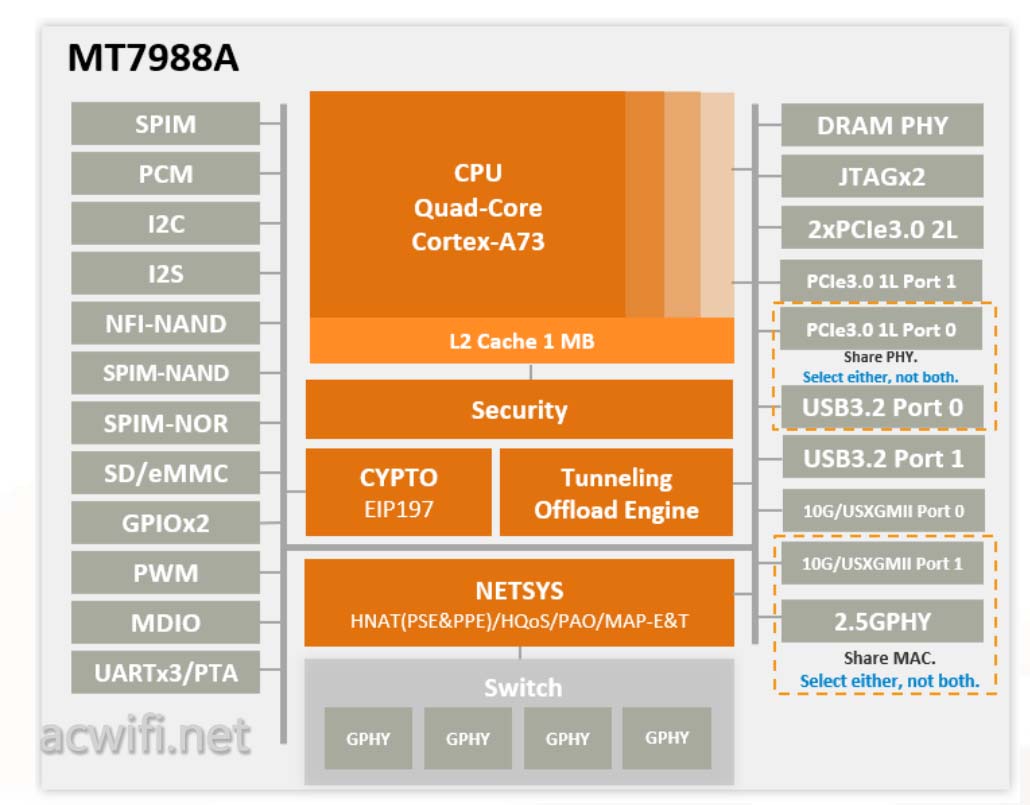
- Architecture: 4x ARM Cortex-A73 cores, clocked up to 1.8 GHz, built on an efficient 12nm node.
- High-Speed Interconnects: Features dual 10G USXGMII interfaces (with one lane sharing a MAC with a 2.5G PHY).
- Supports high-throughput peripheral interconnect via USB 3.2.
- Integrates an internal 4-port Gigabit Ethernet switch engine.
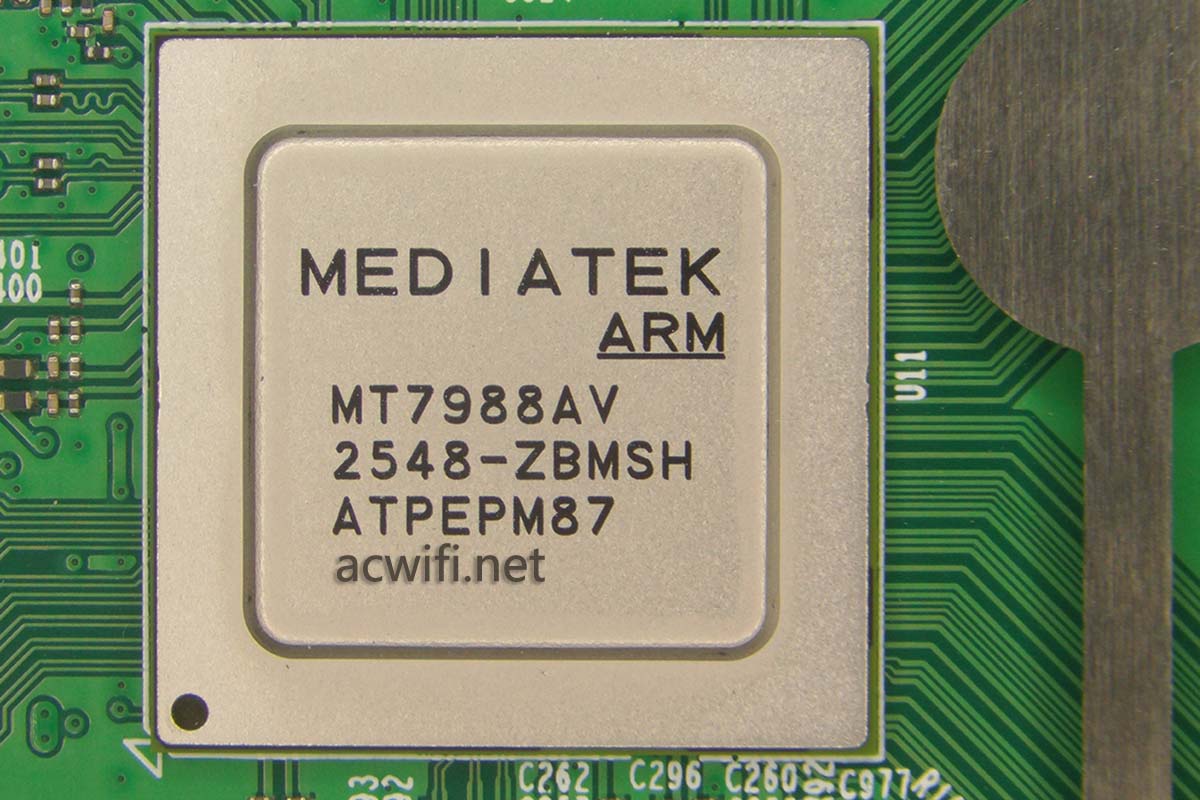
Third-Party Firmware & OpenWrt: Choosing the MT7988A platform provides immense potential for open-source firmware enthusiasts. In fact, fully functional OpenWrt builds are already operational on this device, supporting flashing directly without requiring physical board disassembly or serial headers (免拆刷机).
Functional block diagram of the MediaTek MT7988AV SoC:
2. System Memory (RAM)
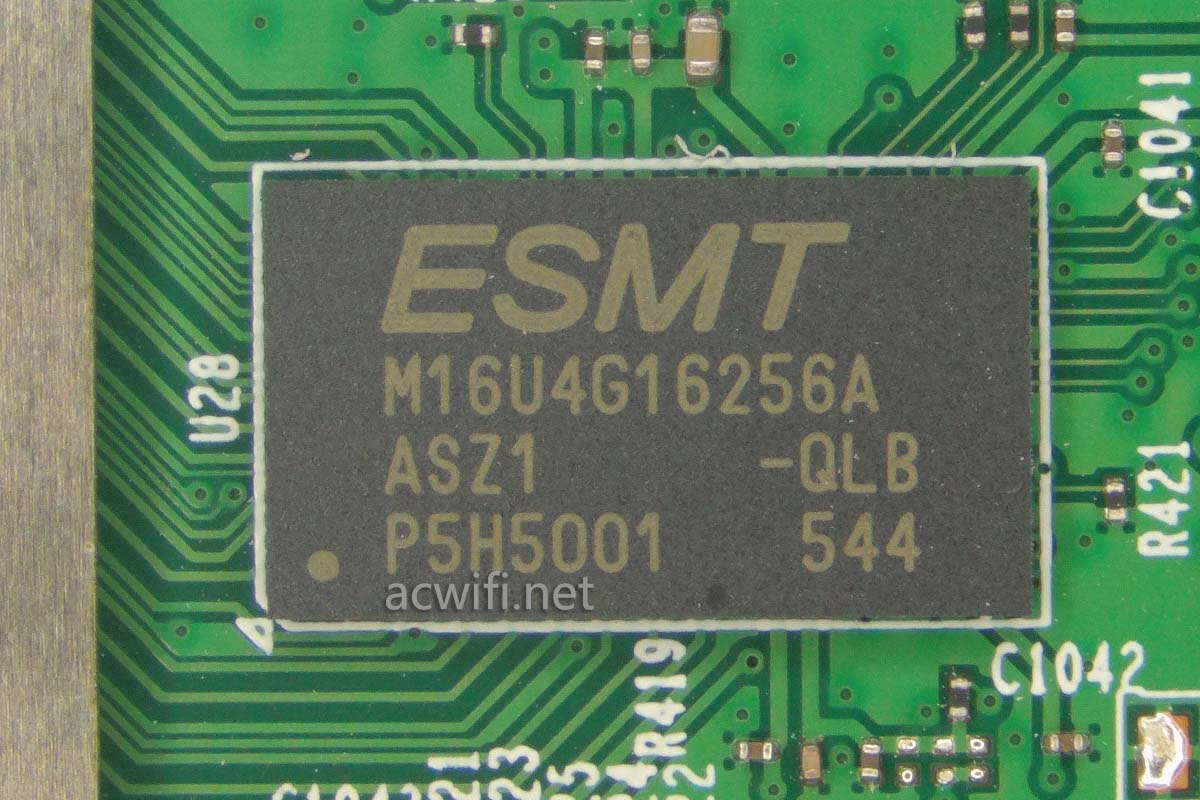
Flanking the CPU are two DDR4 memory packages from EtronTech, part number M16U4G16256A-QLBG:
- Bus Specification: DDR4-3200.
- Density: 512 MB per chip.
- Combined memory capacity: 1 GB (1024 MB), offering massive buffer capacity for demanding routing, NAT tables, and OpenWrt package stacks.
Detailed view of the SoC and RAM section:
3. Multi-Gigabit Switching & 10G PHY
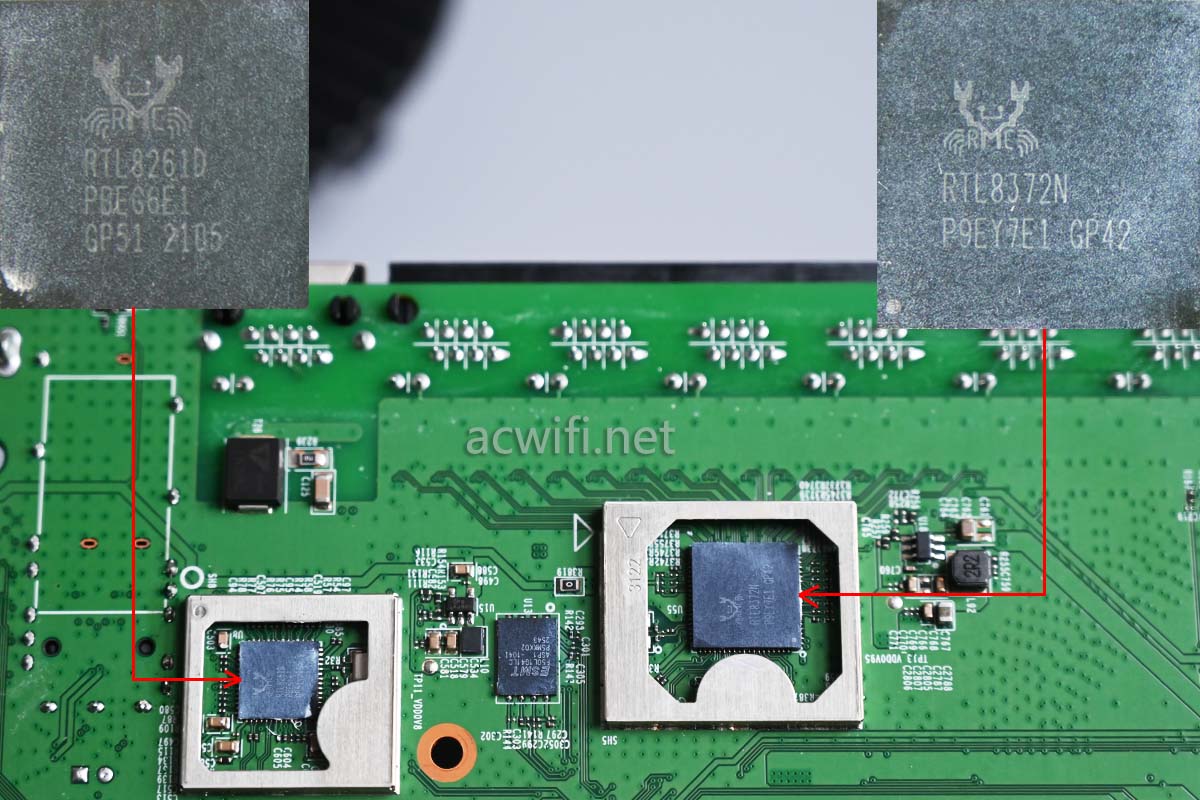
The multi-gigabit Ethernet plumbing is driven by Realtek silicon:
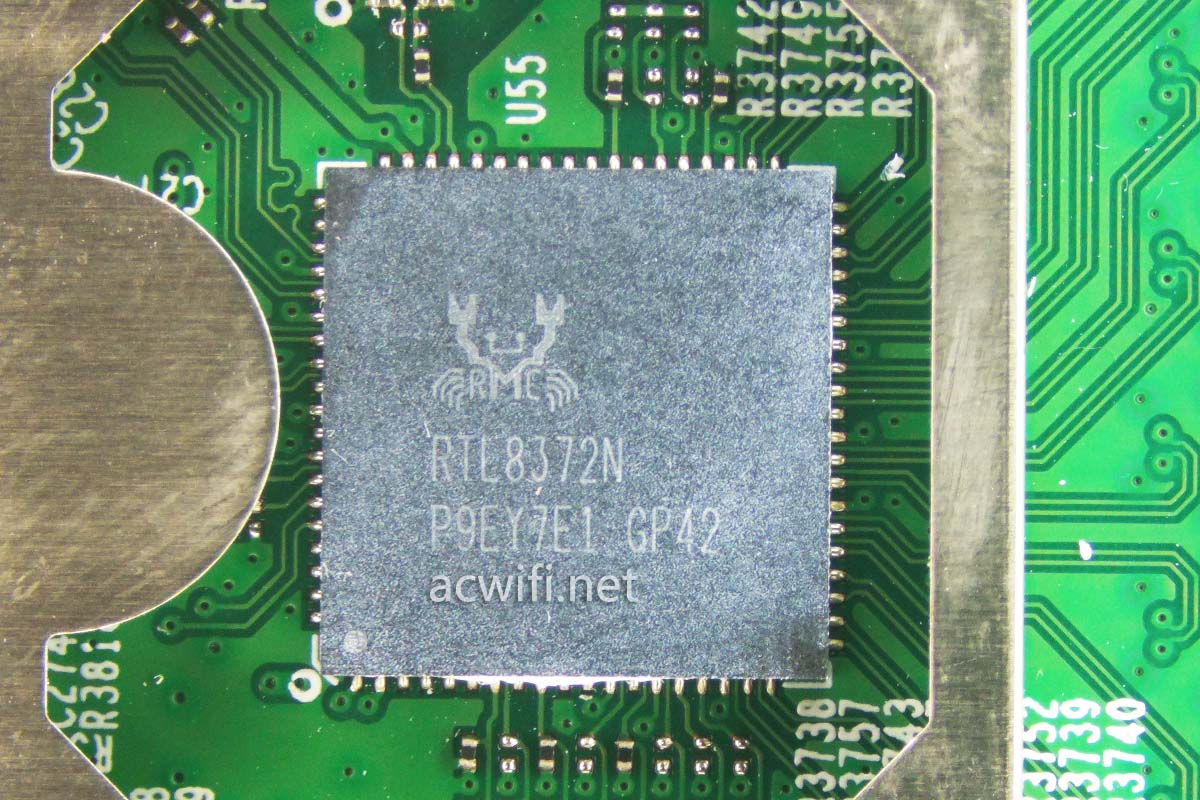
- 2.5G Switch IC: Realtek RTL8372N. It provides two 10G USXGMII links (one dedicated to the 10G SFP+ cage, the other linking directly into the MT7988A SoC). Internally, the RTL8372N houses four integrated 2.5G PHYs driving the four 2.5GbE LAN/WAN ports.
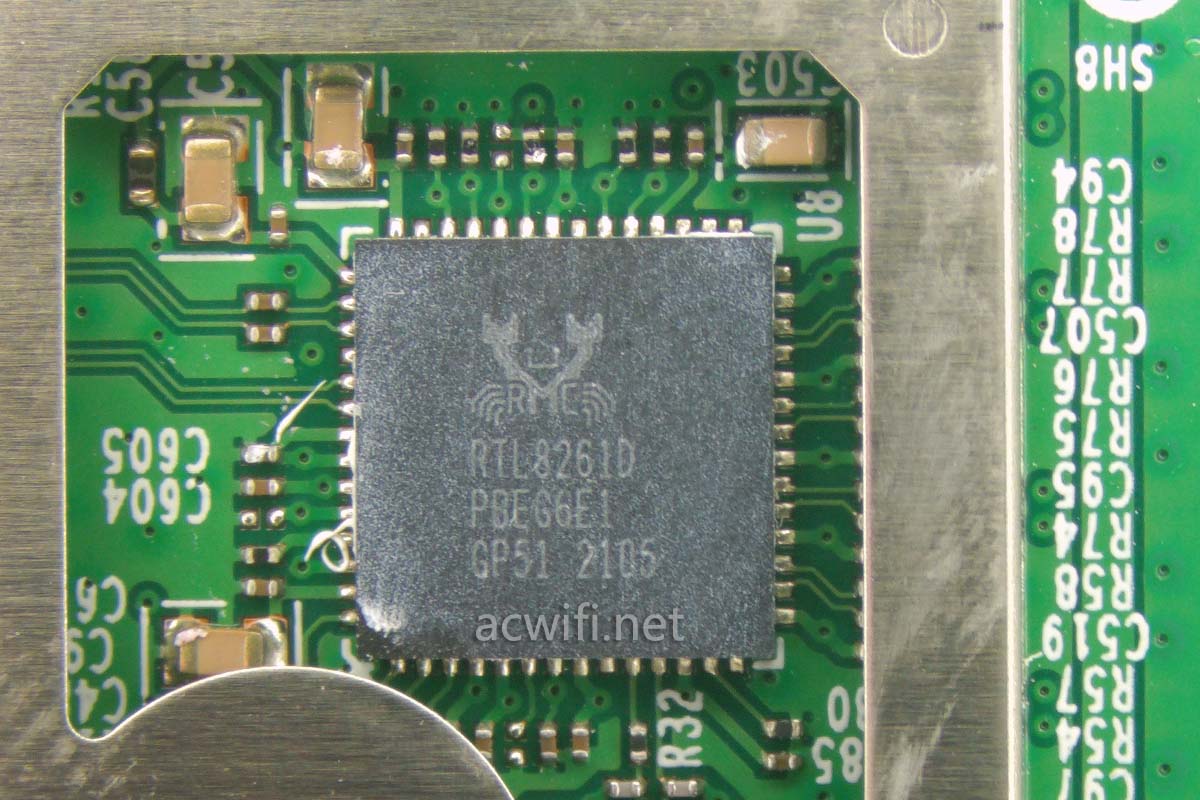
- 10G Copper PHY: The 10G RJ45 port relies on a dedicated Realtek RTL8261D multi-gigabit PHY. It auto-negotiates across five discrete speeds: 100M, 1G, 2.5G, 5G, and 10G Ethernet.
Silicon placement of the network controller chips:
4. Flash Storage
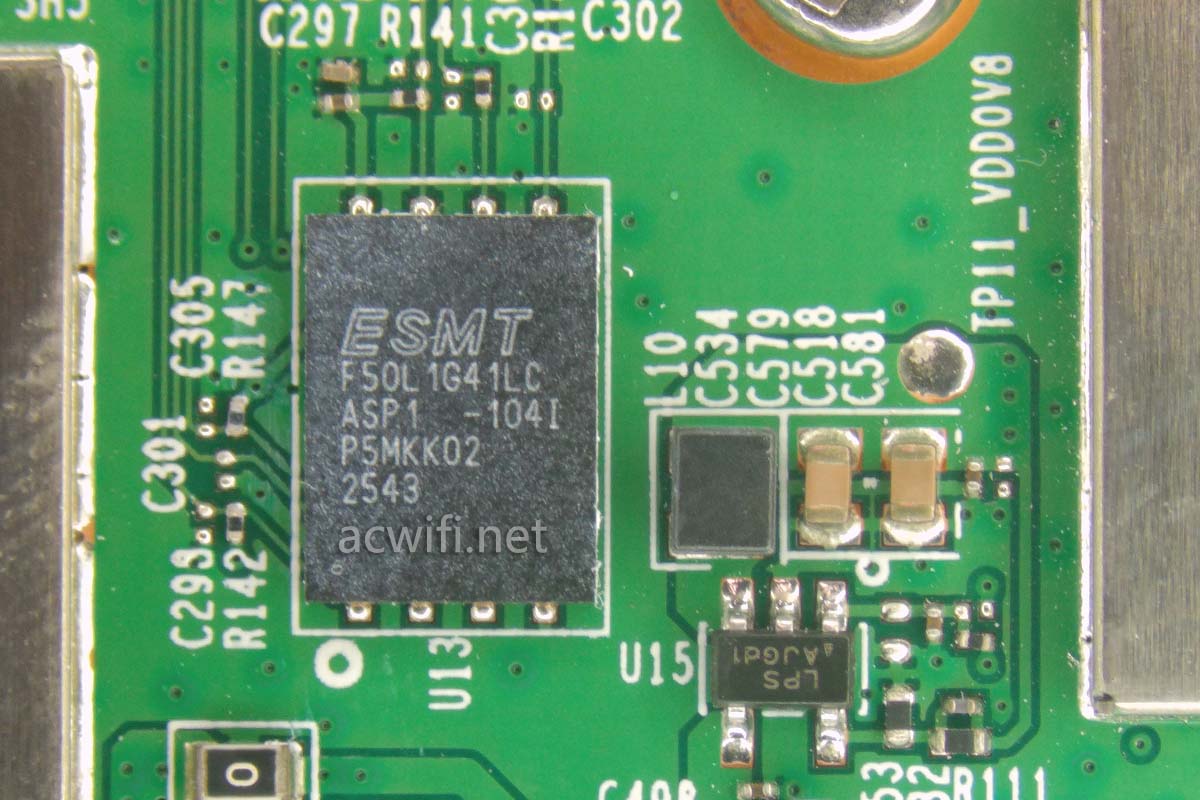
Positioned between the networking ICs is an SPI NAND flash chip, part number F50L1G41LC, providing 128 MB of non-volatile storage:
5. Wi-Fi Baseband & MAC Processor
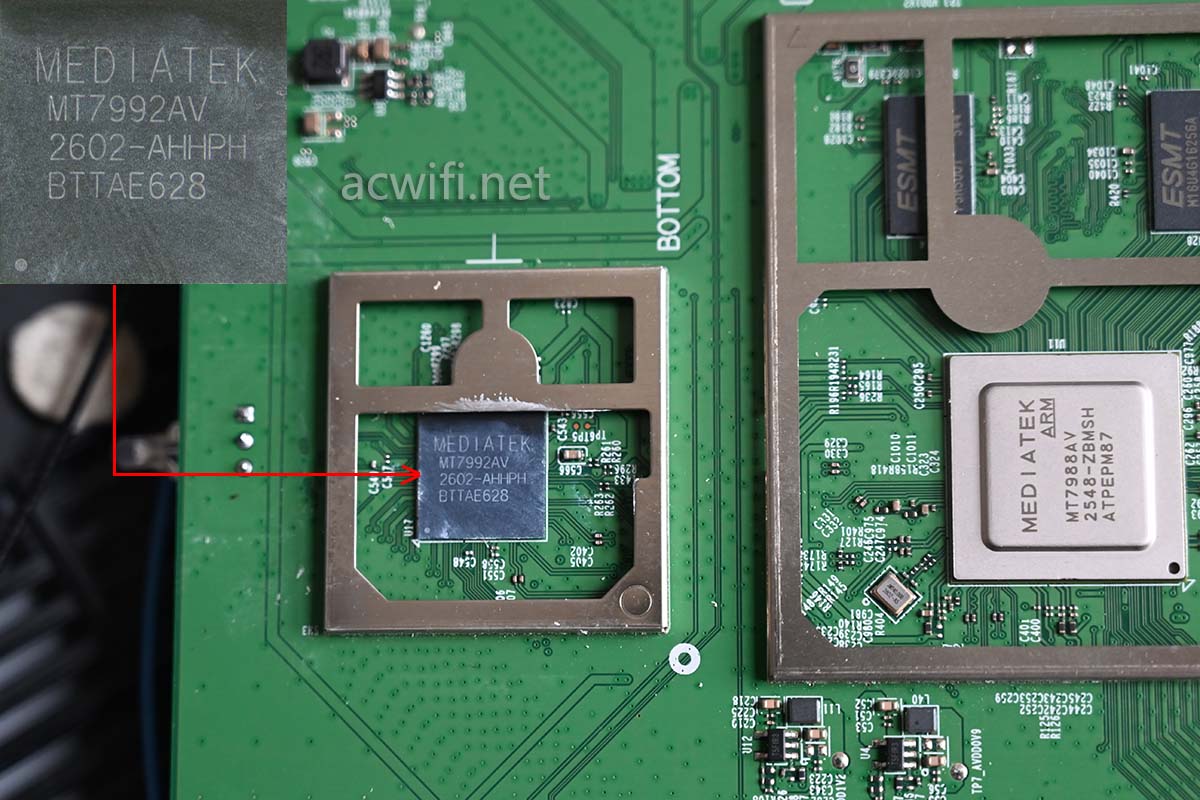
Baseband and wireless MAC duties are handled by the MediaTek MT7992A processor (interfaced directly to the MT7988A CPU, manufactured on an advanced 6nm process):
- Full Wi-Fi 7 feature set on both 2.4GHz and 5GHz with 4x4 MIMO.
- 2.4 GHz: Up to 1376 Mbps theoretical PHY rate (40MHz channel, 4096-QAM).
- 5 GHz: Up to 5765 Mbps theoretical PHY rate (160MHz channel, 4096-QAM).
- Combined wireless bandwidth hits the BE7200 speed rating (1376 + 5765 ≈ 7141 Mbps).
6. 2.4GHz RF Transceiver & External FEMs
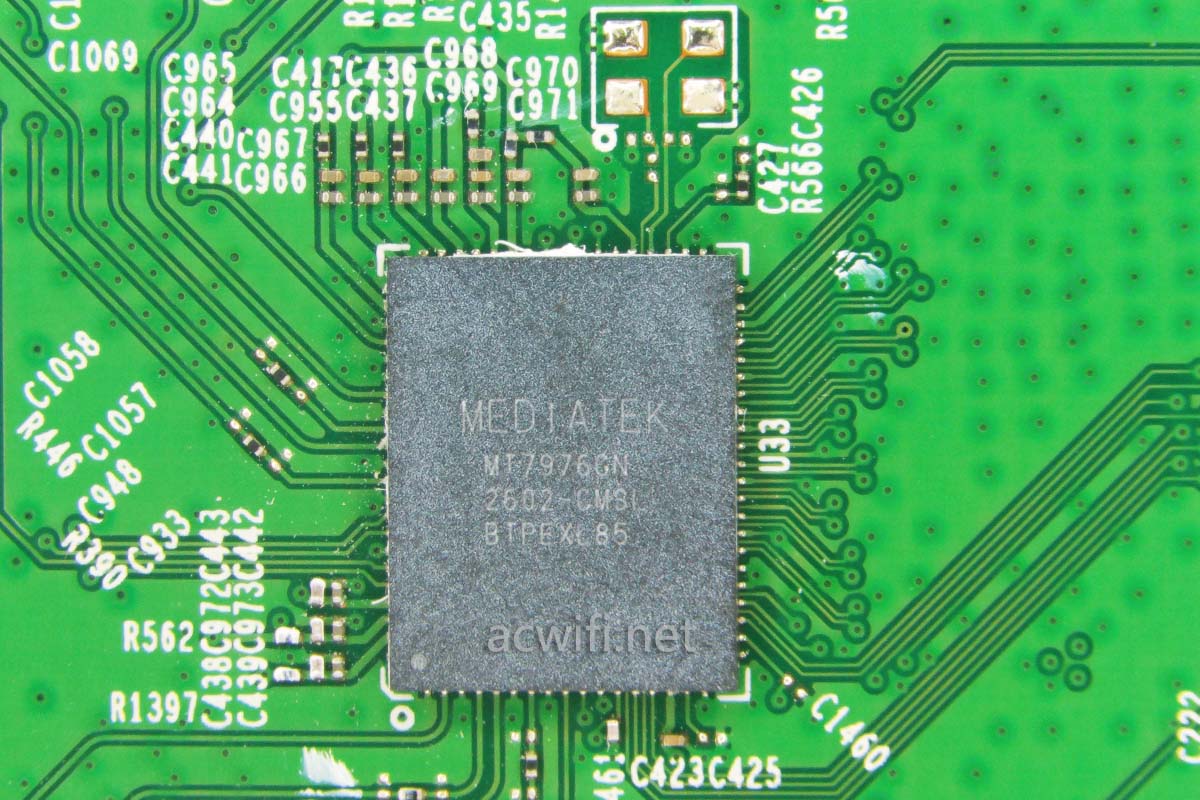
- 2.4GHz RF IC: MediaTek MT7976GN (the “G” suffix denotes an RF transceiver without built-in internal power amplifiers, requiring external front-end modules), operating in 4T4R:
- 2.4GHz Front-End Modules (FEM): Four external high-power FEMs from Vanchip, model VC5333-21 (or simply VC5333):
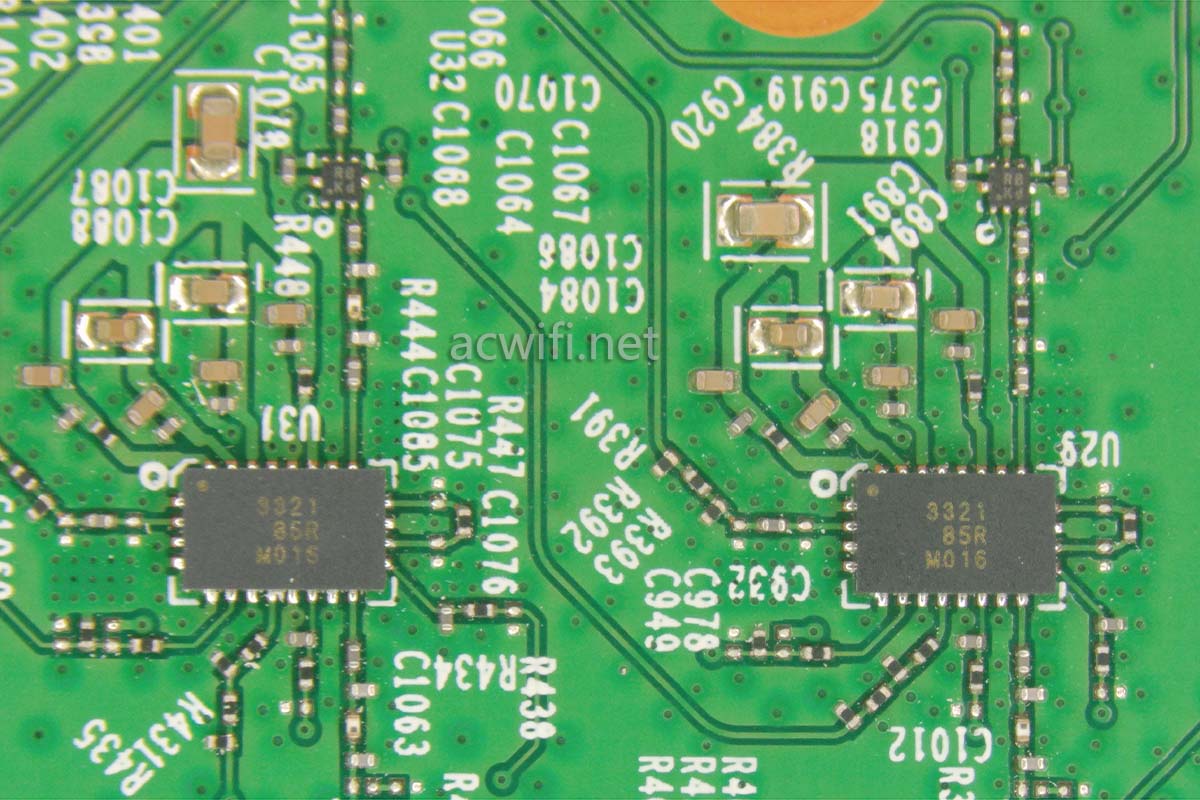
VC5333-21 RF specifications:
- Frequency range: 2.4 GHz – 2.5 GHz.
- Linear output power: 19 dBm @ IEEE 802.11ax MCS11 HE40, EVM < -43 dB (5V rail).
- Linear output power: 23 dBm @ IEEE 802.11n MCS7 VHT40, EVM < -30 dB (5V rail).
- Transmit gain: 34 dB.
- Receive gain: 14 dB.
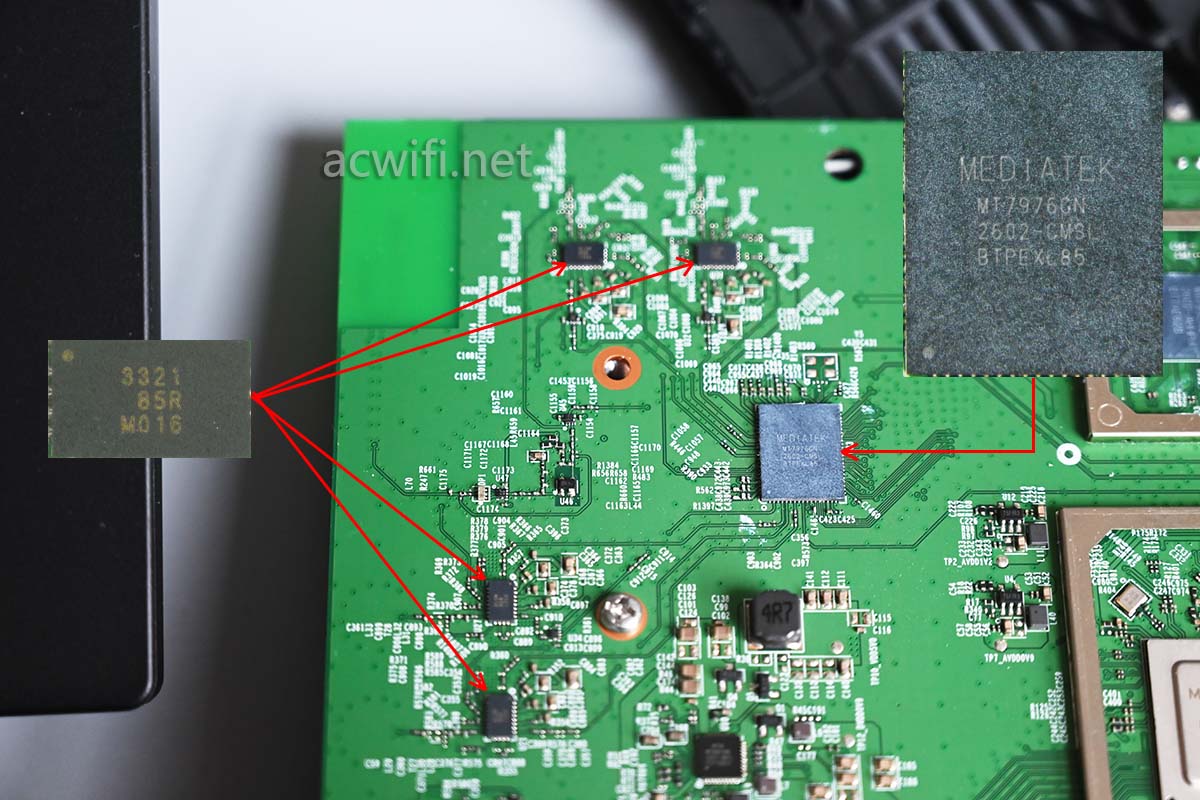
7. 5GHz RF Transceiver & High-Power FEM Array
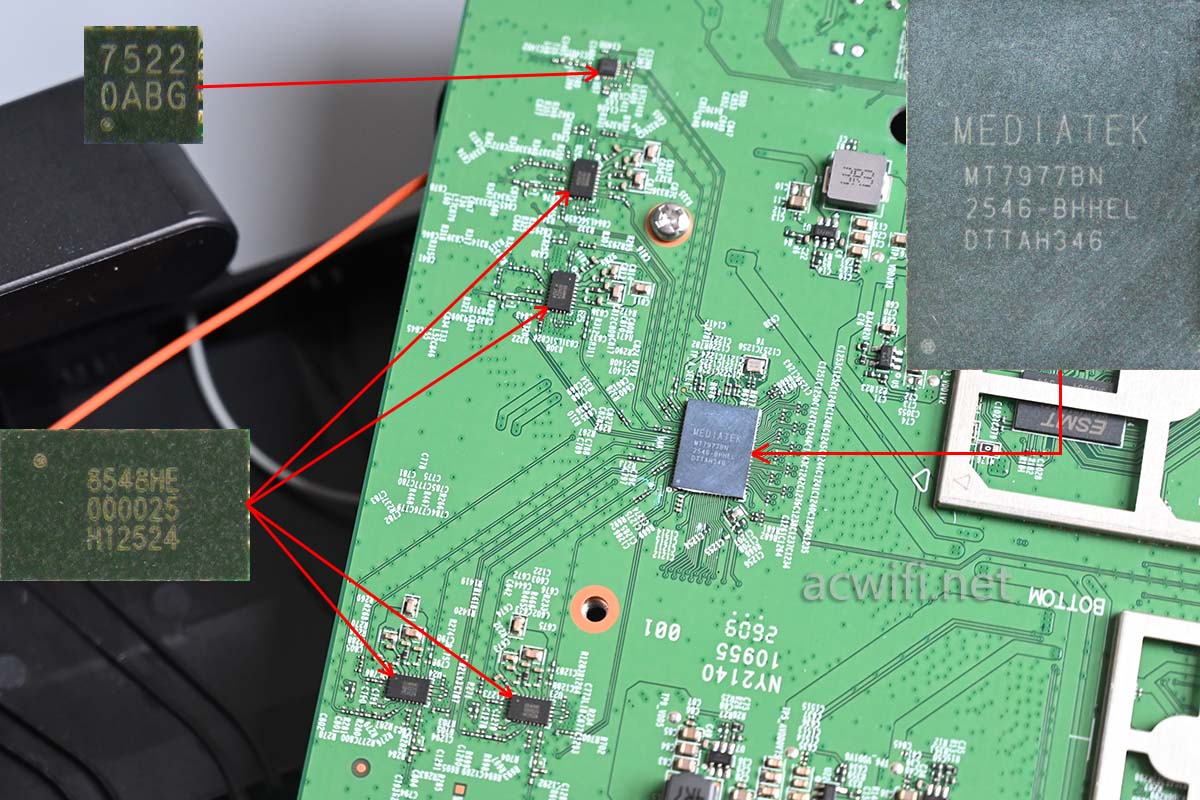
- 5GHz RF IC: MediaTek MT7977BN (external FEM variant), running in a 4T5R (4 Transmit, 5 Receive) topology:
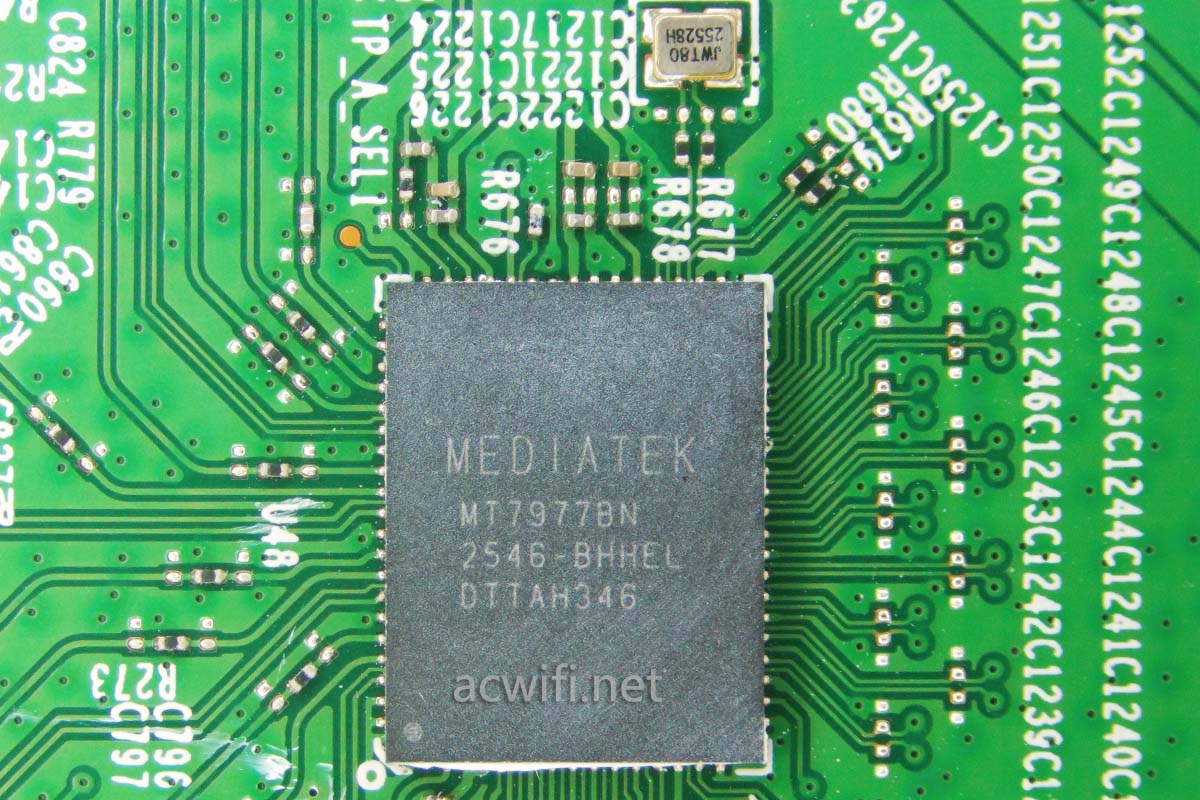
- 5GHz High-Power FEMs: Four high-power Front-End Modules from GrandChip/Kangxi Telecom, model KCT8548HE-1 (a higher-output revision compared to the standard KCT8548HE on the 7DR7290).
- 5th Path Low-Noise Amplifier (LNA): Because the 5GHz chain uses a fifth dedicated receive path (5R), an external standalone LNA chip is added: the Maxscend MXD7522:
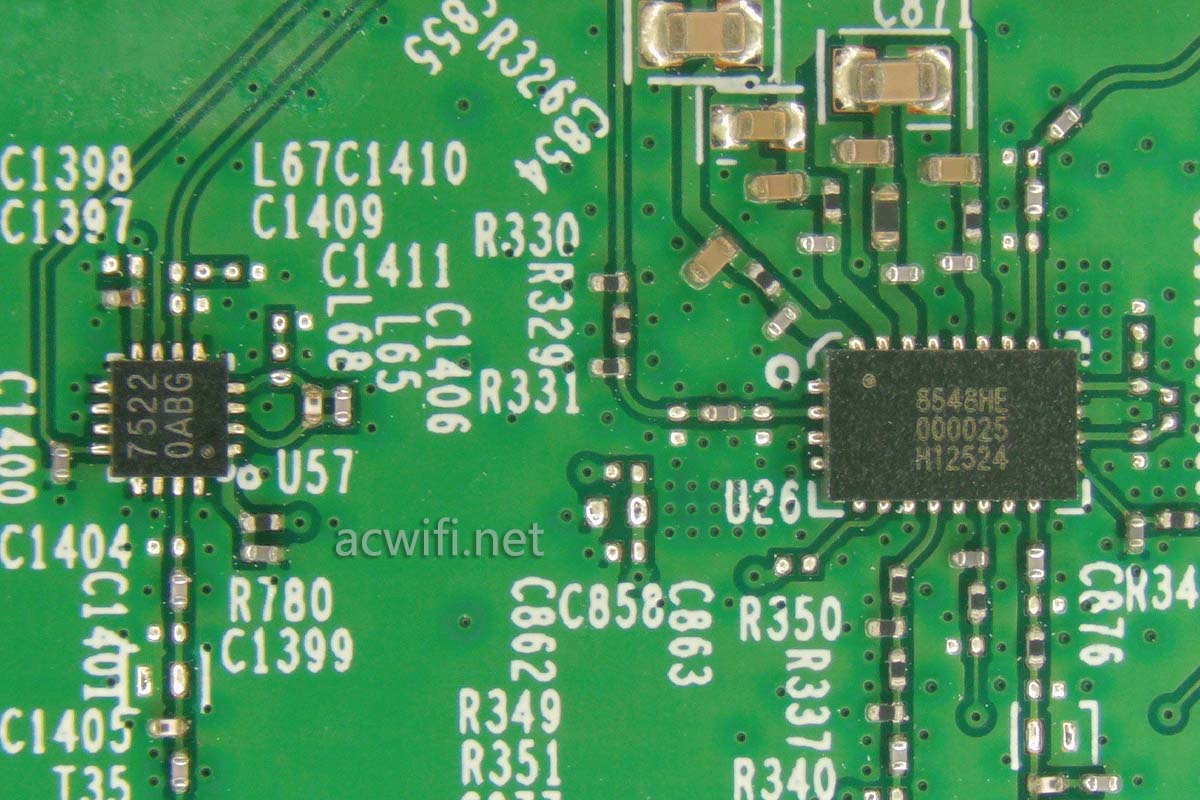
KCT8548HE-1 power output ratings:
- Integrated 5GHz PA, LNA with bypass, and T/R switch.
- Transmit gain: 30.5 dB @ 5V.
- Receive gain: 16.5 dB @ 5V.
- Noise figure: 1.8 dB @ 5V.
- Output power figures:
+19.5 dBm @ -43 dB HE160, MCS11 DEVM, 5V+22 dBm @ -40 dB HE160, MCS11 DEVM, 5V+24 dBm @ -35 dB VHT80, MCS9 DEVM, 5V+25 dBm @ -30 dB HT20, MCS7 DEVM, 5V
8. Peripheral ICs
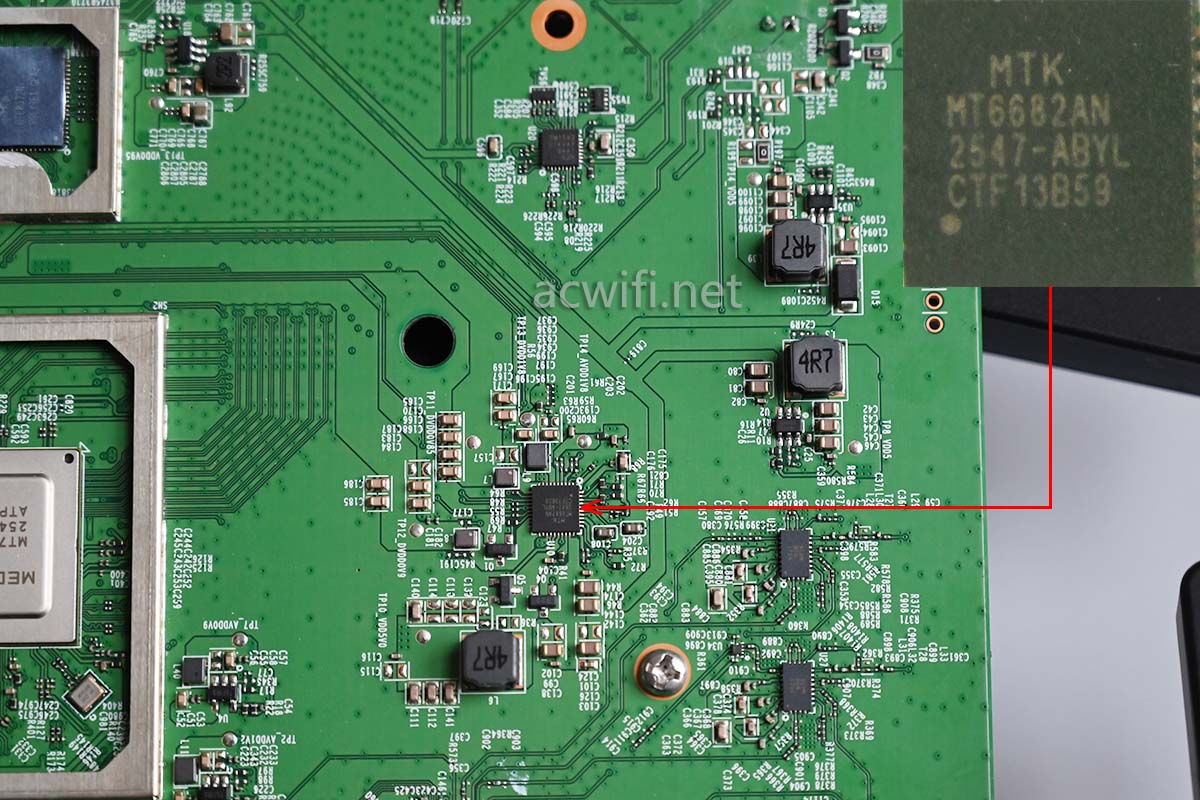
- Power Management IC (PMIC): MediaTek MT6682AN, handling multi-phase DC regulation and voltage step-down sequencing across the SoC and radios:
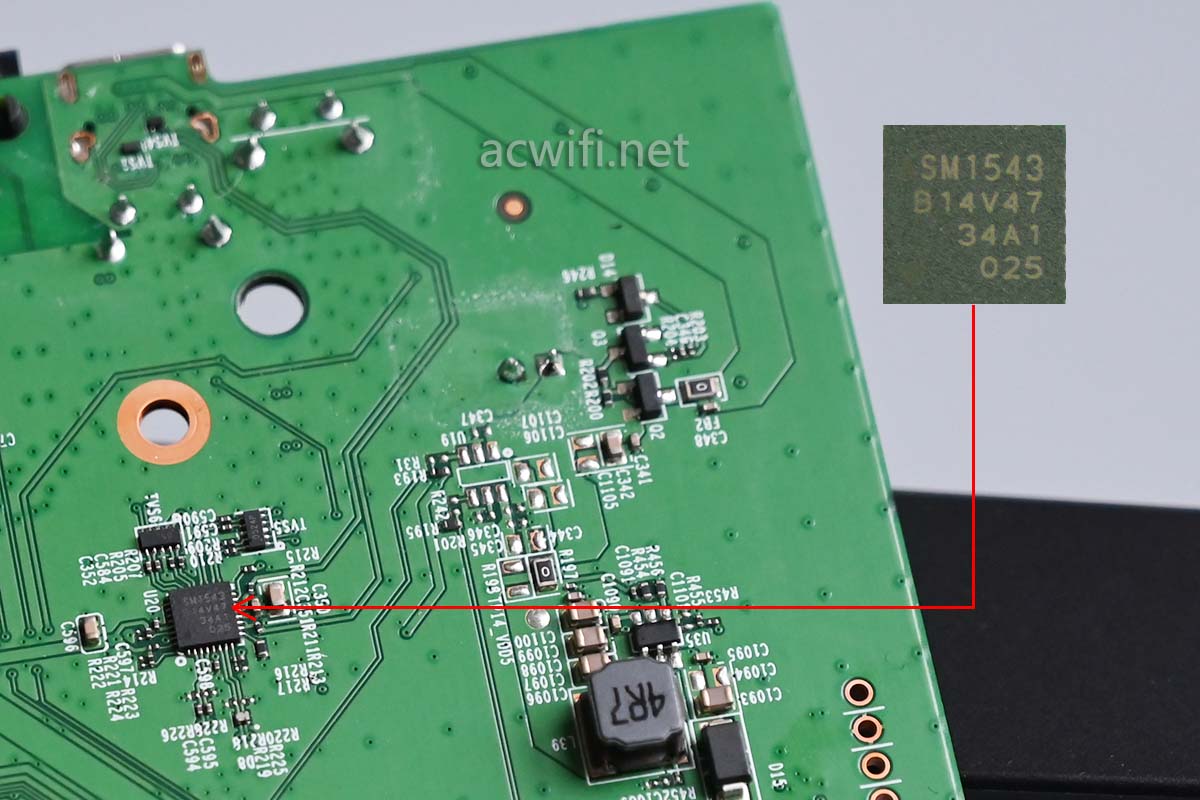
- Type-C Multiplexer Switch: ASMedia ASM1543, driving the USB Type-C interface at up to 10 Gbps:
V. Top-Side Heatsinks & Assembly Reversal
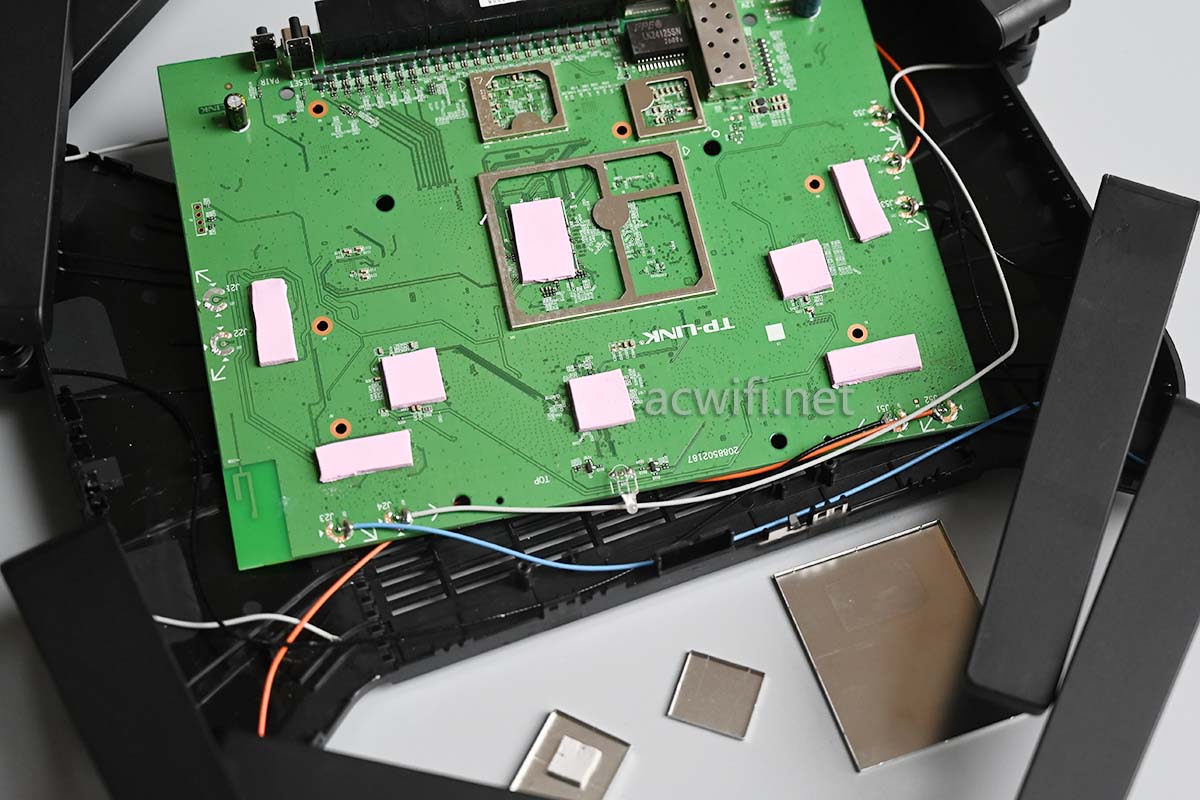
Flipping back to the top surface of the PCB reveals two extruded aluminum heatsinks. Once unscrewed, a generous array of thermal pads transfers heat from the rear of the radio, switch, and FEM zones to these radiators:
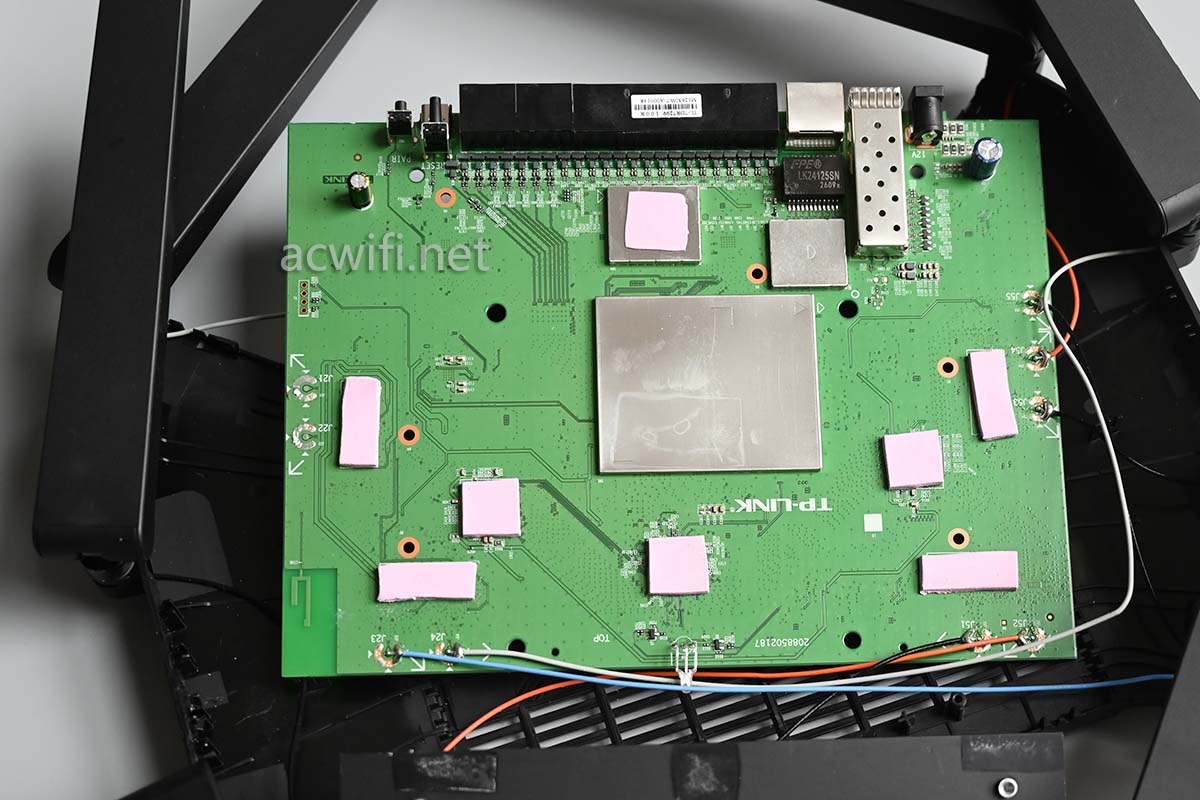
Popping off the top-side shielding covers reveals only passive routing and thermal ground pads; no active silicon resides on this face:
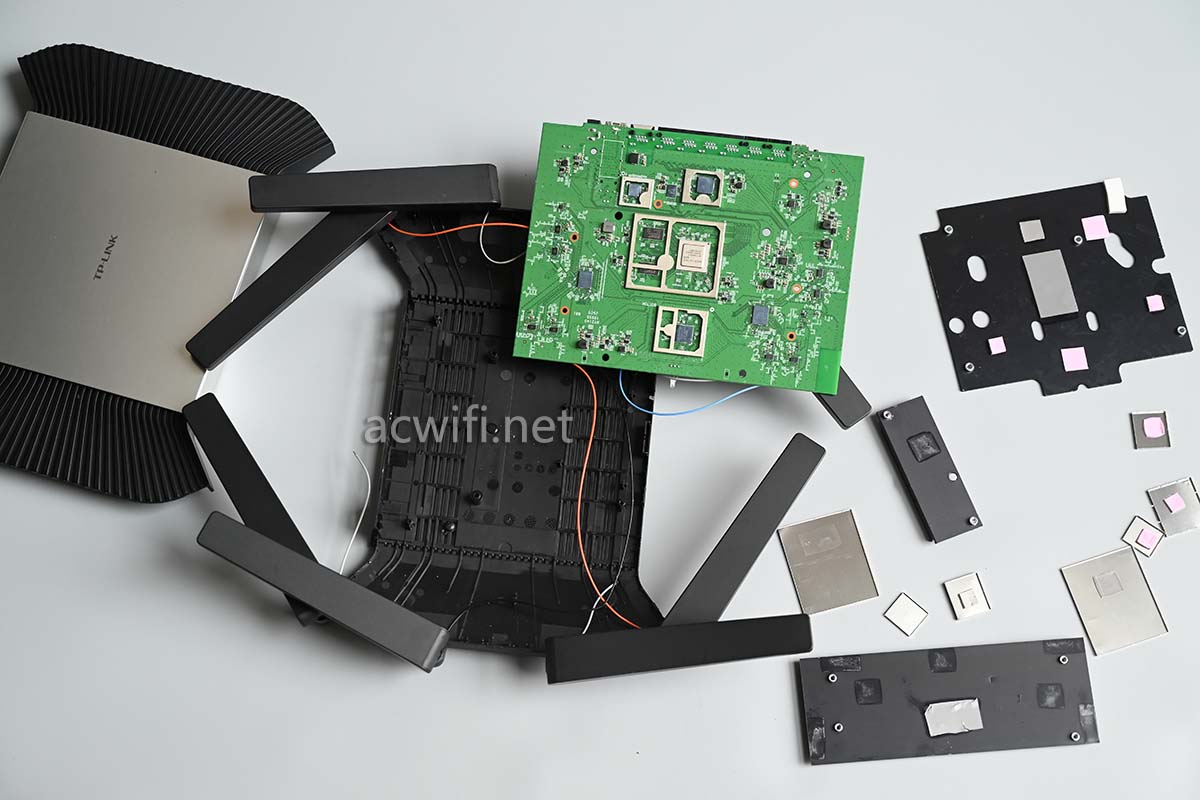
With analysis complete, the 2.4GHz coaxial antenna feeders are resoldered back into place:
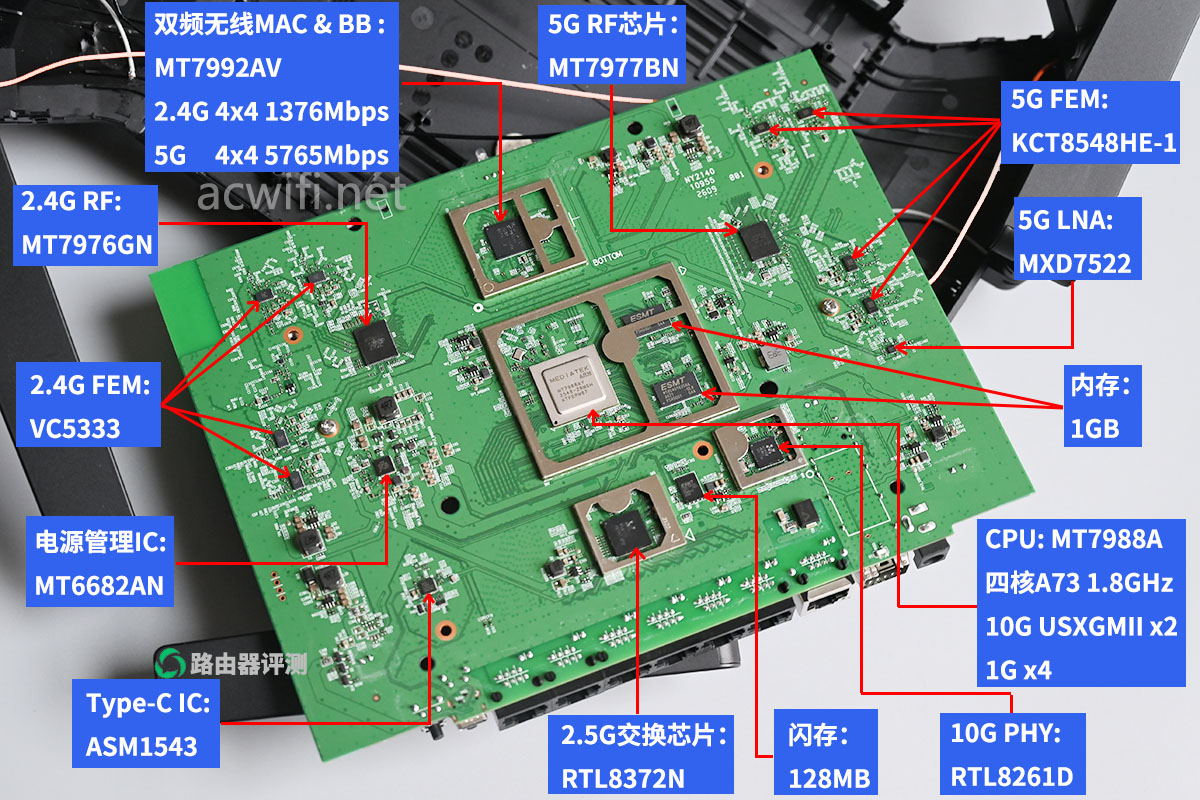
Here is the comprehensive component map of the TP-Link TL-7DR7299:
VI. Real-World Benchmarking & Wireless Performance
1. 64-Byte Small Packet Forwarding
Using PacketMaster hardware traffic generators to evaluate small 64-byte packet forwarding:
- Simultaneous Bidirectional Forwarding (64-byte small packets): Clocked in at 14.21 Mpps, nearly saturating the theoretical wire-speed ceiling of 14.88 Mpps.
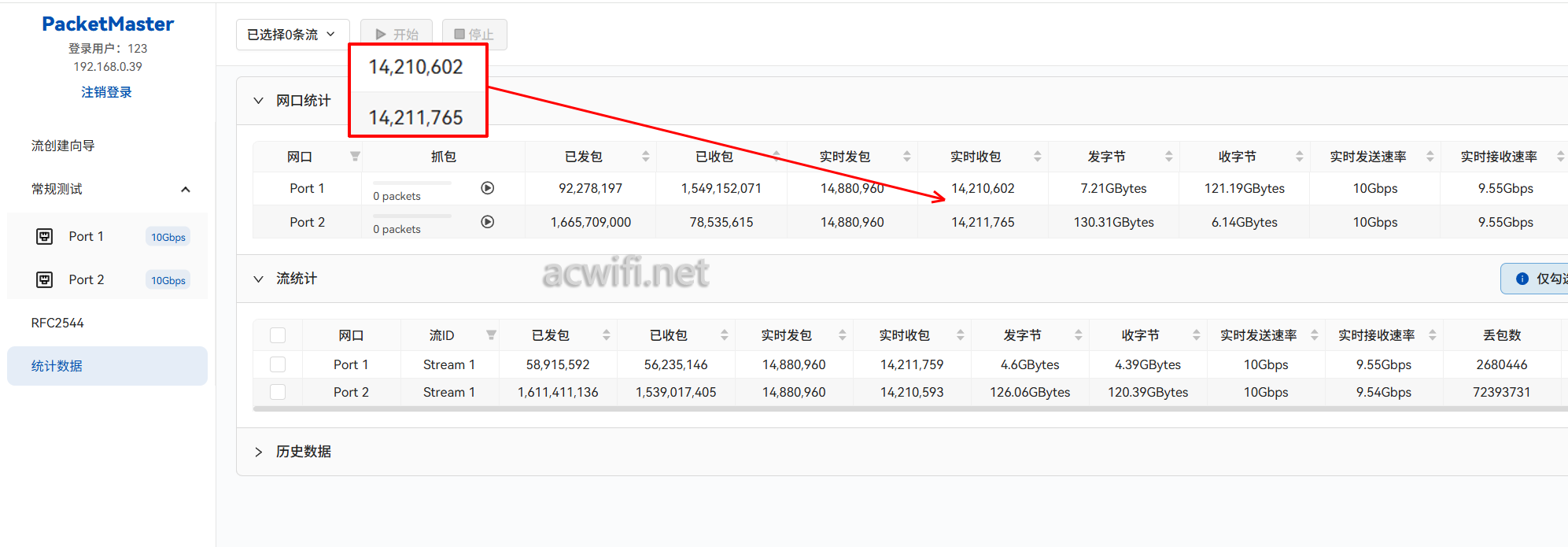
This proves the hardware packet processing engine (PPE / hardware NAT) on the MT7988A can handle intense, low-latency concurrent connections without CPU bottlenecking.
2. Point K Wireless Speed Test (Obstacle-Heavy Corner)
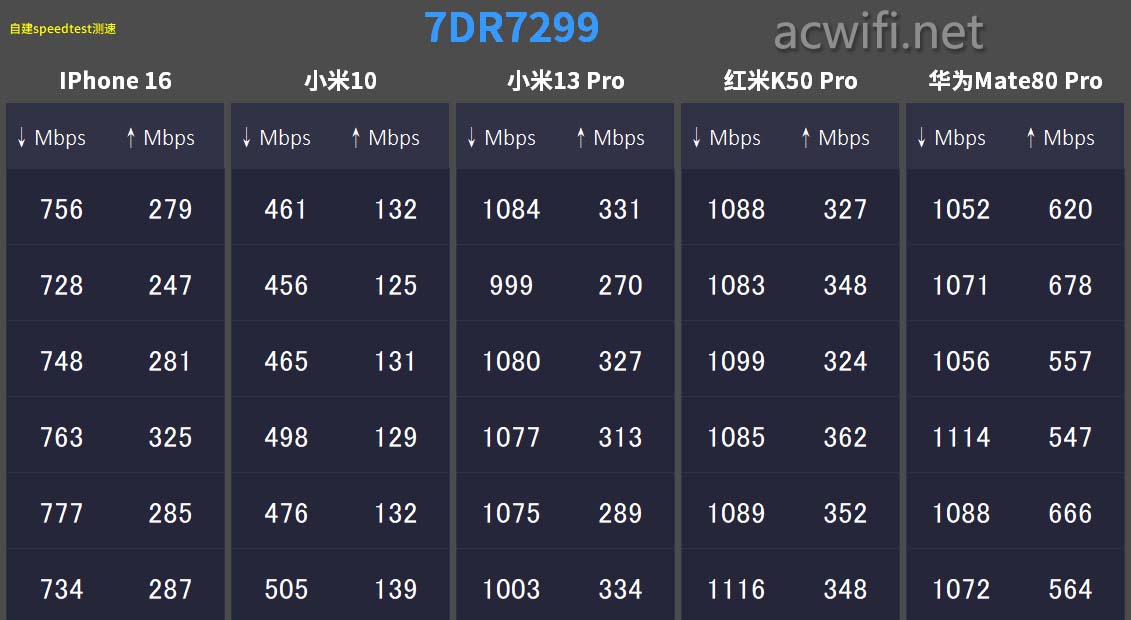
At ACWiFi’s traditional “Point K” location (a far-corner test environment through multiple reinforced concrete walls), the 5GHz band sustained strong RSSI and high data throughput:
3. Roaming Protocols & Beacon Capabilities
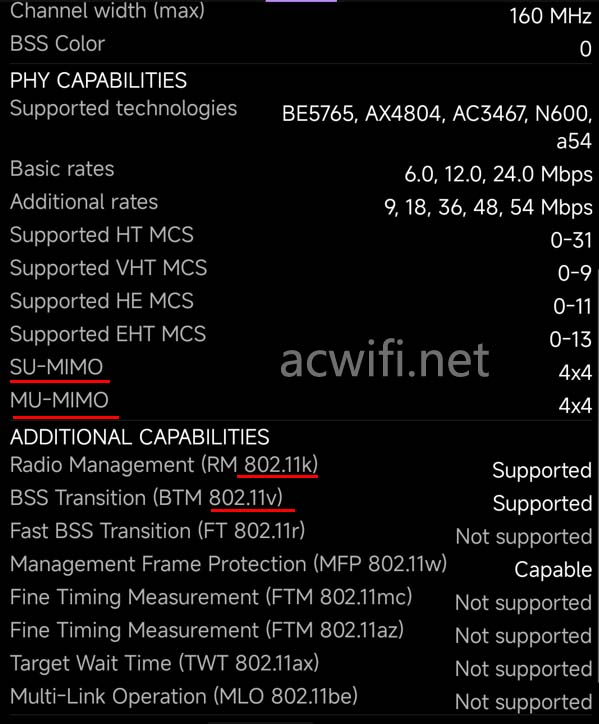
Analyzing the 802.11 beacon frames verifies that the router supports:
- Fast BSS transition via 802.11k (Radio Resource Management) and 802.11v (BSS Transition Management) enabled out of the box.
- Active support for MU-MIMO and explicit Beamforming:
4. Over-The-Air Throughput with MediaTek MT7927 Wi-Fi 7 Client
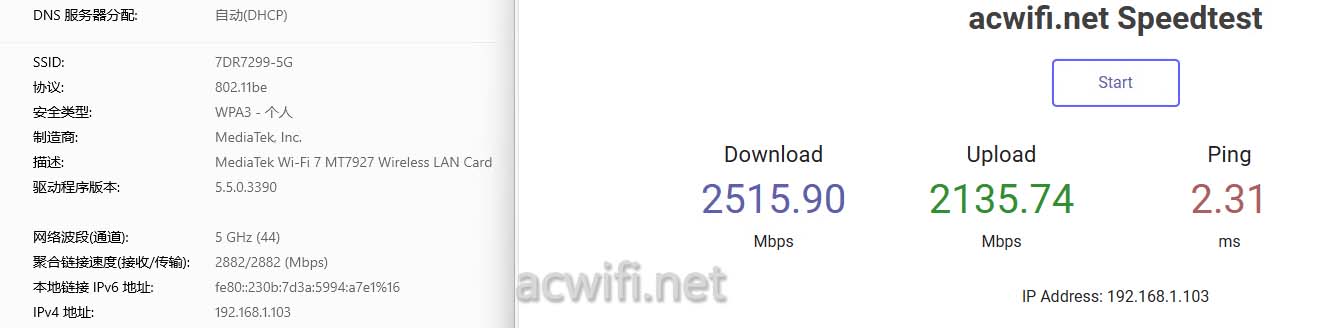
Testing over-the-air throughput against a laptop client equipped with the MediaTek MT7927 Wi-Fi 7 NIC on the 5GHz 160MHz channel delivered sustained transfer rates exceeding 2.8 Gbps:
5. Web Management UI
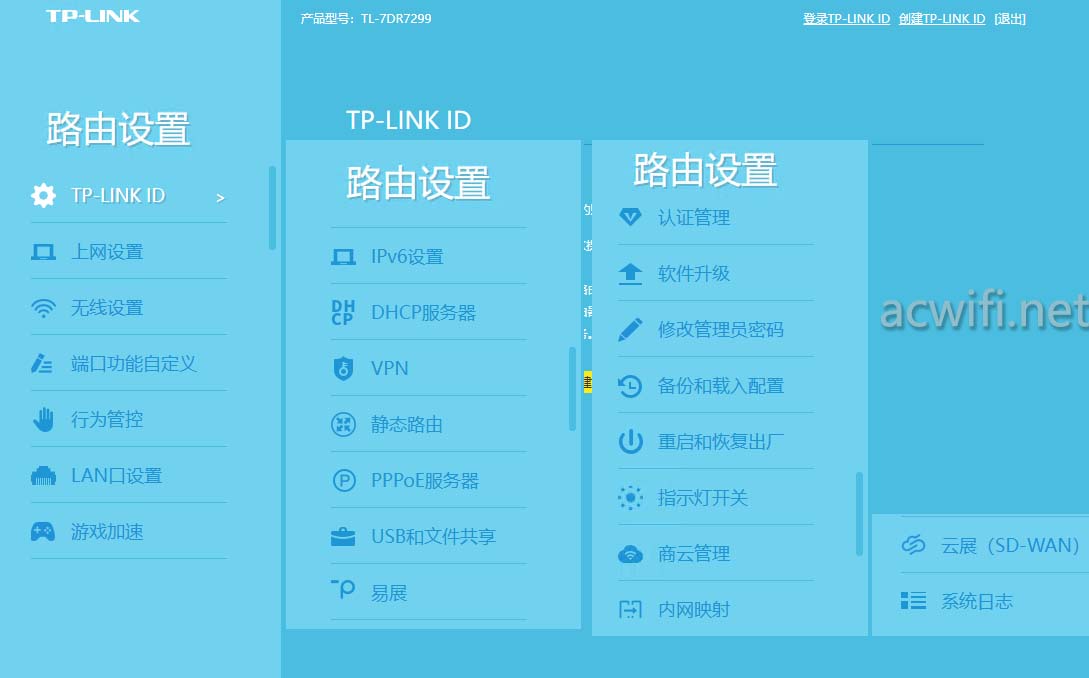
The TP-Link Web interface clearly delineates the physical state of all multi-speed links: the 10G SFP+ slot, 10G RJ45, four 2.5G ports, dual 1G ports, and the USB 3.0 subsystem:
VII. Final Verdict & Buying Recommendations
The TP-Link TL-7DR7299 effectively bundles the robust radio section of the 7DR7260 with higher-powered FEMs, steps up the processing platform to the flagship MediaTek MT7988A (4x A73 @ 1.8GHz), provides an uncompromising port matrix (Dual 10G + Quad 2.5G + Dual 1G), and adds high-speed USB 3.0 Type-C storage expansion.
| Parameter | Specifications (TL-7DR7299) |
|---|---|
| Wi-Fi Class | Wi-Fi 7 BE7200 (2.4G 1376Mbps + 5G 5765Mbps) |
| Processor (SoC) | MediaTek MT7988AV (Quad-core A73 @ 1.8GHz, 12nm) |
| RAM | 1GB DDR4-3200 (EtronTech M16U4G16256A-QLBG x2) |
| Flash Memory | 128MB SPI NAND (ESMT F50L1G41LC) |
| 10G Ports | 2 Ports (1x 10G SFP+ Optical Cage + 1x 10G RJ45 Copper) |
| Additional I/O | 4x 2.5GbE + 2x 1GbE + 1x USB 3.0 Type-C |
| Wireless Silicon | Baseband MT7992A + RF 2.4G MT7976GN + RF 5G MT7977BN |
| RF Amplification | 4x VC5333-21 (2.4G) + 4x KCT8548HE-1 (5G) + 1x LNA MXD7522 |
| Small Packet NAT | 14.21 Mpps bidirectional forwarding (64-byte packets) |
| Firmware Modding | OpenWrt builds available, supports no-disassembly flashing |
Key Highlights:
- Unmatched Port Density per Dollar: Dual 10G ports combined with quad 2.5G ports provide massive flexibility for Multi-Gigabit WAN, high-speed NAS backbones, and HomeLab virtualization.
- Cool Operation & Low Draw: Utilizing a 12nm host CPU and a 6nm Wi-Fi baseband alongside extensive aluminum heat sinking keeps temperatures low and full-port power consumption under ~13.8W.
- OpenWrt Ready: The MT7988A platform is fully supported in open-source networking trees, and OpenWrt can be deployed without opening the physical housing.
Priced around 999 RMB (~$140 USD), if your budget allows and you need an all-in-one multi-gigabit routing engine, the TP-Link TL-7DR7299 is one of the best price-to-performance choices in modern networking. For setups that don’t need 10G uplinks, the 7DR7290 or 7DR7260 remain solid alternatives.
*Source: ACWiFi 33635, published 2026-03-26.
Comments & Discussion
Share your thoughts, ask questions and feedback